


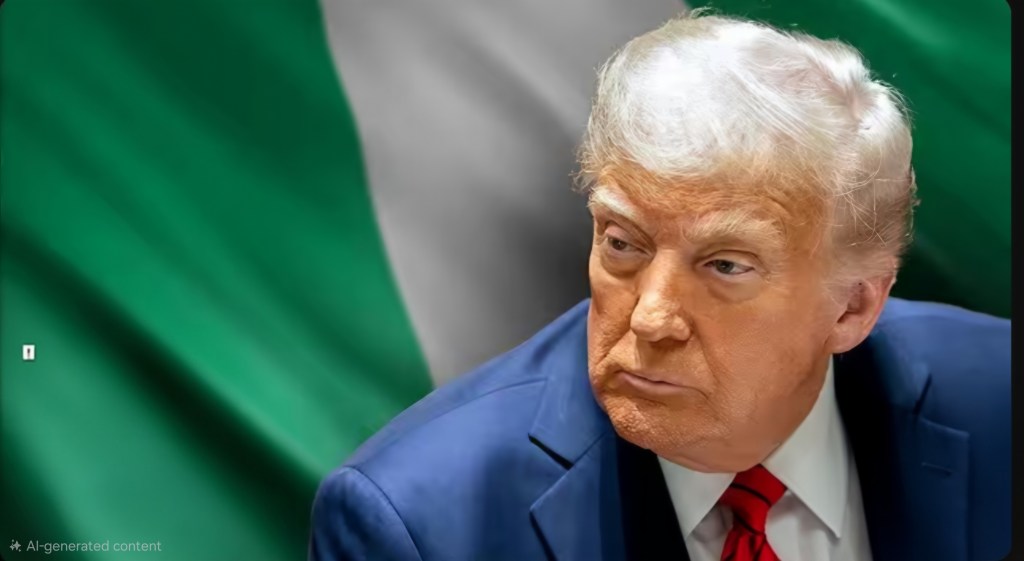
In early November 2025, President Donald Trump ignited a firestorm in U.S.-Nigeria relations with a pair of starkly contrasting announcements. On one hand, he directed U.S. immigration authorities to fast-track asylum claims for White South Africans—citing reports of ethnic persecution. On the other, he threatened “guns-a-blazing” military intervention in Nigeria itself, accusing the government of complicity in “mass slaughter” of Christians by Islamist militants and vowing to cut off all U.S. aid unless action is taken. This “dangerous dichotomy”—offering sanctuary to alleged white victims while preparing to wage war on a black nation —exposes deep flaws in Trump’s foreign policy approach: impulsivity, selective outrage, and a blend of evangelical pandering with isolationist bravado. Let’s break it down.
The Dual-Track Approach: Asylum as Lifeline, Bombs as Justice
- Asylum for the Persecuted: Trump’s order prioritizes White Afrikaners applicants, framing their plight as an “existential threat” from ethnic violence. Trump and his cohorts have failed to provide verifiable evidence of any such violence and he has dismissed the protestations from the South African president Cyril Ramaphosa.
- At the same time he highlights Boko Haram-style attacks in Nigeria’s volatile Middle Belt and north. This aligns with his broader 2025 immigration overhaul, which slashes overall refugee caps to 7,500 but carves out preferences for “persecuted caucasians minorities”—code for white folks in this case. It’s a nod to his evangelical base, echoing past gestures like resettling white South African farmers. For Afrikaners asylum seekers, this could mean quicker processing and higher approval rates, potentially swelling U.S. white communities already numbering over 20,000. But it’s narrowly tailored: Afrikaners or Christian Nigerians fleeing the same violence? Likely sidelined under Trump’s anti-migrant crackdown.
- Military Threats as Hammer: Just days later, Trump escalated on Truth Social, instructing the “Department of War” (his rebranded Pentagon) to prep for strikes or invasion to “wipe out” Islamist terrorists. He designated Nigeria a “country of particular concern” for religious freedom violations, halting aid and musing about airstrikes or boots on the ground—reminiscent of his 2020 Soleimani hit but riskier in a sovereign ally. The trigger? A Fox News segment amplifying Sen. Ted Cruz’s claims of “Christian genocide,” despite data showing violence hits Muslims hardest in Nigeria’s north, with no evidence of state-sponsored targeting.
This isn’t coherent strategy—it’s a forked road: Evacuate the “cherished Afrikaners” via asylum pipelines, then bomb the “disgraced country”. It’s like treating a house fire by rescuing the kids while torching the home.
Why It’s Dangerous: Hypocrisy, Escalation, and Hidden Costs
Trump’s rhetoric paints a heroic binary—America as global Christian savior—but it unravels under scrutiny, revealing perils for all involved:
- Sovereign Meddling and Escalation Risk: Threatening unilateral strikes violates international norms and Nigeria’s sovereignty, a nation of 220 million that’s Africa’s largest economy and a key counter-ISIS partner. Nigerian President Bola Tinubu rebuked it as a “miscommunication,” urging joint ops instead, but Trump’s “fast, vicious” vow could spark backlash—jihadist recruitment surges, refugee floods, or even anti-U.S. riots. Analysts warn it mirrors failed interventions like Libya 2011: short-term “wins” breed long-term chaos. With U.S. forces already stretched (e.g., recent Mexico cartel ops), this diverts from real threats like China in the Sahel.
- Selective Humanitarianism Fuels Division: Asylum for Afrikaners? Noble on paper, but it reeks of bias—Trump’s refugee cuts hit Muslim-majority nations hardest (e.g., bans on Afghanistan, Myanmar). In Nigeria, where 50% are Muslim, this pits “worthy” victims against “others,” exacerbating ethnic rifts at home and abroad. X users decried it as “psychopath white supremacist” posturing, while immigration forums buzz with fears it’ll politicize all Nigerian claims.
- Domestic Politics Over Diplomacy: This blitz—sparked by a TV clip—bypasses intel channels, alarming even Pentagon brass who scrambled Africom staff over the weekend. It’s red meat for MAGA voters ahead of midterms, but erodes alliances: Aid cuts ($500M+ annually) gut Nigerian health/education, indirectly fueling the extremism Trump decries. Nigerian media fronts screamed alarm, with Lagos vendors hawking papers headlined “Trump’s War Threat.”
Broader Implications for Nigeria and the World
For Nigerians, it’s whiplash: Hope for Igbo escape routes amid terror, dread of U.S. bombs destabilizing an already fragile federation. Experts like Ebenezer Obadare call for collaborative aid, not invasion—Nigeria needs drones and intel, not “Department of War” ultimatums. 43 Globally, it signals Trump’s 2025 playbook: Transactional muscle-flexing that prioritizes spectacle over stability, risking a new “forever war” in Africa while his borders stay shut to most.
This isn’t protection—it’s provocation wrapped in piety. If unchecked, it could fracture U.S. credibility, spike migration (ironically straining his asylum system), and hand extremists a propaganda win. Diplomacy, not dichotomies, is the real path to safeguarding lives. What’s your take—does this help or hurt Nigerian communities abroad?
 Centre for Nigeria Progress