

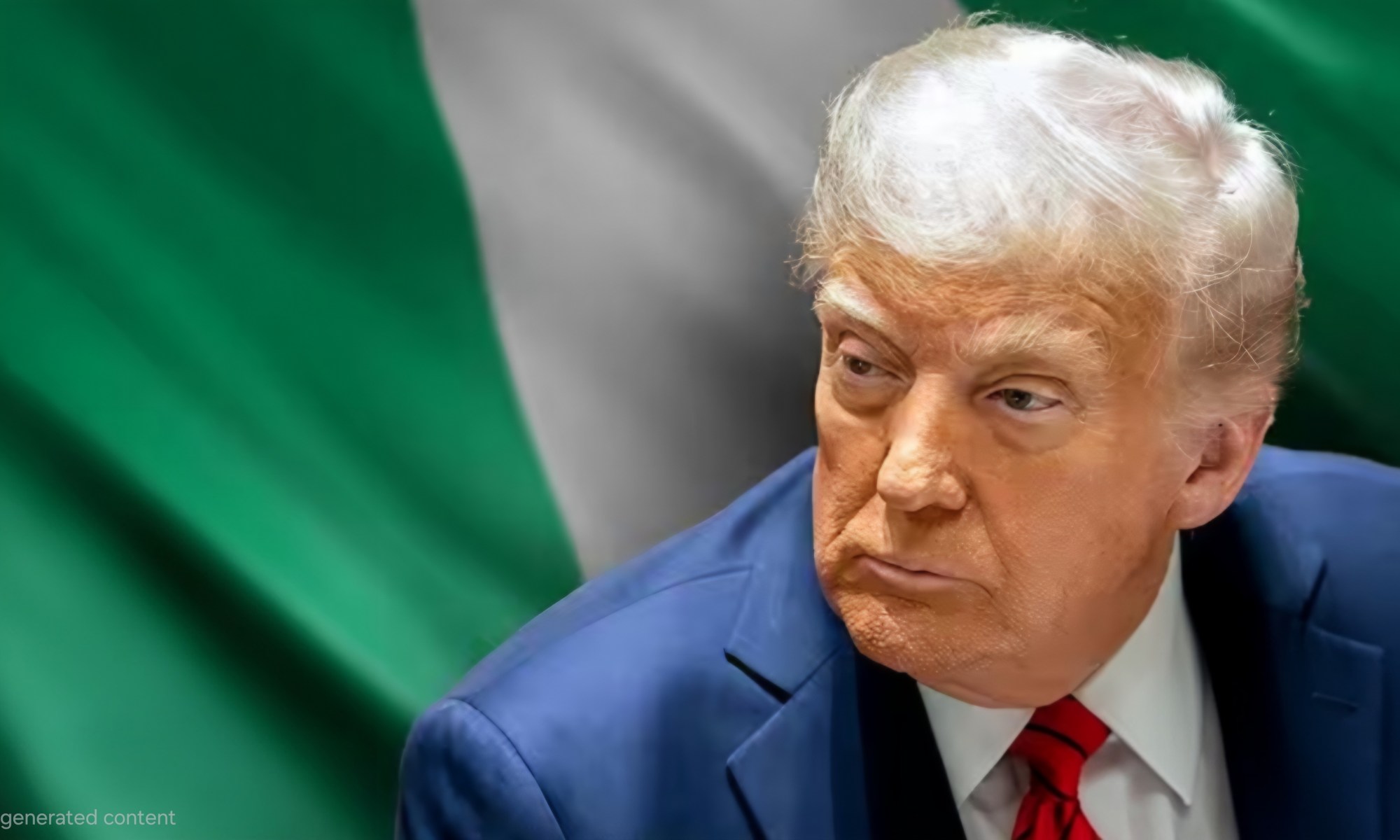

Every now and then, a new wave of hysteria washes across Nigeria’s political landscape — often imported, poorly digested, and then regurgitated by individuals who think WhatsApp broadcasts count as PhD-level research. The latest flavour of nonsense borrows from the American “Trump-style” threat politics: exaggerated claims of religious warfare, persecution fantasies, and fear-mongering designed to divide ordinary people who have enough real problems already.
Let’s take a pinch — no, a pitch — of salt with this imported madness. Nigeria has more than enough of its own homegrown challenges; we certainly do not need to clone America’s political lunacy and sprinkle it on our already simmering pot.
Yes, Nigeria has witnessed violence, injustice, and lawlessness. And the victims come from all faiths, all ethnicities, all regions. If you review the headlines from the last two decades, the bloodshed has never been exclusive to one religion or the other. Crime in Nigeria has no prayer point — criminals don’t ask their victims for baptism certificates or prayer mats before striking. When lawlessness reigns, everyone gets their fair share of the pain.
Are there cases where perpetrators use religion as a cloak for their evil? Certainly. But these isolated incidents — as painful as they are — do not automatically prove the existence of some grand, nationwide “religious war”. Some people are too eager to make a leap of faith so long that even Olympic long-jumpers would bow in respect.
Part of the problem is that outsiders — especially those who barely know Nigeria beyond CNN headlines and church WhatsApp stories — imagine a clean, straight line dividing Christians in the South and Muslims in the North. In reality, Nigeria laughs at that simplistic map.
There are more Christians in Southern Kaduna than in Benin City, Edo State.
There are more Muslims in Osogbo (Osun State) than in Kebbi.
Interfaith marriages? Abundant.
Many Nigerian families have an Archbishop on one side, an Imam on the other, and a herbalist uncle serving as the equaliser.
Nigeria is not a neat, religiously partitioned country. Instead, it is a colourful mess — a mosaic of beliefs, tribes, languages, and interwoven lives. If truly there was a religious war, who would fight who? Cousin versus cousin? Husband versus wife? In-laws versus in-laws? Even Boko Haram has killed more Muslims than Christians — a fact conveniently omitted by those pushing imported propaganda.
Those who wish to sow religious discord either do not understand Nigeria or are hoping Nigerians are too distracted by fuel queues to notice the scam. They resemble the biblical donkey Balaam was riding — stubborn, misguided, and needing a divine intervention to see sense.
The truth is simple: Nigeria’s biggest enemies are not Christians or Muslims — but wicked leadership, poverty, insecurity, corruption, and an elite political class that weaponises identity to avoid accountability.
Whether you attend church on Sunday, mosque on Friday, or shrine on a market day, you stand in the same fuel queue, take the same bad roads, breathe the same polluted air, and suffer under the same incompetent governance.
So let us mind what we wish for and not allow imported madness to turn us into puppets for opportunistic politicians. If we allow fear-mongers to lead us, we may one day wake up to find that our fate is being determined by the political equivalent of donkeys — noisy, stubborn, clueless, and still somehow convinced they are stallions.
Nigeria’s unity may not be perfect, but it is real, built daily in marriages, markets, neighbourhoods, schools, friendships, and shared struggle.
Let us protect that — not burn it for the entertainment of politicians seeking power through division.
 Centre for Nigeria Progress