

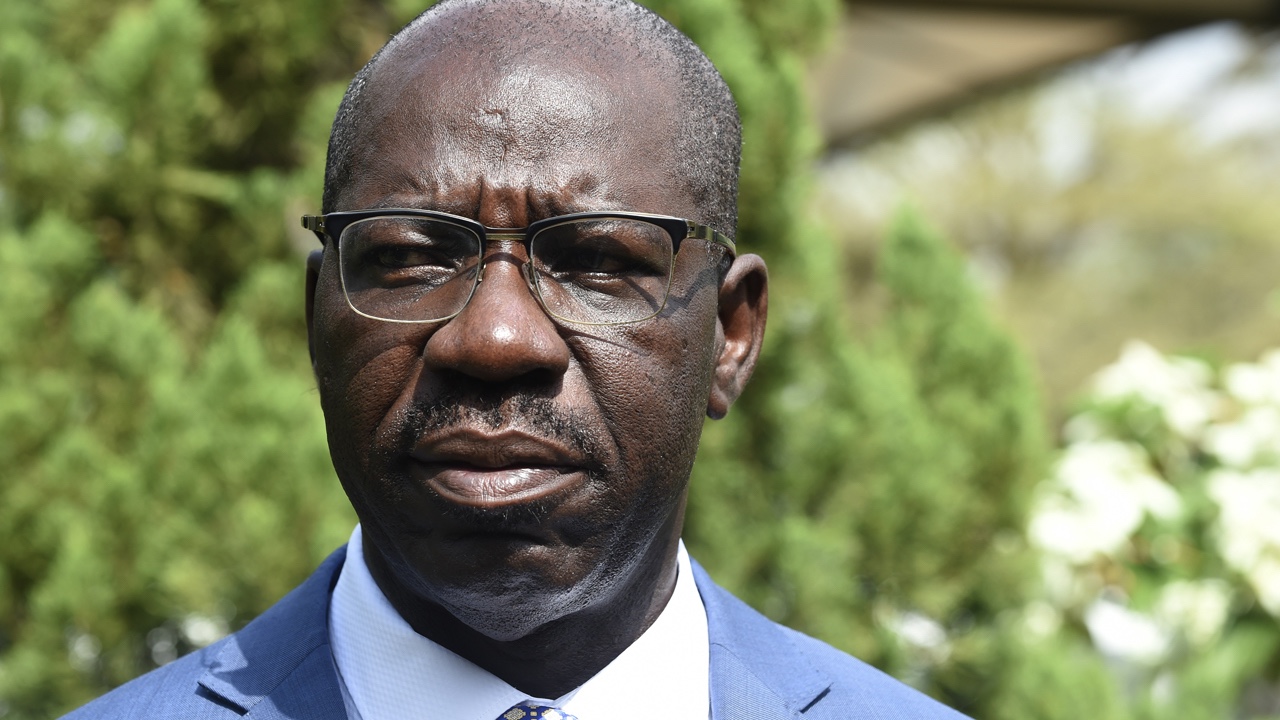
The palava surrounding the Museum of West African Art (MOWAA) and former Governor Godwin Obaseki’s explanations for its funding and establishment has exposed something deeper than a mere dispute over heritage or donor money. It has put on full display the democratic anemia that marked much of Edo State’s governance during his tenure.
Obaseki’s defence of MOWAA — earnest, elaborate, sometimes bordering on corporate PowerPoint enthusiasm — demonstrated a striking omission: a complete silence on the role of law and the Edo State House of Assembly. Not once did he anchor his explanation in statute, legislative authority, or the constitutional machinery that should underpin any major public cultural institution. Instead, the former governor spoke as though the museum was a personal start-up, incubated by goodwill and vision rather than the black-and-white of democratic checks.
An International Museum Built on English Law?
In a move fit for a constitutional comedy, the legal framework governing MOWAA’s underlying structure rests not on Nigerian law — which remains thin, vague, and barely developed regarding private and public charities — but on English law. Yes, the same English law Nigeria supposedly bid farewell to in 1960 continues to haunt our institutional architecture like a colonial ghost that missed its flight back to Heathrow.
This reliance on foreign charity law has left the museum’s legal status floating in ambiguity. Is it public? Private? International? Quasi-governmental? Diplomatic? A franchise? Depending on who is asked, answers vary wildly — a symptom not of creativity but of Nigeria’s legal vacuum in this area.
A Governor Without a Legislature
But the real plot twist lies not in the legal structure of MOWAA but in the governance structure of Edo State itself during Obaseki’s earlier years.
Obaseki effectively ran the state without the full complement of the House of Assembly, thanks to that infamous episode in which only a fraction of lawmakers were inaugurated while the rest watched from across a political chasm. What followed was not democracy but executive unilateralism with a civilian face. Without the institutional ballast of a functioning legislature, Obaseki’s administration drifted toward the habits of a military administrator — decisive, energetic, reform-oriented, yet unconstrained, unchallenged, and often unaccountable.
In such an environment, transformative policies — infrastructure expansions, institutional reforms, and, yes, the establishment of MOWAA — went unaccompanied by robust debate, statutory cover, or institutional defenders. Decisions were made, commissions were created, and museums were born, but the political scaffolding meant to protect them from future storms was missing.
The Cost of Skipping Democracy
The irony is that Obaseki’s government undertook many ambitious projects aimed at modernising Edo State. But democracy is not just about doing good things — it is about doing them through legitimate, transparent, and accountable means. Without legislative endorsement:
policies become vulnerable to reversal,
institutions become contested, and
legacies become fragile, dependent solely on the personality rather than the polity.
This is precisely the storm now engulfing MOWAA: an institution built with global ambition but standing on uncertain legal and democratic ground.
The Final Import
The moral of the story? When a governor rules without the legislature, every great idea becomes an orphan. Obaseki’s transformative initiatives — museums, tech hubs, educational reforms — now lack institutional guardians and statutory shields, making them susceptible to political revisionism, royal suspicion, and public misunderstanding.
In the end, the saga of MOWAA is not only about heritage or funding. It is a reminder that democracy is not a nuisance. It is the very thing that gives public projects legitimacy, continuity, and a future beyond the tenure of one well-meaning administrator.
 Centre for Nigeria Progress