


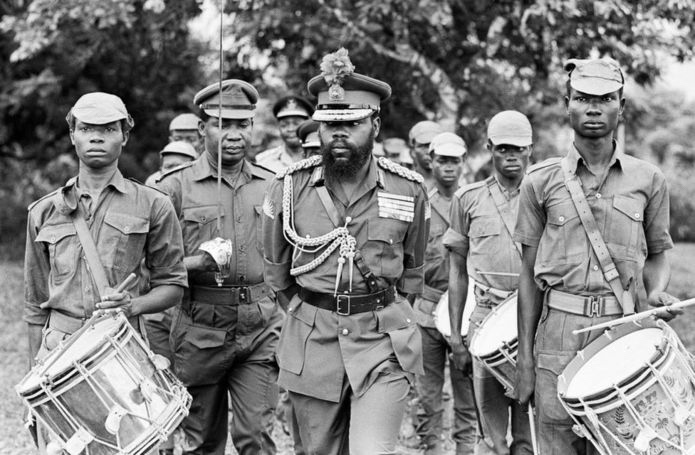
There is a moment in every nation’s history where the path forks dramatically. A single decision, a single failed agreement, can alter the destiny of millions. For Nigeria, that moment was the Aburi Conference, held in January 1967.
In the lush, tranquil hills of Aburi, Ghana, Nigeria’s top military leaders gathered for a last-ditch effort to pull the country back from the brink of collapse. What happened over those two days was a masterclass in negotiation, a fleeting handshake of peace, and ultimately, a tragic failure that plunged Nigeria into a brutal three-year civil war.
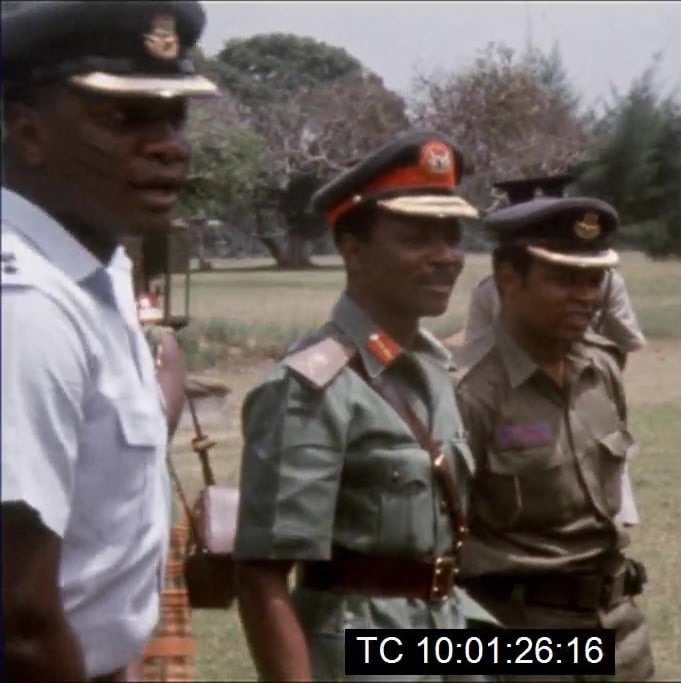
This is the story of the agreement that could have saved a nation.
The Gathering Storm: Why Aburi?
To understand Aburi, we must understand the context of 1966. It was a year of immense trauma. Two military coups, widespread ethnic violence, and the mass killing of thousands of people, predominantly Igbo from the Eastern Region, in pogroms in the North. The federation was teetering.
The Eastern Region, under its military governor, Lt. Col. Chukwuemeka Odumegwu Ojukwu, had lost all confidence in the central government led by Lt. Col. Yakubu Gowon. The region was threatening secession. With tensions at a boiling point, the two leaders agreed to meet on neutral ground—Aburi, Ghana—under the mediation of General J.A. Ankrah.
The goal was simple and monumental: agree on a new political structure to keep Nigeria united.
The Handshake in Aburi: What Was Agreed?
For two days, the leaders debated the future of the country. Against all odds, they emerged with a signed agreement, the Aburi Accord. The core of this agreement was a radical decentralization of power.
The leaders agreed that the federal government in Lagos had become too powerful and that returning authority to the regions was the only way to maintain unity. The key resolutions included:
· A New Power Structure: The Supreme Military Council (SMC), not just the Head of State, would be the highest authority. Any major decision affecting the entire nation would require the unanimous “comment and concurrence” of all regional military governors.
· Regional Control of Security: The army was to be reorganized into Area Commands, corresponding to the regions. For internal security matters, these commands would be under the control of the respective Military Governors.
· Reversing Centralization: Key decrees passed after the first 1966 coup, which had stripped the regions of their previous autonomy, were to be repealed.
In essence, the Accord proposed a confederal system—a “Nigeria” of semi-autonomous regions held together by a loose central authority. Ojukwu saw this as a guarantee of the East’s security and autonomy. Photographs from Aburi show handshakes and smiles, a moment of profound, if fleeting, hope.
The Breakdown: Why the Deal Fell Apart
The optimism was short-lived. The devil, as they say, was in the details.
Upon returning to Nigeria, the agreement immediately began to unravel. The two sides had fundamentally different interpretations of what they had signed.
· Ojukwu’s Interpretation: The Eastern leader insisted on a literal implementation of the Accord. He believed the regions were now virtually sovereign, with the federal government serving as little more than a secretariat.
· Gowon’s Interpretation: Back in Lagos, Gowon was faced with fierce opposition from federal civil servants and advisors. They argued that Ojukwu’s interpretation would make the central government powerless and lead to the country’s inevitable breakup.
The federal government attempted to codify the Accord into law with Decree No. 8. However, Ojukwu and the East rejected it, pointing to clauses (like emergency powers that could override a regional governor) that they felt betrayed the “spirit of Aburi.”
The trust had shattered. Accusations of bad faith flew back and forth. The Eastern Region began to functionally operate as a separate entity, collecting its own taxes and seizing federal corporations. The failure at Aburi became the green light for secession.
The Aftermath: The Road to War
The collapse of the Aburi Accord was the point of no return.
On May 30, 1967, Ojukwu formally declared the independence of the Eastern Region as the Republic of Biafra. In response, Gowon declared a state of emergency and initiated a “police action” to bring the rebellious region back into the fold.
That “police action” quickly escalated into the full-blown Nigerian Civil War (1967-1970), a devastating conflict that claimed an estimated one to three million lives, mostly from starvation and disease.
A Legacy of “What If?”
The Aburi Conference remains one of the most significant “what if” moments in Nigerian history. It represents a lost opportunity for a peaceful, negotiated settlement.
· A Lesson in Communication: It stands as a stark lesson on the dangers of vague agreements and the importance of precise language in high-stakes diplomacy.
· The Centralization Debate: The core issue debated at Aburi—the balance of power between the center and the states—remains a central and unresolved theme in Nigerian politics today.
The smiles and handshakes in Ghana were a mirage. The failure to build on that brief moment of consensus sent the nation down a path of immense suffering, the echoes of which are still felt generations later.
 Centre for Nigeria Progress