


Democracy as a system of governance has its attractions, which include, but are not limited to, political tolerance, a multi-party system, control over the abuse of power, popular franchise, free and fair elections, free courts, and accepting election results. The authors of the system believed that these are part of the indices that make it preferable to a dictatorship and its tendency to be essentially a one-party system dominated by an individual intent on holding sway over everyone else.
As a newspaper, we believe that democracy, with all its shortcomings, remains the most suitable system of governance for a developing nation like Nigeria. We make this assertion because it is assumed that in a democracy, what obtains is the predominance of the peoples will as against the horror of a Leviathan.
At independence, the country practised the British-style parliamentary system with the Prime Minister and the leader of the party that has the largest number of seats in the House of Representatives emerging as the head of government. Ministers were also chosen from the elected members of the majority party. That system collapsed after the 1966 military coup. When democracy was reinstated in 1979, marking the birth of the Second Republic after a prolonged period of military rule, the country adopted a United States-style executive presidential system, which remains in place to date. Critics argue that the system, due to its cost implications and wasteful propensities, is not suitable for a resource-strapped nation like Nigeria, which has a large population to feed.
We recall that the failure of the second attempt to build a viable democratic system was largely attributable to the indiscipline of the political class and its ill-advised efforts to muzzle opposition. The third Republic, if we may call it that, was primarily engineered by a clique within the military that desired to transit into a democracy. It failed because the people resisted a ploy by a few to impose a dictatorship on the nation through a fraudulent democratic process. T he Fourth Republic has endured for more than two decades, despite the shenanigans of the political class. The Peoples Democratic Party (PDP), which had planned to rule for 60 years, was tossed into the trash can because it wanted a one-party democratic structure. The harassed opposition parties coalesced into a unified entity that set a precedent and successfully removed an incumbent from office. That ought to have served as a lesson, as that party, presently in power, pursues a mindless process of whipping every political opinion into its fold to ensure that it retains office for another four years. T here have been rumours of a plot by a section of the military to truncate the fragile democratic structure in place, which led to sweeping changes in the security apparatus. Still, the party is proceeding with its plot to destabilise and render ineffectual opposition parties as 2027 approaches.
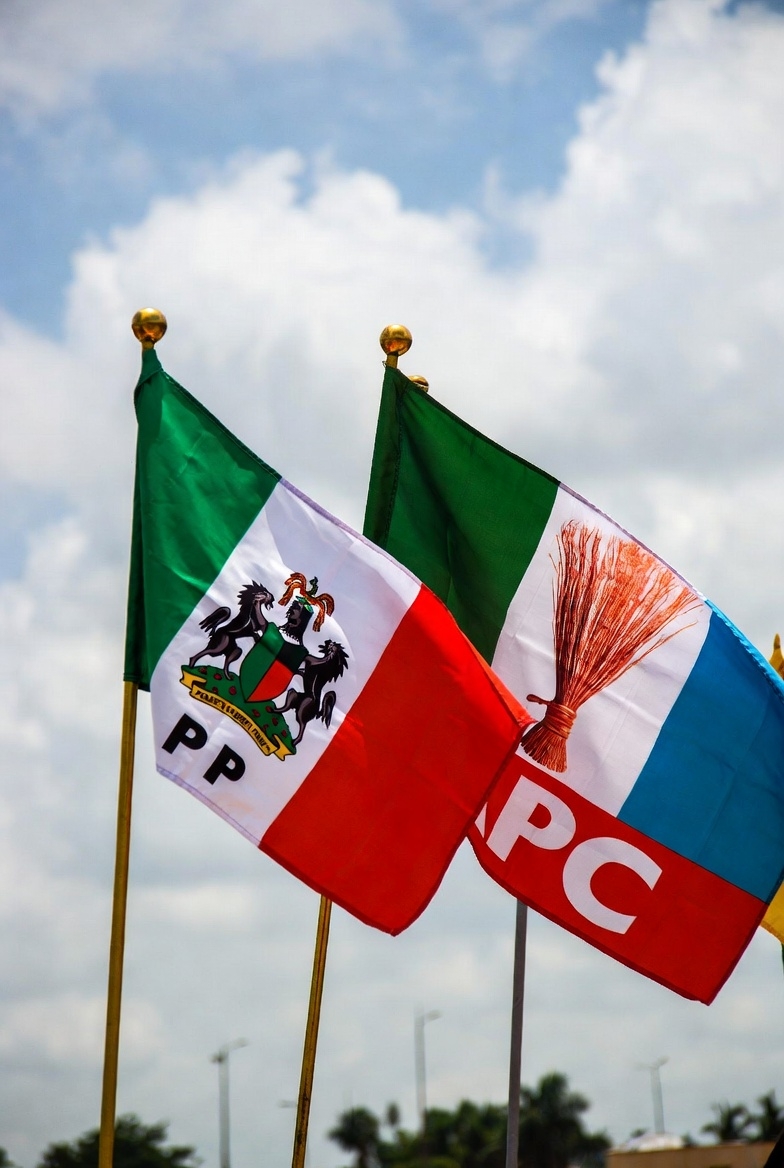
As a newspaper, we are concerned that the democratic structure is imperilled if this plot continues. Combined with the heightened insecurity in the country, which is crippling the socio-economic life of the people, the apprehension is indeed genuine that democracy itself may be heading to an intensive care unit (ICU). We are persuaded to warn that the desperation towards a one-party state by the ruling All Progressives Congress (APC) is a bad omen for democracy in the country. The resignation of opposition party chieftains and their declaration for the APC leaves a sour taste in the mouth. President Bola Ahmed Tinubu was earlier reported to have claimed that it was not his fault that the opposition was in disarray. That would have been acceptable if the decapitation process were a natural consequence of political processes.
However, we conjecture that what is happening is being orchestrated to ensure a safe passage to an arranged victory for the APC in 2027. We are concerned about the state of democracy in this country, considering the stress that accompanies the emergence of a leader whom the people did not elect to lead them. We have passed through this path before, and that is why we are worried— terrified at the prospect of the success of anti-democratic forces in this contrived move to manipulate the popular will. It is not enough to blame the opposition for being seemingly disorganised. Given the predilection of politically- exposed persons to always be part of the gravy train, the emerging confusion can be understood in this context. And that is the danger we perceive. Is the situation redeemable? Without doubt, yes.
All the political actors boast of their democratic credentials, especially the role they played at one time or another in the f ight against dictatorship in the country. And that raises the question of what has changed to warrant the inordinate haste to thwart the course of history. We are persuaded by the argument of the authors of democracy that giving a free rein to a multiplicity of opinions is a preferred choice to the heckling that is going on, aimed at drowning the voice of others in a frenzied bid to dominate and oppress.
 Centre for Nigeria Progress