

From a single brazen phone call to a national emergency: In 2021, kidnapper Sani Jalingo’s boastful call to a Hausa radio station, where he declared himself part of the “government of the forest,” was a chilling preview. Today, that localized threat has exploded into one of Nigeria’s most severe security crises, with recent months witnessing the worst mass abductions in the country’s history.
The trauma inflicted on students like Hamza Nasiru and the desperate anger of families selling all they own to pay ransoms are no longer isolated tragedies. They are symptoms of a failing system where criminal impunity, ideological extremism, and state weakness have converged, putting an entire generation at risk.
The Evolving Threat Landscape
The security situation in northern Nigeria has fractured into a multi-headed monster, with distinct but sometimes overlapping groups driving the violence.
1. The Criminal “Bandits”
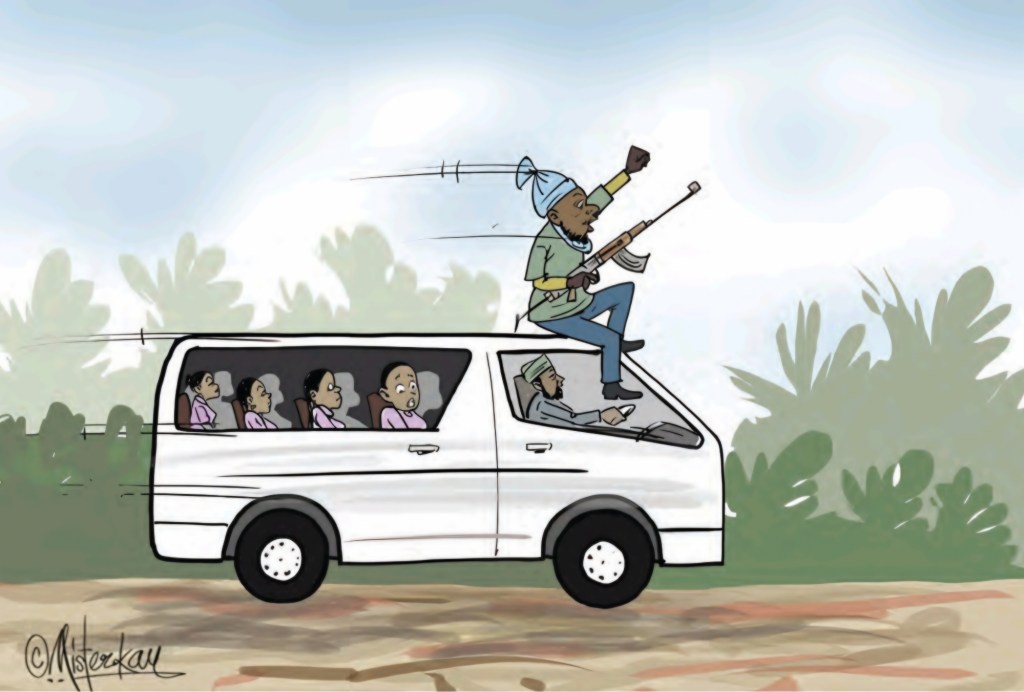
Jalingo represented the primary engine of the kidnapping economy: highly mobile criminal gangs locally known as “bandits.” Designated as terrorists by the government in 2022, these groups are primarily financially motivated, treating abduction as a low-risk, high-reward industry. Their signature tactic involves large groups on motorcycles, enabling swift attacks on vulnerable targets like schools and villages before security forces can mobilize.
2. The Ideological Extremists
Complicating the picture are hardened jihadist groups:
· Boko Haram & ISWAP: The group behind the 2014 Chibok kidnapping remains active in the northeast. Its more lethal splinter, the Islamic State in West Africa Province (ISWAP), focuses on military targets but uses kidnapping to fund operations.
· New and Spreading Factions: The emergence of groups like Lakurawa and Mahmuda has extended extremist control over communities in the northwest. Most alarmingly, October 2025 saw the first claimed attack inside Nigeria by JNIM, a Sahel-based group controlling parts of Mali and Burkina Faso, signaling a dangerous regional spillover.
Anatomy of a State Failure
The relentless success of these armed groups points to deep, systemic failures within Nigeria’s security and governance structures.
Chronic Overstretch: Nigeria’s military and police are tasked with an impossible mandate—simultaneously combating insurgencies, kidnappings, separatist agitation, and deadly communal conflicts. Retired General Lucky Irabo has highlighted critical gaps in intelligence, manpower, and equipment, arguing that creating new agencies is not the solution without fixing these foundational flaws.
The Catastrophic Assault on Education: The most visible failure is the persistent targeting of schools. Following the abduction of over 300 people from a school in Niger state in November 2025—the third such attack in a week—authorities took the drastic step of ordering 20,468 schools to close indefinitely across seven northern states. Amnesty International warns this is “an assault on childhood” that trades short-term safety for a “dysfunctional future,” risking a lost generation.
Reactive Leadership and Fragile Alliances: While new Defence Minister Gen. Christopher Musa has promised “rapid gains,” tangible progress is elusive. Regionally, the critical Multinational Joint Task Force in the Lake Chad basin has been weakened by political withdrawals, giving insurgents more room to maneuver across borders.
Pathways Out of the Crisis
A lasting solution requires moving beyond purely kinetic military responses to a holistic strategy that addresses root causes.
· Invest in the Future, Not Just Firepower: The direct link between crime, inequality, and youth unemployment is clear. A 2025 study from Taraba State explicitly recommends youth empowerment programs as crime prevention. Protecting and investing in education is a national security imperative.
· Bolster, Don’t Bureaucratize, Security: Experts agree: existing security agencies need a profound overhaul with proper resources, not more parallel structures. Closing intelligence and equipment gaps is essential.
· Restore Justice and Accountability: The cycle of impunity must end. Transparent investigations and prosecutions for past mass abductions are crucial to restoring public trust and deterring future crimes.
Conclusion: A Nation at a Crossroads
The despair captured in 2021—”If I had my way I would move my children out of this country”—has now rippled across the north. The “government of the bush” that Sani Jalingo boasted about has expanded its reach, challenging the state’s monopoly on violence and threatening Nigeria’s social fabric.
Reversing this tide demands a concerted, courageous, and multi-dimensional strategy. It is a fight not just for territory, but for the nation’s soul and the future of its children. The time for reactive measures is over; only a comprehensive commitment to security, justice, and opportunity can reclaim Nigeria’s stolen future.
Key actors: Dogo Gide, Bello Turji, Sani Jalingo, and Dan Karami are the most notorious Fulani kidnappers in Nigeria today.
So dangerous are they that the Gobir Development Association recently wrote that Turji is in control of Sabon Birni, Goronyo, Isa, and Shinkafi Local Government Areas of Sokoto and Zamfara State.
Sani Jalingo was the mastermind of most kidnappings in Kaduna and he once bragged that he had killed seven out of ten abductees just to prove that he meant business.
The philosophy of these Fulani killers is violence; they sleep, eat, and drink violence, and they are a threat to everyone.
Today all security forces are negotiating with these terrorists for the release of their captives. They do not have DSS, army, Navy, Air force, Police, Civil Defense, NIA, military firing power, why then is it difficult to eliminate these rag tag groups who do not have mercy, compassion and tolerant in their violent endeavours.
What are your thoughts on Nigeria’s security challenges? Do you believe regional cooperation or internal reform is more urgent? Share your perspective in the comments below.
 Centre for Nigeria Progress