

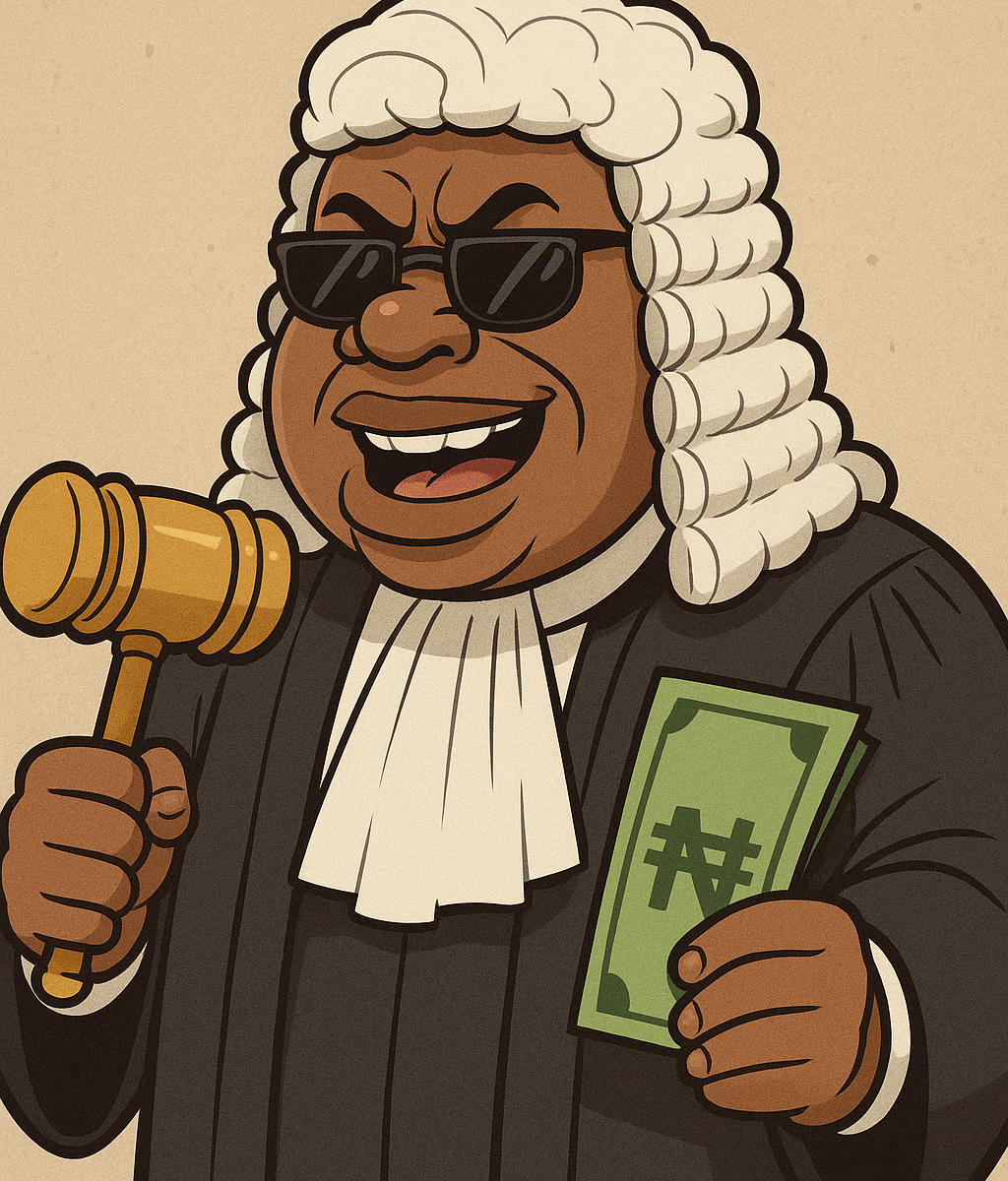
Let’s play a little game of word association. I say “Nigerian Judiciary.” What comes to mind? If you said, “The last hope of the common man,” please collect your prize—a single, slightly melted sweet—from the nearest court registrar’s office. You may have to wait ten years to get it, and the judge might award it to the man behind you, but hey, due process!
The idea that the judiciary is the common man’s last hope is a beautiful, almost poetic sentiment. It’s the kind of thing you engrave on a plaque next to a wobbly, outdated fan in a hot courtroom. It suggests that when all else fails—when the police are chasing your generator thief instead of arresting him, when your local government chairman has used your road project money to buy a new fleet of SUVs—you can run to the hallowed halls of justice for sanctuary.
But let’s be real. If the Nigerian judiciary is the last hope for the common man, then the common man is basically the protagonist in a Nollywood horror film, and the ghost is a man in a wig holding a bill for “file verification fees.”
Consider the average common man, let’s call him Uncle Bola. Uncle Bola has a problem. His neighbour, Mr. Johnson, has built a fence that annexes Uncle Bola’s entire compound, including his prized mango tree. A clear case, you’d think. Justice just needs a measuring tape and a copy of the Land Use Act.
So, Uncle Bola approaches the temple of justice. His journey begins not with a filing, but with a pilgrimage. He must first find a lawyer who a) is alive, b) is not currently at a “special court session” (which looks suspiciously like a birthday party at a beachfront bar), and c) won’t charge him the equivalent of three years’ harvest from the very mango tree in dispute.
After securing legal representation, the case is filed. The first hearing date is set for six months later. On the day, Uncle Bola takes a day off work, pays for transport, and arrives at the court by 8 AM. By 4 PM, he learns the judge is “unavoidably detained.” The new date is in another four months. This cycle repeats itself. Each time, Uncle Bola’s lawyer greets him with a warm handshake and a gentle reminder that “the wheels of justice grind slowly, but they grind exceedingly fine.”
Uncle Bola begins to suspect the wheels aren’t grinding at all. They’ve fallen off the axle and are being sold as scrap metal.
Meanwhile, Mr. Johnson, the fence-builder, is feeling just fine. He’s had time to not only enjoy the mangoes but to plant a small garden and build a mini-bar on the annexed land. With every adjournment, his illegal structure gains a kind of permanence. At this rate, by the time the case is decided, Mr. Johnson’s grandson will be arguing the case for the defence, and the fence will be a declared national monument.
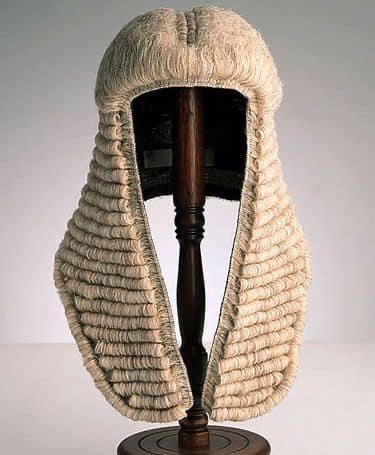
The real action in the courtroom isn’t the arguments; it’s the theatre. The lawyer’s wig, a fashion item abandoned by the British in the 18th century, is soaked with sweat. The judge peers over glasses, asking profound questions like, “Lawyer, are you still in this matter?” The air is thick with the promise of justice and the unmistakable aroma of akara from the canteen downstairs.
And the language! The common man doesn’t speak Latin. He doesn’t know what “sub judice” or “lis pendens” means. He just wants his land back. His lawyer explains these terms to him, each explanation accompanied by an invoice for “professional consultation services.”
So, is the judiciary the last hope? Technically, yes. But it’s the kind of hope you have when your car breaks down in the middle of the Third Mainland Bridge at rush hour. You hope a mechanic will come. You hope it won’t cost a fortune. You hope you won’t be there until tomorrow. But deep down, you know you’re in for a long, expensive, and profoundly frustrating experience that will make you question all your life’s choices.
The true last hope of the common man isn’t the judiciary; it’s a strong stomach, a good sense of humour, and the ability to find joy in the sheer, breathtaking absurdity of it all. And maybe a very tall ladder to sneak back some mangoes from his own tree.
 Centre for Nigeria Progress