

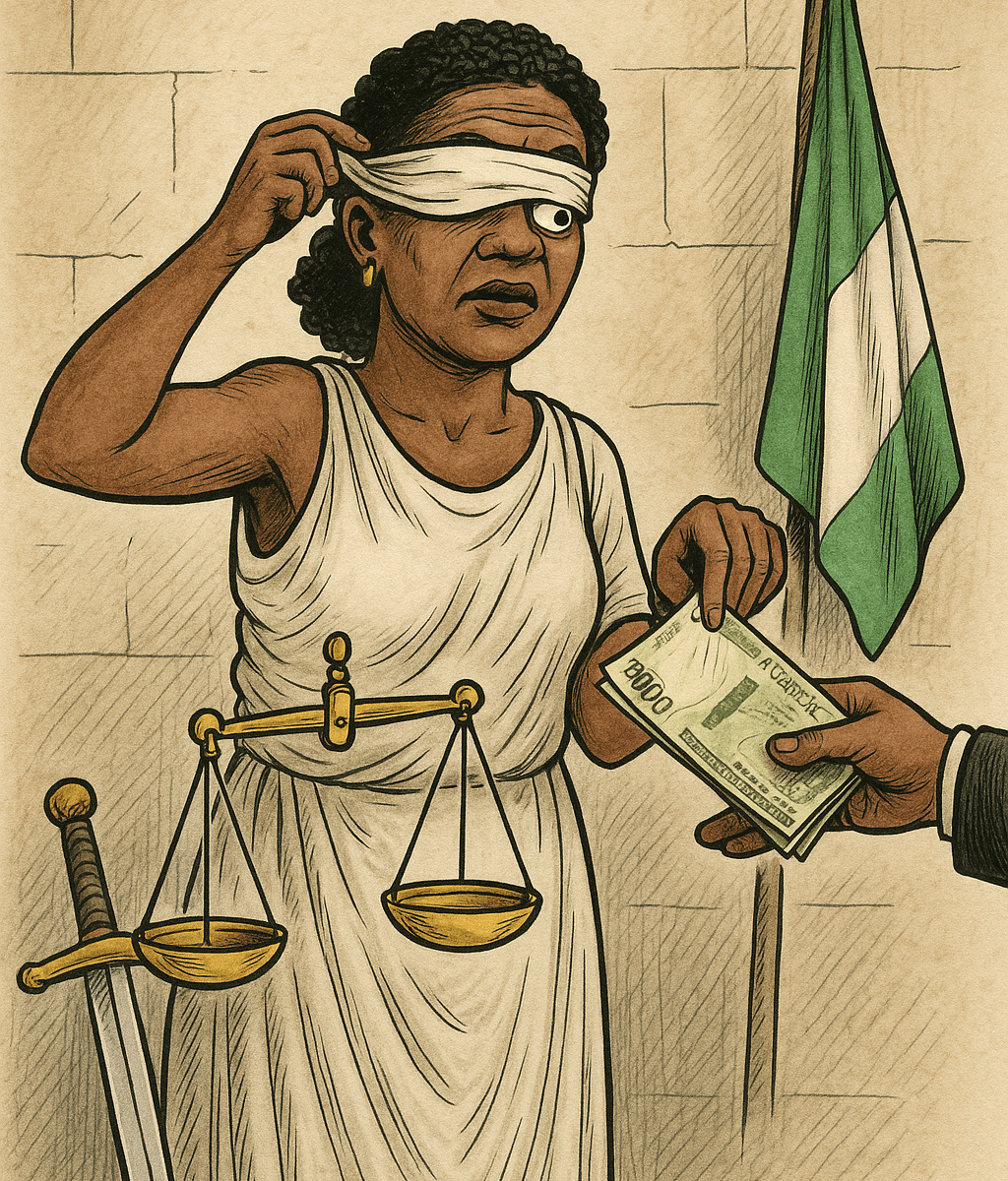
In Nigeria, misconduct does not attract consequences; it attracts promotions. Power is acquired, not to serve, but to misbehave freely. Once you find your way into office—by hook, crook, or midnight arithmetic—the law immediately becomes advisory, and the Constitution is reduced to motivational literature.
The rule of law exists only in textbooks, conference halls, and long speeches delivered with straight faces by people who have never obeyed it. In real life, the powerful treat the law the way drivers treat traffic lights in Lagos: suggestions, not instructions.
In fact, breaching the Constitution is now a recognised career path. Cross-carpeting, which the Constitution expressly forbids, is practiced openly and proudly. Legislators defect with such swagger that one would think the Constitution actually encourages it. Nothing happens. Instead, they are rewarded with appointments, protection, and political patronage—Nigeria’s version of “employee of the month.”
Our major political parties are not fighting this lawlessness; they are franchising it. They are the wholesalers and retailers of constitutional abuse. Today you are APC, tomorrow PDP, next week LP, depending on market forces and available stomach infrastructure. Many members of the National Assembly currently sit on platforms completely different from the parties that smuggled them into Parliament. Some of these serial defectors are later upgraded to governors. In Nigeria, loyalty is optional; impunity is mandatory.
Politicians terrorise the people, especially the poor, with policies that punish poverty and reward theft—and still nothing happens. The Constitution is mocked, beaten, and locked in the boot of a convoy, while sirens clear the road for lawbreakers.
So when 27 members of the Rivers State House of Assembly decided to abandon the party that carried them to office—even though there was no division recognised by law—no one was shocked. They knew the Nigerian formula: step one, break the law; step two, secure judicial perfume; step three, move on as if nothing happened. Some of them have since cross-carpeted again, because why not? In Nigeria, once you escape consequences the first time, you are entitled to free refills.
These men enjoy the backing of the powerful, the blessing of movers and shakers, and the silence of institutions designed to shout. Nigeria’s injustice institutions have mastered the art of looking busy while doing nothing.
These are the absurdities of the Nigerian situation. Nigerians endure the most abominable misconduct with Olympic-level patience, as if lawlessness were part of our cultural heritage. To the comity of nations, Nigeria increasingly looks like a country where rules are allergic to enforcement. Meanwhile, decent Nigerians suffer quiet embarrassment abroad. For example, Qatar Airways treat Nigerian passports as if it comes with a criminal record.
In Nigeria, leaders behave anyhow, and remedies cannot be found where remedies are meant to live. Courts were created to dispense justice, but ours dispense adjournments, technicalities, and sometimes miracles—for the right people. Justice exists, but it is in premium class. The rest of us travel economy, if we travel at all.
Nigerians are living in hell inside their own country, courtesy of leaders who mistake lawlessness for leadership. Every department of government promotes disorder, condones it, or issues a press statement explaining why it is unavoidable. Those who swore to uphold the Constitution now violate it as a daily routine—morning devotion, afternoon breach, evening impunity.
Only the powerless are punished for minor infractions. The big thieves sit at the head table, carving national cake with both hands. Nigerians live under constant torment, ruled by looters who introduce themselves as “Your Excellency.”
And now we hear—via social media—that the Rivers State House of Assembly complex has been demolished, for reasons as ridiculous as the people who ordered it. In Nigeria, when democracy becomes inconvenient, we simply bulldoze it. The crisis in Rivers State is the natural consequence of a political system built on illegality. Any structure erected on sandy foundations will crack—and eventually collapse.
Those who behave like emperors in a democracy should remember Nebuchadnezzar, who was sent to the bush to eat grass for seven years because of pride. In Nigeria, our emperors are still grazing comfortably, but history has a way of revisiting arrogant men—sometimes without prior notice.
Nigeria today is a despotic state pretending to be a democracy. Democracy here is a costume worn only on election day. But one day, Nigerians shall be free. And when that day comes, impunity will finally discover what consequences feel like
 Centre for Nigeria Progress