

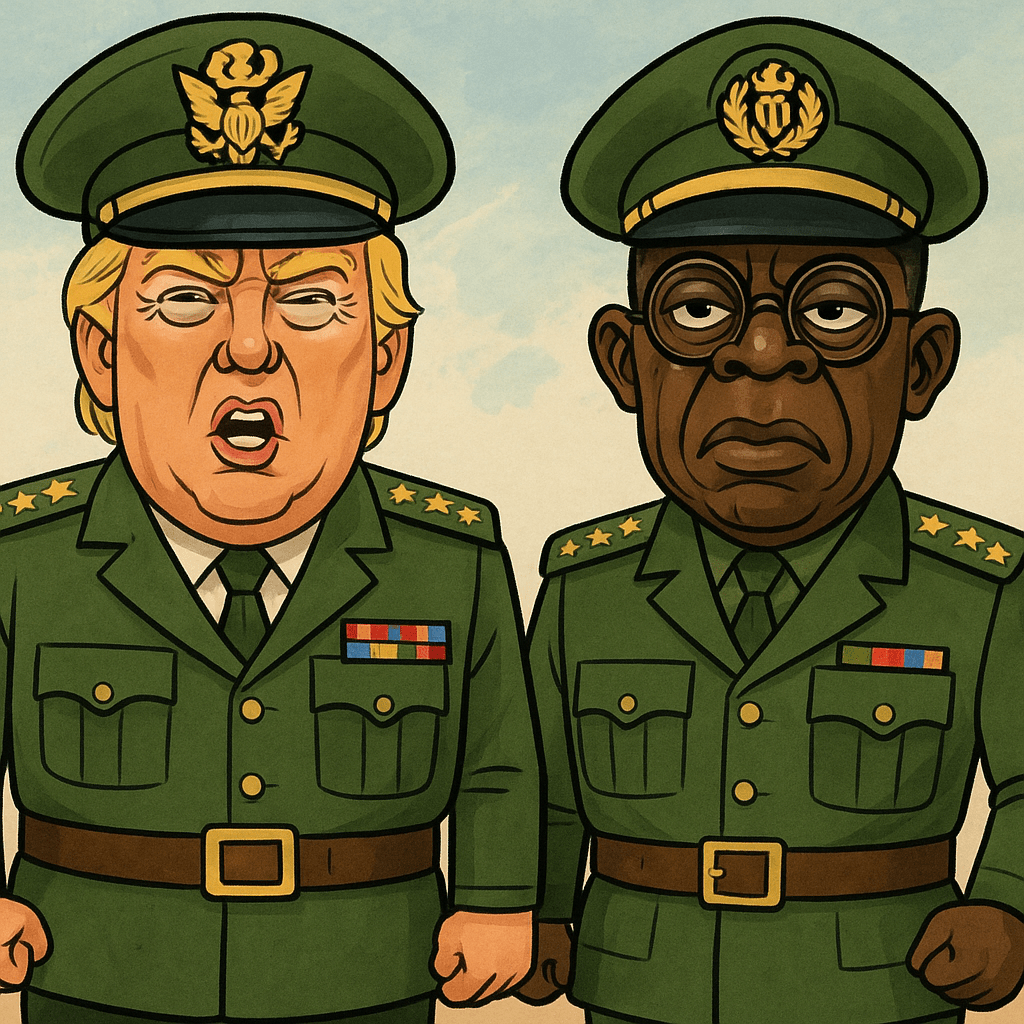
@DOlusegun’s Article is an elegant exercise in political PR. Smooth. Confident. Reassuring. It reads like the kind of briefing note governments circulate when they want the public to exhale and say, “Ah. So everything is under control.” Unfortunately, international relations is not yoga. Breathing exercises do not substitute for facts.
The central claim of the piece — that President Tinubu converted a U.S. threat into a diplomatic triumph — deserves closer scrutiny, because beneath the polished language lies a generous conflation of damage control with strategic genius.
Let us begin where the article carefully tiptoes.
The CPC Designation: Not a Compliment, Not a Chess Match
The designation of Nigeria as a Country of Particular Concern is not a misunderstood love letter from Washington. It is a formal, statutory finding under U.S. law that a country has engaged in or tolerated severe violations of religious freedom. Countries do not get on that list because they failed to phrase a press release correctly.
To reframe this as merely “intense pressure” or unfortunate timing after the Kwara church attack is to miss the point. The CPC label reflects years of documented violence, persistent impunity, and a Nigerian state that appears unable — or unwilling — to protect citizens consistently, regardless of faith.
This is not perception. It is record.
If Nigeria were a corporate entity, the CPC designation would be a regulatory red flag, not an invitation to a networking lunch.
“Christian Persecution”: The Straw Man Argument
The article insists that U.S. concerns are based on a simplistic narrative of Christian persecution and then congratulates the administration for explaining Nigeria’s “complex realities.” That explanation is not new. Nigerian officials have been singing this hymn for over a decade.
Washington is not unaware that Muslims die in Zamfara or that bandits do not carry denominational ID cards. The issue is not whether Muslims also suffer — they do — but whether the Nigerian state is failing unevenly and predictably in certain regions, creating patterns that foreign governments cannot ignore.
Complexity is not a defence. It is an indictment.
When violence becomes routine, explanations become excuses.
The Ribadu Mission: Necessary, Not Ingenious
Sending the National Security Adviser to Washington is not a “chess move.” It is Diplomacy 101. When a superpower designates your country as a rights violator, you do not respond with vibes; you dispatch your security chief.
Listing security spending figures — trillions of naira on paper — is also not persuasive evidence of effectiveness. Nigerians have lived long enough to know that budget size and security outcomes are distant relatives who rarely speak to each other.
If spending alone secured lives, Nigeria would be Switzerland with jollof.
Inviting U.S. delegations for fact-finding missions is commendable, but again, it is remedial action, not strategic brilliance. You do this when your credibility is in question — not when you are winning.
The “Guns-Blazing” Threat: Rhetoric Meets Reality
Donald Trump threatening to go “guns-a-blazing” should surprise no one. This is a man who treats foreign policy like professional wrestling: loud entrances, exaggerated threats, and unpredictable outcomes.
To take Trump’s rhetoric literally, then claim credit when it does not materialise, is to confuse the absence of disaster with the presence of success.
The United States did not pivot because Nigeria outplayed it. The U.S. pivoted because it always prefers influence over invasion, partners over pariahs, and intelligence cooperation over televised bravado.
Nigeria did not tame the lion. The lion simply chose a different meal.
Joint Operations and AFRICOM: Old Wine, New Label
Joint intelligence operations, AFRICOM logistics, and arms sales are not unprecedented breakthroughs. They are part of a long, cautious, and transactional relationship between Nigeria and the U.S., periodically interrupted by human rights concerns.
What changed was not Tinubu’s genius but Nigeria’s strategic indispensability in a region spiralling toward instability. The U.S. did not suddenly discover Nigeria; it rediscovered its self-interest.
Calling this a diplomatic “masterclass” is like praising a tenant for paying overdue rent after receiving a final notice.
The Real Test Tinubu Has Not Passed
Diplomacy is not measured by how politely you respond to pressure, but by whether the underlying conditions that invited the pressure change.
Nigeria remains:
Overrun by non-state armed actors Plagued by selective enforcement and negotiated criminality Reliant on external validation for internal legitimacy
Until citizens feel safer in Kaduna, Benue, Plateau, Zamfara, Borno, and Kwara — without Washington’s supervision — no amount of international engagement qualifies as triumph.
Conclusion: Less Applause, More Accountability
President Tinubu did not disgrace Nigeria diplomatically. That is true. But neither did he perform alchemy by turning condemnation into conquest.
What occurred was competent crisis management — welcome, necessary, and long overdue — but competence is the baseline of governance, not its apotheosis.
Nigeria does not need celebratory essays about how well it handled a rebuke. It needs fewer rebukes to handle.
Until then, calling survival a masterclass may soothe political allies, but it insults citizens who still live with the consequences of a state struggling to secure itself.
 Centre for Nigeria Progress