

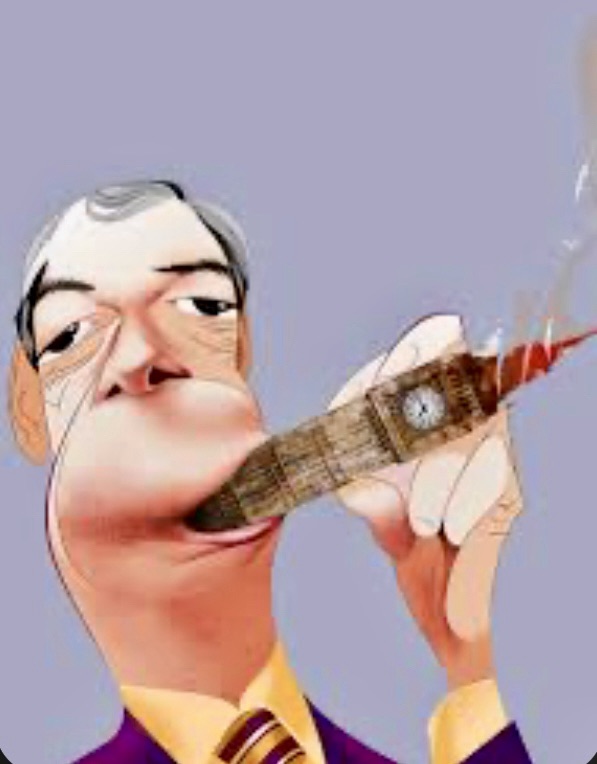
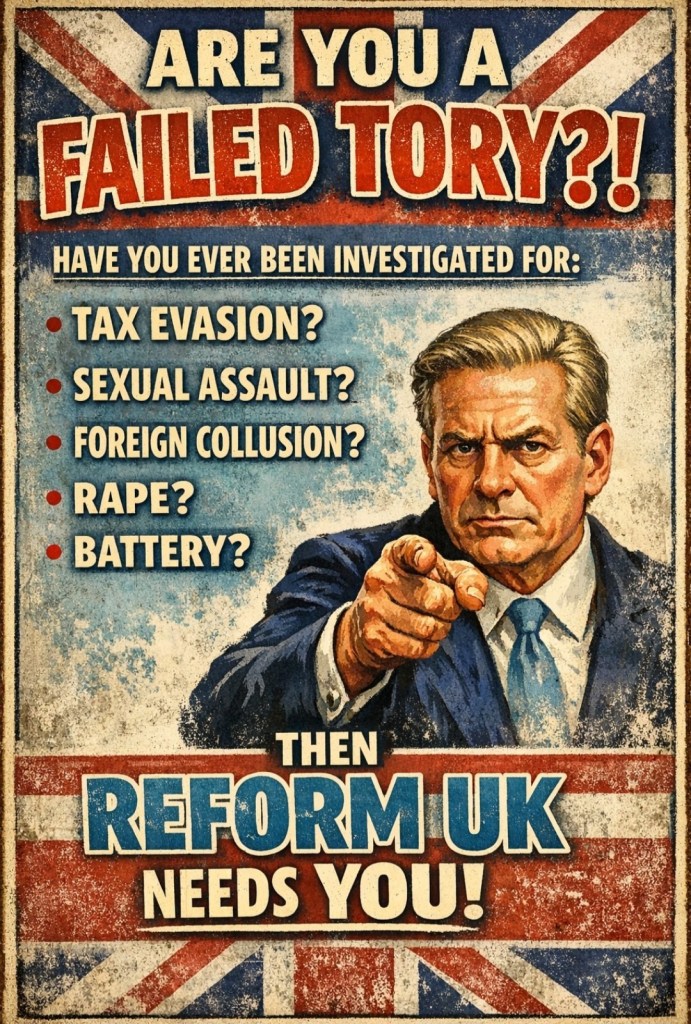
Political history is often shaped not by titans of ideology, but by opportunists waiting in the wings for their moment. Nigel Farage is the starkest British example of this in a generation. To understand the self-inflicted wound of Brexit, one must first look past the bombastic rhetoric of the “Brexit election” and trace the infection back to its source: not a grand ideological movement, but a political cul-de-sac inhabited by a journeyman and a chancer.
For years, Farage’s UK Independence Party (UKIP) was a political laughing stock. It was a curious band of merrymen, led by a washed-up TV showman in Robert Kilroy-Silk, preaching a nostalgic fantasy of a Great Britain as the unchallenged lord of all seas. Its early appeal was fringe, its finances shaky, and its credibility non-existent. Yet, in its fervent, simplistic euroscepticism, it held a latent power—a dormant irritant within the body politic.
The itch, of course, did not begin with Farage. It was Margaret Thatcher who, through her ideological battles with Brussels over sovereignty and finance, first mainstreamed a deep-seated Conservative suspicion of the European project. For her, it was a pragmatic and philosophical struggle. But for a small, embittered faction of her loyalists, bruised by her downfall, that “European itch” became their sole raison d’être. It transformed from a policy disagreement into a sacred score to settle, a weapon to bludgeon her successors—Major, Hague, Howard—with the charge of betrayal.
By the time David Cameron assumed leadership, this untreated grievance had festered. The Tory party’s wound was gangrenous, threatening to split it apart. Cameron’s catastrophic misdiagnosis was to believe he could perform a shock treatment—a referendum—to lance the boil and finally settle the issue. He fatally underestimated the infection’s depth and the skill of the opportunist waiting to exploit it.
Enter Nigel Farage, the man from the cul-de-sac. With no coherent ideological position beyond opposition, and bankrolled by funding streams whose origins (not least from Russian oligarchs viewing UK disruption as a strategic convenience) raised profound questions, Farage mastered a new political language. He turned complex issues of governance and trade into visceral stories of betrayal and identity. He was not a thinker; he was a campaigner of relentless, simplistic energy. Cameron’s gamble handed this game man a national megaphone and a binary question perfectly suited to his talents.
The result was a national tragedy disguised as a democratic triumph. The patient did not recover; Cameron’s gamble killed the stable, prosperous Britain he sought to preserve. And in the chaotic aftermath, the chancer was elevated to the role of kingmaker, his fringe ideas now the blueprint for a fundamental reordering of the state.
The legacy of this journey from joke to juggernaut is now clear. The project Farage championed—devoid of a serious plan, driven by grievance over growth—has steered Britain not towards sunlit uplands of sovereignty, but towards the precarious reality of a diminished global player. The push is not for a brighter future, but a regression: a cold, isolated sweatshop on the edge of Europe, leveraging its own workers’ rights and standards in a desperate bid for trade. It is a forced march back towards a past that never existed, orchestrated by a man who turned a political itch into a national amputation.
Farage’s ultimate success is a chilling lesson in political history. It proves that a figure with no positive vision, armed only with a sharp ear for resentment and a willingness to exploit a weakening establishment, can stumble into a position to alter a nation’s destiny entirely. The cost of that accident is a country now grappling with the profound and painful consequences of taking its most serious decisions on the advice of a clown.
 Centre for Nigeria Progress