

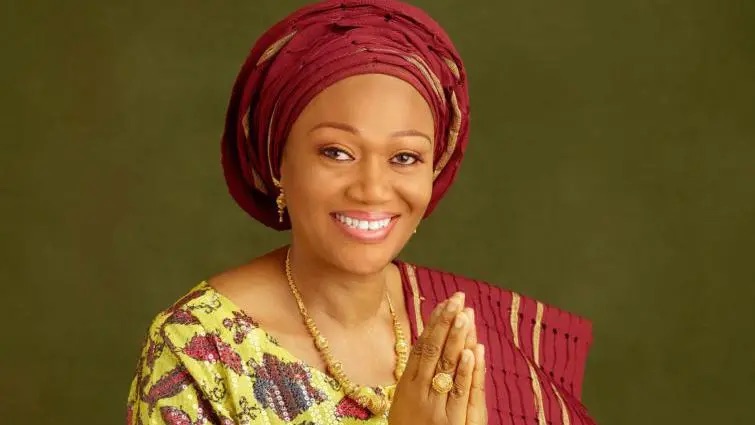

In America, the owner of The Washington Post, Jeff Bezos, reportedly paid Melania Trump a cool $45 million for a documentary on her life. Commentators cleared their throats, adjusted their spectacles, and announced that this was not “art” but pay to play. Still, the word art kept popping up in the discussion, like a stubborn mosquito that refused to be slapped dead.
Fine. Let us now relocate this entire drama to Nigeria. Same script. Same plot. Different accents.
Imagine the owner of The Guardian (Nigeria edition, not the British one with weekend supplements and quinoa recipes) paying ₦16 billion to Remi Tinubu, the wife of the President of Nigeria, for a documentary on her life.
Pause. Breathe. Sip zobo.
Before the trailer even drops, CNN would break into programming. The BBC would cancel Antiques Roadshow. The New York Times would publish a 14-part investigative series titled:
“Democracy in Distress: How a Documentary Sank a Republic.”
There would be no talk of art. No cinematic analysis. No deep reflections on lighting, symbolism, or the emotional arc of “First Ladyhood.” Nobody would ask whether the documentary was shot on 35mm film or iPhone Pro Max. The word auteur would not survive the first paragraph.
Instead, we would hear:
“Crony capitalism” “State capture” “Blatant corruption” “Money laundering with subtitles”
The same transaction that in America is being gently debated as “problematic but artistic” would, in Nigeria, be described as the end of civilisation as we know it.
Western commentators would not say, “Well, maybe it’s a legitimate commercial deal.” No. They would say:
“This is a classic example of African kleptocracy.”
They would not ask, “Is it art?”
They would ask, “Which offshore account received the money?”
And Nigerian defenders would, of course, respond patriotically:
“Is it a crime to tell one’s life story?”
Yes. Apparently, only when you are Nigerian.
Because when Bezos pays Melania $45 million, it is a controversial creative investment.
When a Nigerian media owner pays Remi Tinubu ₦16 billion, it is proof that Africa is not ready for democracy.
Same behaviour. Same elite back-scratching. Different moral vocabulary.
In the West, power whispers and calls itself art.
In Nigeria, power sneezes and the whole world calls it corruption.
So let us be honest. This is not really about documentaries. It is about who is allowed to launder influence with a camera and who is not.
In America, pay to play wears a tuxedo and attends film festivals.
In Nigeria, pay to play wears agbada and becomes a case study in Transparency International reports.
Art, it seems, is universal.
But outrage is strictly regional.
 Centre for Nigeria Progress