


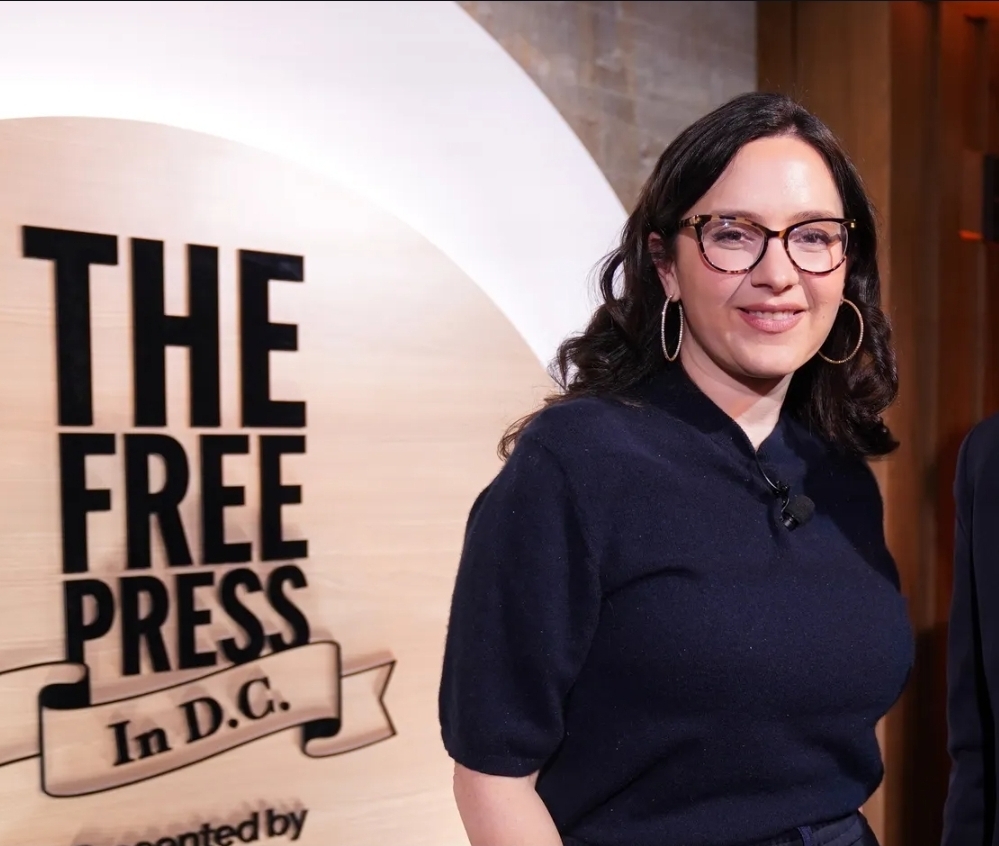
We are told, constantly, that the mark of a serious person in turbulent times is neutrality. To be above the fray. To see “both sides.” To deal only in facts, untainted by the messiness of moral judgment. This framing is seductive; it casts its adherents as the sober adults in a room of shouting children.
But here is the hard, necessary truth of the Trump era, and of any era where democratic norms are under systematic assault: There is no neutral ground in the face of a movement that itself rejects neutrality, facts, and the very rules of the game. To claim neutrality when confronted with such a force is not to stand apart—it is to take a side. And that side is power.
This is not a theoretical debate. It is a lesson etched in the recent, damning report from The Intercept about CBS and its star commentator, Bari Weiss. Weiss, who has meticulously cultivated an image as a fearless, facts-based heterodox thinker, found herself at the center of a journalistic scandal. According to the report, she played a key role in killing a 60 Minutes story that was deeply adverse to Donald Trump’s interests.
The story was not about partisan gossip. It was a groundbreaking investigation into one of the most shocking, and underreported, human rights abuses of the Trump administration: the illegal deportation of migrants—not to their home countries, but to El Salvador. Individuals from Haiti, Honduras, Brazil, and elsewhere were rounded up, stripped of due process, and dumped in a country where they had no ties, no support, and were often targets for violence and extortion.
This was not a policy dispute. This was a brutal, systematic practice that separated families and violated both U.S. and international law. The 60 Minutes team, led by a seasoned producer, had meticulously documented it.
Yet, when Bari Weiss was brought in as a “neutral” voice to review the piece, she penned a memo that eviscerated it. She framed the story as advocacy, not journalism. She questioned the credibility of the lawyers and NGOs exposing the abuse, while giving weight to the opaque, ever-shifting explanations of Trump administration officials. In the name of “balance,” she demanded the kind of impossible, corroborative evidence from victims in chaos that would sink any investigation into state-sponsored wrongdoing.
The result? The story was spiked. A major, prime-time exposé of an inhuman policy vanished. The public was kept in the dark. And the powerful were shielded.
Let us be clear about what this “neutrality” enabled. This was not a “both sides” issue. On one side: documented evidence, victims’ testimony, legal experts decrying clear violations. On the other: a state apparatus carrying out a clandestine and cruel operation, obfuscating and lying to cover its tracks. To insist on a false equivalence here is to become an accomplice to the obfuscation. It is to grant the abuse of power a legitimacy it does not deserve.
This is not a new playbook. It echoes the darkest chapters of the recent past. The phrase “extraordinary rendition” should send a chill down the spine of anyone who remembers the post-9/11 era. The Bush administration, in its “war on terror,” devised this monstrously clinical term for a monstrous practice: kidnapping. They snatched people off the streets of global cities, “rendered” them to third countries like Syria or Egypt, where they were tortured in secret prisons—black sites—far from the reach of the U.S. Constitution or any law.
And how was it sold? How was it defended by “serious,” “neutral” voices in the media and policy circles? As a tough, necessary, if unsavory, tool. The language of neutrality—“We have to understand the pressure they were under,” “Look at the intelligence they were working with”—provided the respectable veneer for barbarism. It laundered moral catastrophe into a complex policy debate. To be neutral between the torturer and the tortured is to side with the torturer.
The killing of the 60 Minutes story on illegal deportations is the same instinct, applied to a different horror. It is the instinct to conflate the rigorous exposure of an atrocity with partisan attack. It is the instinct to place the burden of proof entirely on the accuser while accepting the denials of the state as inherently credible. It is the worship of process and access over truth and justice.
Bari Weiss styles herself a warrior against “orthodoxy.” But in this case, the real orthodoxy she served is the oldest and most pernicious one of all: the orthodoxy of power. The orthodoxy that says institutions must protect themselves, that rocking the boat is a greater sin than covering up abuse, and that the “reasonable” position is always found in the mushy middle, even when one side has ventured into the territory of evil.
There can be no neutral stand against evil. There can only be complicity or opposition. When the choice is between exposing the illegal deportation of human beings to danger and death, or protecting the reputation of a network and maintaining “balance” in the eyes of a partisan administration, neutrality is a myth. It is a decision. And it is a decision to look away.
The lesson for all of us—journalists, commentators, citizens—is this: In an age where core principles are under attack, the call for “neutrality” is often a trap. It is a demand that we sanitize the unsanitizable, that we normalize the aberrant. True courage lies not in performing a sterile centrism, but in following the facts wherever they lead, and in having the moral clarity to call a spade a spade, a kidnapping a kidnapping, and a monstrous deportation policy exactly what it is.
The silence purchased by false neutrality is not impartial. It is deafening. And it always, always benefits those in power.
 Centre for Nigeria Progress