


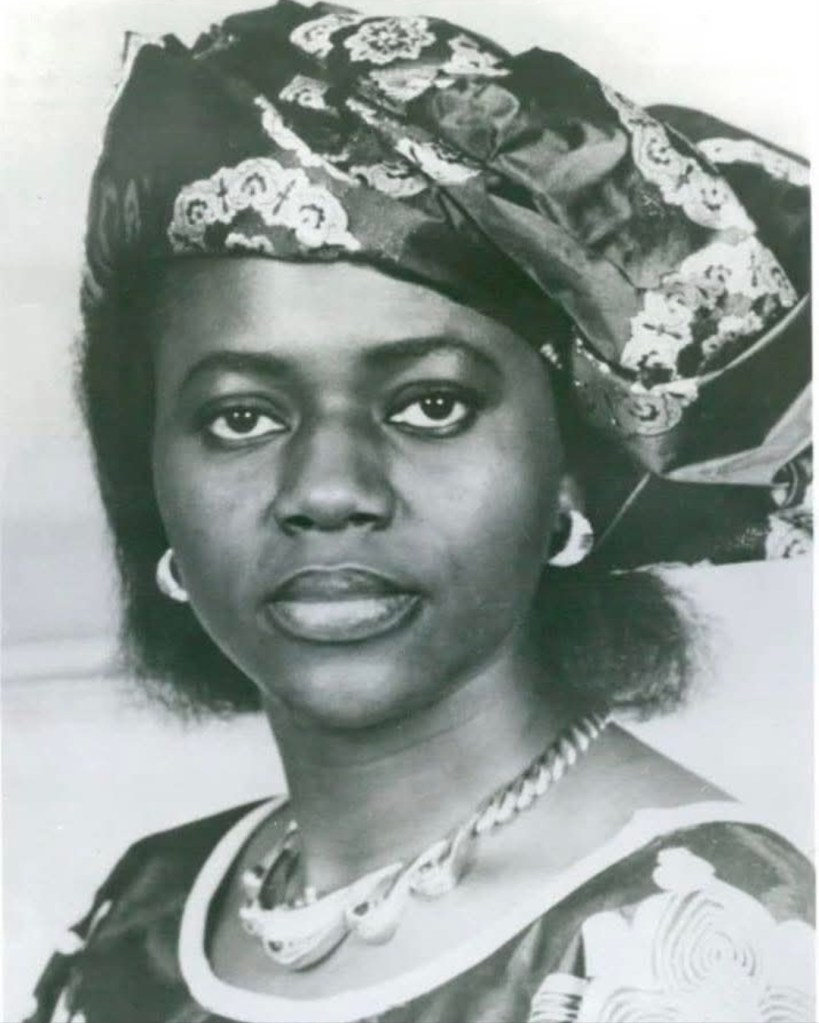
“The international community has long considered Nigeria a narco-state,” declared a 2007 report to the Canadian Parliament, which named then-ruler General Ibrahim Babangida and his wife, Maryam, as central figures in a suspected state-backed cocaine ring.
The name Maryam Babangida, Nigeria’s influential First Lady from 1985 to 1993, is often associated with her public “Better Life for Rural Women” program. However, in the nation’s collective memory, it is also irrevocably linked to a persistent cloud of scandal involving high-level drug trafficking, cover-ups, and the violent suppression of the press.
This article examines the recurring allegations that connected Maryam Babangida to two notorious figures—Jennifer Madike and Gloria Okon—and explores how these unresolved cases from the 1980s and 1990s continue to symbolize a deep-seated crisis of accountability in Nigeria.
The Jennifer Madike Scandal: A Direct Accusation
The case of Jennifer Madike provided the most direct, public link between Maryam Babangida and the “stench” of drug dealing during her husband’s regime.
In early 1991, socialite and businesswoman Jennifer Madike was arrested. She was accused of collecting a bribe from individuals who believed she could use her influence with the National Drug Law Enforcement Agency (NDLEA) chairman, Fidelis Oyakhilome, to secure the release of detained drug dealers.
The scandal exploded when Madike, while in detention, reportedly claimed that First Lady Maryam Babangida had an interest in the case. According to a 1992 Human Rights Watch report, Madike suggested that Oyakhilome could be removed from his post for non-compliance with the First Lady’s wishes.
The government’s response was swift and severe, revealing its acute sensitivity to the allegations:
· Arrests and Detention: Madike and her cousin were detained under the notorious State Security Decree No. 2, which allowed for indefinite detention without trial.
· Press Crackdown: The regime shut down three Lagos-based newspapers owned by John West Publications for 13 days. Their offense was publishing a story under the headline “IBB, Maryam [Babangida] named in Jennifer’s deal”.
· Suppression of Legal Defense: Madike was repeatedly denied access to her lawyer, human rights activist Femi Falana, despite multiple court orders.
This case cemented a public perception that the highest levels of power, including the First Lady’s office, were entangled with and protected drug-related corruption.
Gloria Okon: The Ghost of Aminu Kano International Airport
The mystery of Gloria Okon predates the Madike scandal and forms an even darker and more enduring chapter. Her story begins with an arrest that would spiral into a national conspiracy theory.
· The Arrest and “Death”: In April 1985, Gloria Okon was arrested at Aminu Kano International Airport for alleged drug smuggling. Merely six days later, authorities reported she had died in custody by suicide.
· Public Doubt and Conspiracy: The official story was met with widespread disbelief. A powerful rumor took hold: the woman who died was not Okon, but a substitute. The real Gloria Okon, it was alleged, had been smuggled out of the country with the help of powerful state actors to protect her and her high-profile connections.
· The Journalist’s Pursuit: The late investigative journalist Dele Giwa, editor of Newswatch magazine, began probing the Okon case. In October 1986, before he could publish his findings, Giwa was assassinated by a parcel bomb mailed to his home—the first such attack on a journalist in Nigeria.
· Link to the First Lady: During the 1999 Oputa Panel hearings (a truth commission), petitioners alleged that Dele Giwa had been investigating a connection between Gloria Okon and Maryam Babangida. It is crucial to note that the panel made no judicial finding on this, and a Newswatch co-founder has since denied Giwa was working on such a story.
Despite denials, the Okon and Giwa cases became intertwined in the public mind as the ultimate symbol of how far the state would go to bury the truth about drugs and power.
A Regime Defined by Secrecy and Repression
The Babangida regime’s handling of these drug allegations was not an isolated tactic. It was part of a systematic governance model built on opacity and fear.
To understand the environment, here is a summary of the regime’s key methods for controlling information and dissent:
· Legal Instrument: State Security Decree No. 2 (1984)
· Primary Use: Indefinite detention without trial.
· Impact on Drug Cases: Used to detain Jennifer Madike and silence her allegations.
· Legal Instrument: Military Decrees
· Primary Use: Ruling by decree, placing actions above judicial review.
· Impact on Drug Cases: Created a legal shield for state actions, undermining the courts.
· Legal Instrument: Press Proscription & Harassment
· Primary Use: Shutting down media houses for “embarrassing” the government.
· Impact on Drug Cases: Directly used to suppress reporting on the Madike scandal.
· Legal Instrument: Violence and Assassination
· Primary Use: Eliminating vocal critics.
· Impact on Drug Cases: The murder of Dele Giwa created a chilling effect on investigative journalism.
As noted by Alain Labrousse in a report to the Canadian Parliament, the regime’s creation of the NDLEA was seen by some as a facade, an attempt to “feign combating drug trading” while high-level activities continued.
Echoes in the Present: Kano Airport and the Unending War
The legacy of this era is not confined to history books. The “stench” of drug trafficking remains a severe national crisis, with Aminu Kano International Airport (MAKIA) still a major hub for interdictions.
The difference today is the agency’s leadership under Brig. Gen. Mohamed Buba Marwa, who is widely credited with a more aggressive and transparent approach. Yet, the scale of arrests underscores how deeply entrenched the drug trade has become since the era when state complicity was widely suspected.
A Culture of Impunity
The unresolved nature of the Okon and Madike scandals, and the unsolved murder of Dele Giwa, fostered a lasting culture of impunity. When powerful figures are perceived to be above the law, it erodes public trust and emboldens criminal networks. The current NDLEA battles not just traffickers, but a deep-rooted system that was, for a time, allegedly compromised from the top.
In the end, the recurring “stench” is not just about narcotics. It is the smell of unanswered questions, of justice denied, and of truths buried by power. The names Maryam Babangida, Jennifer Madike, and Gloria Okon remain connected as coordinates on a map of Nigeria’s long struggle for accountability—a map where many roads, still today, lead back to the shadows of the past.
The fight against drugs in Nigeria is as much about confronting current cartels as it is about finally addressing the ghostly, unresolved scandals that continue to haunt the nation’s conscience.
 Centre for Nigeria Progress