


Former DIP Fidelis Oyakhilome’s career represents a compelling Nigerian story of professional ascent, public service, and dramatic downfall. His journey from police cadet to state governor and anti-drug czar, followed by a controversial dismissal, illustrates the complex intersection of law enforcement, military governance, and personal scandal in Nigeria’s political landscape.
Key Career Milestones & Timeline
Early Life and Education
· Born: April 13, 1939, in Ewu, Ishan, Edo State
· Education: Studied law at the University of Ife (1965-1968) and Nigerian Law School, Lagos (1968-1969)
· Joined Police: Entered the Nigerian Police Force as a Cadet Inspector in 1959
Police Career Progression
· 1972-1974: Chief Superintendent of Police, Criminal Investigation Division, Rivers State Police Command
· 1975-1977: Served in Grenada under a technical assistance agreement
· 1978: Promoted to acting Commissioner of Police
· 1979: Substantive Commissioner of Police; served as Commissioner of Police for Imo State (1979-1983)
· 1986: Deputy Inspector-General of Police, Directorate of Training, Force Headquarters
Governorship and Anti-Drug Leadership
· 1984-1986: Military Governor of Rivers State
· 1988-1991: Chairman/Chief Executive Officer, National Drug Law Enforcement Agency (NDLEA)
Tenure as Rivers State Military Governor
Oyakhilome assumed office as Military Governor of Rivers State in January 1984 following the military overthrow of Nigeria’s Second Republic. His administration focused on agricultural development and education:
Educational Legacy
· Established the Rivers State School of Basic Studies on April 19, 1984 (later Rivers State College of Arts and Science)
· This institution provided crucial educational infrastructure in Port Harcourt
Agricultural Initiatives
· Successfully increased agricultural output across Rivers State
· Launched the “School to Land” program which attracted significant media attention but was eventually abandoned after his tenure
· Promoted his Green River project, an agro-based rural development initiative, using helicopters to transport journalists to showcase the scheme in inaccessible Niger Delta areas
Governance Style
Oyakhilome was redeployed on August 26,1986, and replaced by Colonel Anthony Ukpo. His fascination with helicopters for governance in the difficult Niger Delta terrain highlighted both practical needs and a tendency for spectacle.
Chairmanship of NDLEA and Controversial Downfall
In 1988, Oyakhilome was appointed Chairman of the National Drug Law Enforcement Agency (NDLEA), taking charge of Nigeria’s fight against narcotics.
The Jennifer Madike Scandal
Oyakhilome’s tenure ended abruptly in 1991 following allegations involvingJennifer Madike, a Lagos businesswoman and socialite:
· Madike was arrested for collecting US$80,000 from three men
· She claimed the money was intended for Oyakhilome to secure the release of two suspected drug dealers
· The case involved suspected heroin smugglers, with the United States unsuccessfully applying for extradition of one dealer
· This scandal resulted in Oyakhilome’s dismissal from the Nigeria Police Force
Pattern of “Supercop” Downfalls
Oyakhilome’s case fits a troubling pattern in Nigerian law enforcement where celebrated officers face dramatic downfalls:
· Tafa Balogun (former IGP): Convicted and imprisoned for corruption in 2005
· Ibrahim Magu (former EFCC Chairman): Suspended following corruption allegations in 2020
· Abba Kyari (DCP): Suspended in 2021 over FBI indictment
Later Career and Activities
After leaving the NDLEA, Oyakhilome continued various professional engagements:
Legal Practice and Advocacy
· Established his own private law firm
· Represented retired police officers at the National Political Reform Conference in 2005
· Served as vice-chairman of the Association of Retired Police Officers of Nigeria (ARPON) in 2009
Business Ventures and Consultancy
· Became an investor in EBS Nigeria, a firm that secured a major contract for anti-retroviral drug supply from the Federal Ministry of Health in 2006
· Worked as a consultant to the National Universities Commission (NUC), identifying 33 illegally operating “universities” in Nigeria in 2008
Legacy and Contemporary Relevance
Oyakhilome’s career offers several important insights into Nigerian governance and law enforcement:
Structural Challenges in Nigerian Policing
Experts analyzing similar cases of officer downfalls point tosystemic issues within Nigerian institutions:
· Dr. Aminu Umar, a sociologist, notes that advancement often depends on connections to powerful interests rather than merit
· Security expert Bem Japhet Audu observes that corruption has become systemic, affecting even those appointed to fight it
NDLEA Leadership Context
Oyakhilome was the first of ten individuals to lead the NDLEA since its establishment in 1989. His controversial tenure contrasts sharply with later leadership, particularly that of General Buba Marwa (appointed 2021), who has been credited with significant reforms and achievements in combating drug trafficking.
Educational Contributions
The Rivers State College of Arts and Science, which Oyakhilome established, remains an enduring part of his legacy in educational development.
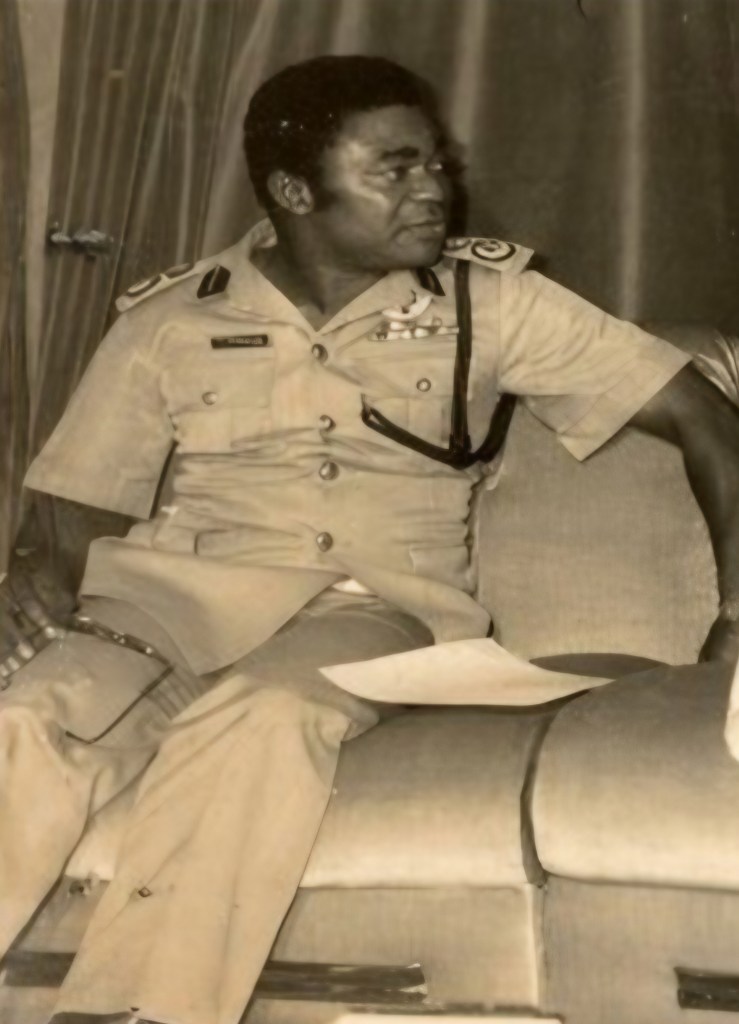
Fidelis Oyakhilome’s career trajectory—from police cadet to state governor and anti-drug agency head, followed by dramatic dismissal—encapsulates both the possibilities and perils of public service in Nigeria. His story reflects broader institutional challenges while highlighting specific contributions to agriculture and education in Rivers State. As Nigeria continues to grapple with issues of governance and law enforcement integrity, Oyakhilome’s rise and fall offer instructive lessons about power, accountability, and the complex realities of public service in Africa’s most populous nation.
 Centre for Nigeria Progress