

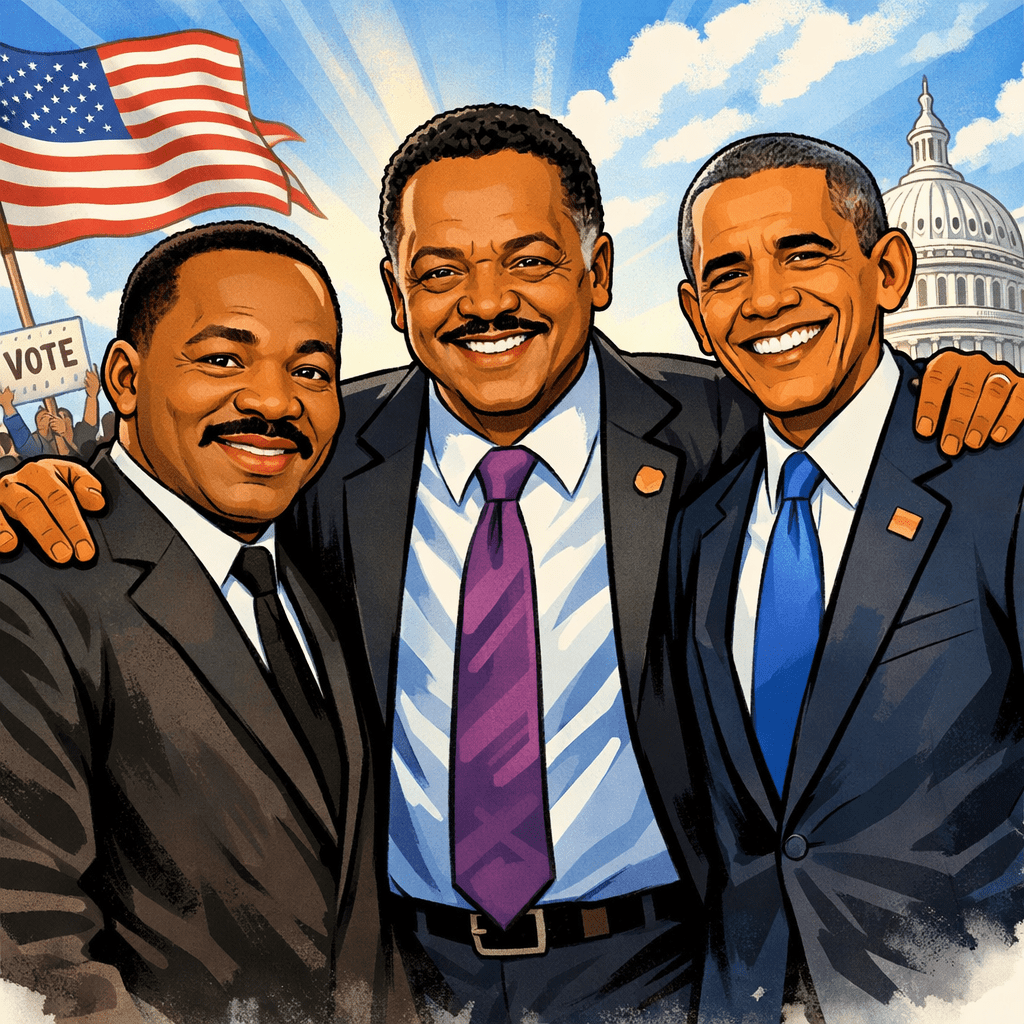
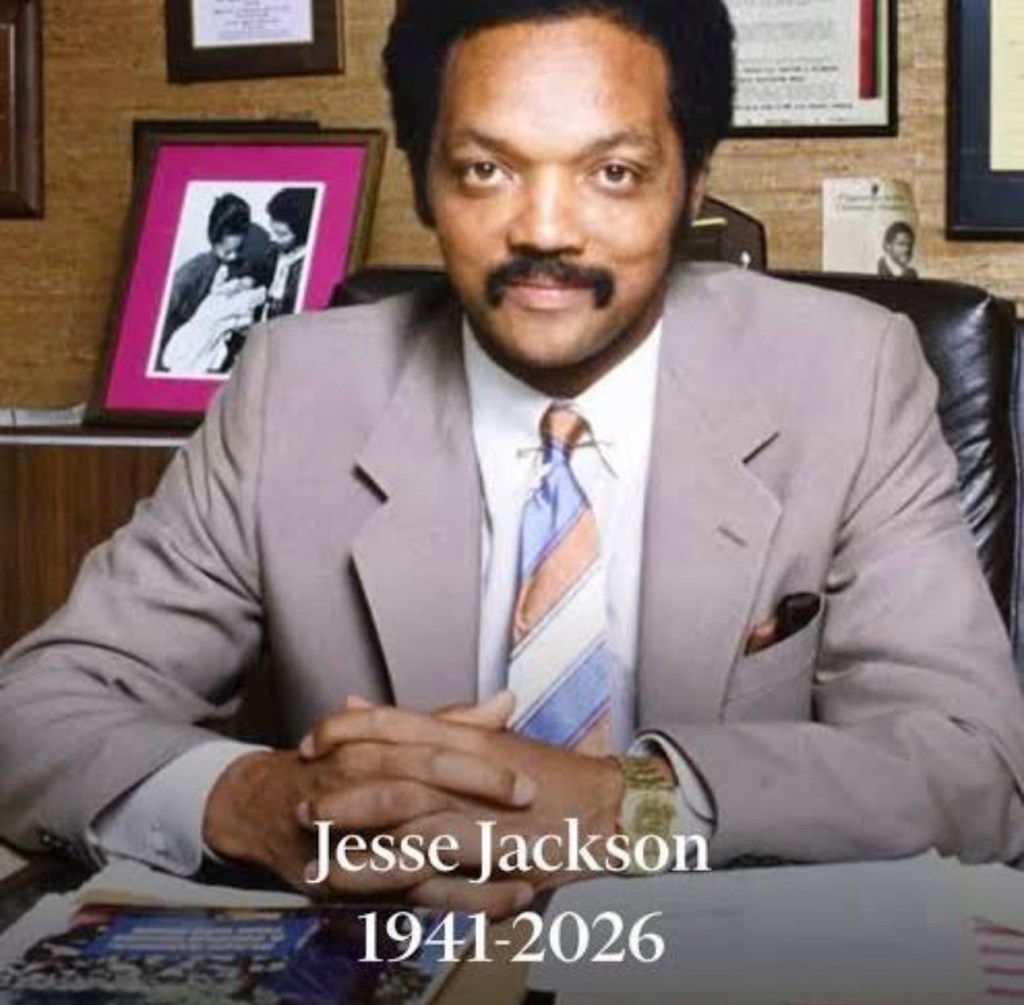
What links Martin Luther King Jr., Jesse Jackson and Barack Obama?
Not inheritance. Not patronage. Not the comfortable cushion of establishment approval.
It was the voice.
Not merely sound waves projected from disciplined diaphragms, but rhetoric as architecture — words arranged with moral symmetry, cadence deployed like a drumline, pauses used as punctuation marks in history.
They did not begin with money. They did not begin with institutional power. They began with oratory — the ancient craft of persuading free people.
The Voice as Instrument of Liberation
Dr. King did not shout. He summoned. His voice carried both sermon and statute. Rooted in the Black church tradition and informed by constitutional idealism, he could speak to a crowd of thousands and still make the individual feel personally addressed. That is the highest form of rhetoric: when the collective hears, but the individual feels.
Jesse Jackson followed — sharper edges, quicker tempo, political rhythm layered with preacherly cadence. If King was symphonic, Jackson was jazz. Improvisational, urgent, unapologetic. He ran presidential campaigns not merely to win delegates, but to normalise ambition for people who had been told to shrink their horizons.
King walked. Jackson ran.
Then came Obama — cool, measured, forensic. Less pulpit, more podium. Less crescendo, more control. But the same spine. The same proposition: that dignity is not granted by majority approval but asserted by self-recognition.
Obama did not simply speak to America. He made America hear itself.
Oratory as Social Currency
We underestimate the economic power of speech. Oratory is currency — not in pounds or dollars — but in conviction. It buys belief. It purchases participation. It funds movements before movements have treasurers.
The arc from King to Jackson to Obama illustrates something more profound than political succession. It demonstrates rhetorical continuity. A baton passed, not of office, but of voice.
And here is the critical point: each man understood that character precedes cadence. The voice persuades only when the vessel carries credibility. You can master intonation, but without moral ballast the sound collapses.
Today, the determinant of advancement for people of hue is not merely access to institutions, but internal conviction. They said to themselves: I am somebody. They believed before the polls did.
Setbacks Are Structural, Not Final
No human endeavour travels in a straight line. Progress is not a motorway; it is a winding path with potholes. The word “currency” itself implies circulation. You rise, you fall, you rise again. That is not failure. That is motion.
King was assassinated. Jackson endured political defeat. Obama faced obstruction of historic proportions. Yet none of those setbacks invalidated the upward trajectory. They were part of the cost of ascent.
Movements mature through resistance.
The Skyward Movement
We often speak of grassroots mobilisation. But the deeper truth is that movements are not merely from the ground — they are toward the sky. They elevate aspiration. They alter psychological ceilings.
King lifted imagination.
Jackson stretched ambition.
Obama normalised attainment.
And while King and Jackson belong to history’s guarded gallery, Obama remains a living chapter — a reminder that rhetoric can still be disciplined, dignified, and deliberate.
Between now and the next chapter, others will be born. Some are already rehearsing their lines. The craft of oratory has not died; it has migrated. It waits for conviction to inhabit it.
Because in the end, power does not begin with office.
It begins with a voice that convinces a people they can stand taller than the world expects.
And once a people believe that, the sky is no longer the limit — it is merely the direction.
 Centre for Nigeria Progress