


Introduction
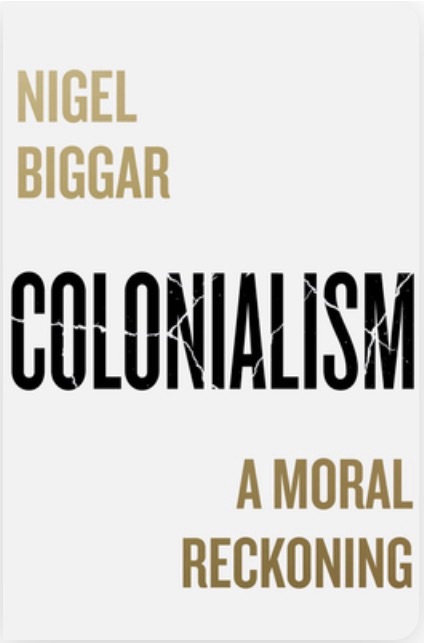
Nigel Biggar’s Colonialism: A Moral Reckoning (2023) attempts to reframe the British Empire as a morally complex, often benevolent, and unfairly maligned historical force. From a Nigerian perspective—a nation whose trajectory was profoundly shaped by British colonialism—this “moral reckoning” reads not as a sober historical reassessment but as an apologia that minimizes profound suffering and erases the voices of the colonized. A Nigerian rejoinder must therefore assert that any moral evaluation of colonialism must center the experiences, losses, and enduring traumas of those who were colonized.
- The Colonial Project Was Inherently Violent and Dehumanizing
Biggar’s argument that colonialism was driven partly by “moral motives” ignores the foundational violence of the colonial encounter in Nigeria. The British conquest was not a benign mission but a violent subjugation. The 1897 sacking of the Benin Kingdom, where British forces looted thousands of priceless bronzes and artifacts, massacred citizens, and exiled the Oba, was not an aberration—it was colonialism in practice. The imposition of rule through maxim guns, the destruction of indigenous political systems, and the suppression of resistance (such as the Women’s War of 1929) reflect a system built on coercion, not consent.
To speak of colonialism’s “moral balance sheet” while downplaying this violence is to commit a second epistemological violence: the sanitization of historical truth.
- The Economic Argument: Extraction, Not Development
Biggar suggests colonialism brought economic development. From Nigeria’s vantage point, colonialism structured the economy for extraction, not holistic development. Nigeria was turned into a monoculture exporter of raw materials (palm oil, cocoa, groundnuts, later crude oil) while being forced to import manufactured goods. Infrastructure—railways, ports—was built to serve export corridors, not to integrate domestic economies or foster industrialisation. The infamous “colonial drain” of resources and profits to Britain stunted Nigeria’s economic potential and entrenched dependency—a condition that haunts the postcolonial economy to this day.
Any “benefit” in infrastructure or administrative systems was incidental to the project of extraction, and came at the cost of dislocating indigenous economic systems and self-sufficiency.
- Cultural and Psychological Destruction
Colonialism was not merely a political or economic system; it was a cultural and psychological assault. The British policy of indirect rule hardened ethnic identities and divisions, creating the fault lines that would later fuel political strife and civil conflict. Missionary education, while providing Western literacy, often disparaged indigenous religions, languages, and worldviews as “primitive.” This cultural denigration created a lasting crisis of identity—what the Nigerian writer Chinua Achebe called “the erosion of self-esteem” among colonized peoples.
Biggar’s framing lacks engagement with this psychological legacy: the internalized racism, the epistemicide of indigenous knowledge systems, and the enduring inferiority complex that postcolonial societies grapple with.
- The Moral Universe of Colonialism Was Hypocritical
Biggar appeals to the “moral standards of the time” to judge colonial actors. But this ignores the fact that many colonial practices were condemned even in their own time by British abolitionists, missionaries, and critics. More importantly, it silences the consistent, vocal opposition of colonized peoples themselves. From the resistance of King Jaja of Opobo to the writings of Nigerian nationalists like Nnamdi Azikiwe, there was always a clear moral critique from the ground: colonialism was unjust, exploitative, and illegitimate.
To claim that colonialism could be morally justified by “civilizing” ideals is to ignore that these ideals were never applied universally—the humanity of Africans was systematically denied in practice.
- The Afterlives of Colonialism: Nigeria’s Postcolonial Struggles
A true moral reckoning must account for the afterlife of colonialism. Nigeria’s post-independence challenges—political instability, ethnic polarization, corrupt governance, and economic dependency—are not merely failures of Nigerian leadership; they are also the legacy of colonial institutions designed for control, not democratic participation. Artificial borders that ignored ethnic and cultural realities, a colonial state built on extraction rather than service, and an education system designed to produce clerks, not critical thinkers—all these shaped the postcolonial condition.
Biggar’s attempt to separate colonialism from its consequences is historically untenable. The moral debt of colonialism includes its long shadow.
Conclusion: Toward a Truly Moral Reckoning
A Nigerian rejoinder does not deny the complexity of history, nor claim that pre-colonial societies were utopias. However, it insists that a moral reckoning with colonialism must begin with the voices and experiences of the colonized. It must center the violence, the theft, the cultural degradation, and the enduring structural inequities. It must acknowledge that no amount of railways or schools can morally offset the fundamental violation of sovereignty and dignity.
Ultimately, Biggar’s project—despite its scholarly guise—feels like an effort to rehabilitate the British Empire’s image at a time of global reassessment of colonial histories. For Nigerians, such a revisionism is not just intellectually flawed; it is an insult to the memory of those who suffered under colonial rule and a barrier to genuine historical justice and reconciliation.
In the words of Chinua Achebe: “Until the lions have their own historians, the history of the hunt will always glorify the hunter.”
Nigel Biggar’s book is a historian’s account from the perspective of the hunter. Nigeria—and Africa—demand that the lions’ roar finally be heard.
 Centre for Nigeria Progress