

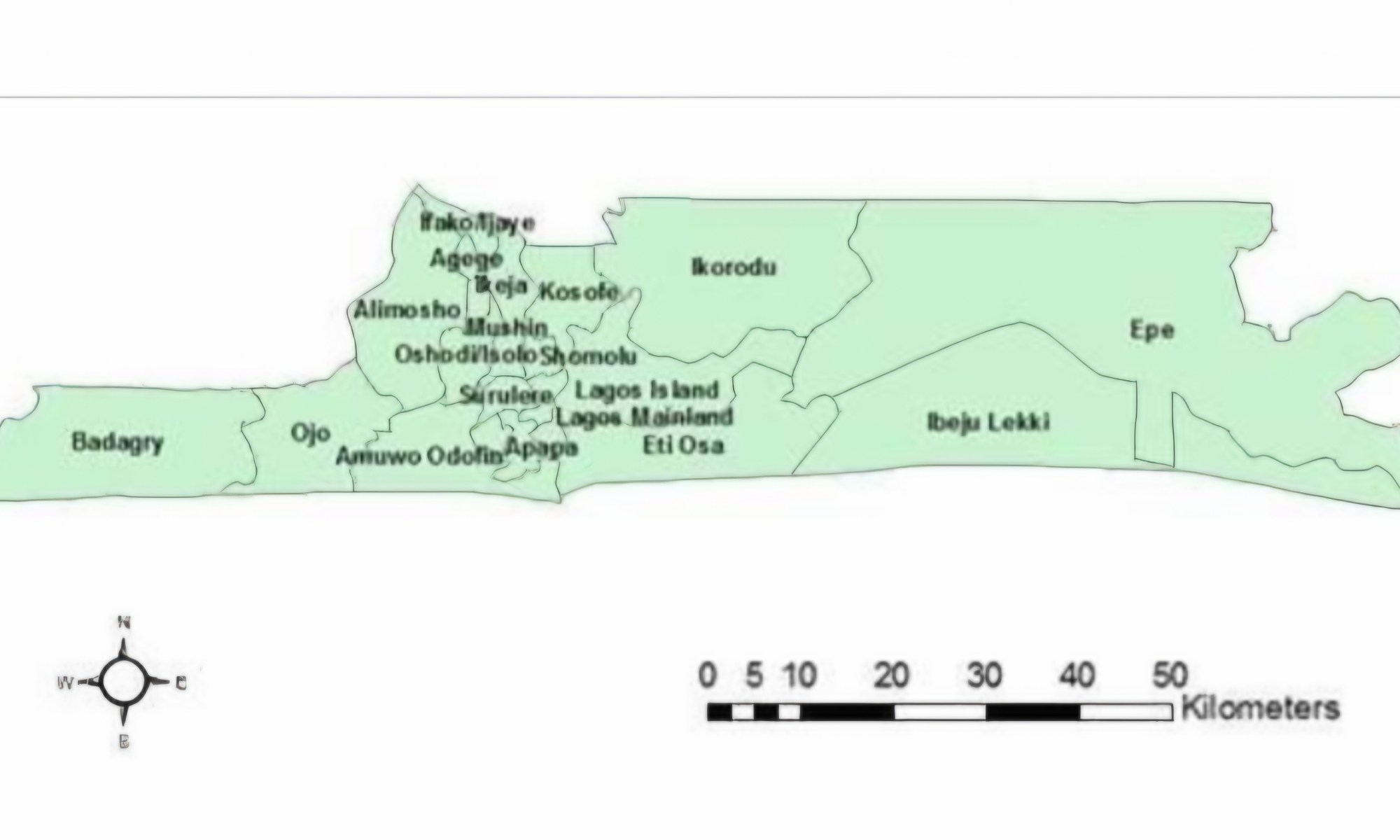
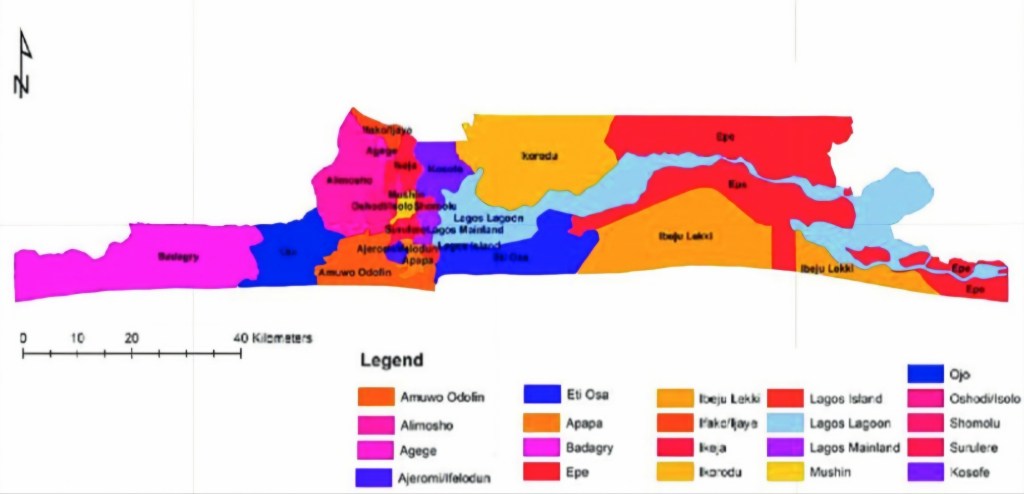
There are moments in constitutional law when one is forced to ask whether the court was interpreting the Constitution or auditioning for the Ballet Rambert. The Supreme Court’s 2004 decision in Attorney-General of Lagos State v. Attorney-General of the Federation is one such moment — a judgment that pirouettes elegantly around logic while insisting, solemnly, that this is what coherence looks like.
At the centre of the case was a simple constitutional question: when does a local government area come into legal existence? What the Court produced was a masterpiece of ambivalence — a local government that exists, does not exist, and exists again, depending on which paragraph you are reading.
The Constitutional Text (The Bit Everyone Pretended Was Complicated)
Let us start with the Constitution itself, that inconvenient document.
Section 7(1) guarantees “a system of local government by democratically elected local government councils.”
Section 8(3) empowers a State House of Assembly to initiate the creation of new local government areas, subject to strict procedural steps.
Section 8(5) then delivers the punchline:
> “An Act of the National Assembly shall make consequential provisions with respect to the names and headquarters of local government areas…”
And for those still unsure whether this matters, Section 3(6) and Part I of the First Schedule list, exhaustively, the local government areas that constitutionally exist.
This is not a relay race. It is a single constitutional transaction. Until the National Assembly acts, the process is unfinished. No bells ring. No baby cries.
The Supreme Court’s Magic Trick
The Supreme Court, however, decided to perform a miracle.
On the one hand, it held that Lagos State had acted lawfully:
> “The State Government has the power to initiate the creation of local government areas.”
So far, so good.
Then came the pivot — the jurisprudential equivalent of “but wait”:
> “The local government areas so created remain inchoate until the National Assembly makes the consequential amendment.”
“Inchoate” is doing heroic work here. It means begun but not completed. Which raises an obvious question: what exactly has been created?
A chair without legs?
A car without an engine?
A local government without constitutional existence, funding, or authority?
Pregnant, But Please Don’t Congratulate Her Yet
The Court insisted that the state law was valid, even though the LGAs it purported to create:
Are not listed in the Constitution;
Are not entitled to funds under Section 162(5);
Cannot lawfully receive allocations from the Federation Account;
Cannot be recognised as local governments for constitutional purposes.
This is constitutional obstetrics gone wrong.
Either the process of creation is complete, or it is not. If it is not complete, nothing has been created. One cannot be “slightly pregnant,” “provisionally married,” or “constitutionally half-born.”
A law that produces no legal subject, no enforceable rights, no recognised institution, and no fiscal entitlement is not creating anything. It is filing paperwork.
Who Exactly Is Governing These Places?
The judgment creates an even more entertaining problem: governance without government.
If these so-called LGAs:
Are not constitutionally recognised;
Are not entitled to statutory allocations;
Are not contemplated by the First Schedule;
Then one must ask — who are these people?
Who is the “chairman”? Chairman of what, exactly?
Who passed their budgets? On what authority?
What laws are they enforcing? Whose taxes are they collecting?
Which oath did they swear — the Oath of Office or the Oath of Imagination?
A local government without constitutional recognition is not a tier of government. It is a well-organized social club.
Federal Lawlessness Met Judicial Yoga
To be fair, the Court was right on one crucial point. It held — correctly — that the Federal Government had no power to withhold Lagos State’s statutory allocations.
The Court stated unequivocally that:
> “The President has no power to suspend or withhold funds standing to the credit of Lagos State under section 162.”
Correct. Applause deserved.
But instead of resolving the constitutional question cleanly, the Court attempted a compromise that satisfied diplomacy and offended logic. The result was a judgment that told everyone they were wrong — but also somehow right.
Constitutional Law Is Not Abstract Sculpture
Constitutional interpretation is not modern art. It is not meant to be admired from different angles with different meanings. It allocates power, money, offices, and authority.
By inventing “valid but inoperative” local governments, the Supreme Court created:
Legal uncertainty;
Administrative absurdity;
And a precedent that says completion does not matter, but recognition does — until it doesn’t.
The Court could have said, simply:
> “Until the National Assembly acts under section 8(5), no local government exists in law.”
That would have been boring. It would also have been correct.
Conclusion: A Judgment That Tried Too Hard to Be Clever
This judgment wanted to be balanced. It wanted to be statesmanlike. It wanted to punish federal excess without empowering state audacity.
What it delivered instead was constitutional limbo — a place where laws are valid, governments exist, but nothing works and no one gets paid.
Local governments that cannot receive funds, exercise authority, or claim constitutional status are not governments at all. They are ghost councils, haunting the Constitution until the National Assembly performs the necessary exorcism.
And no amount of judicial pirouetting can change one immutable truth:
In constitutional law, as in life, if the process is not complete — the thing does not exist.
 Centre for Nigeria Progress