

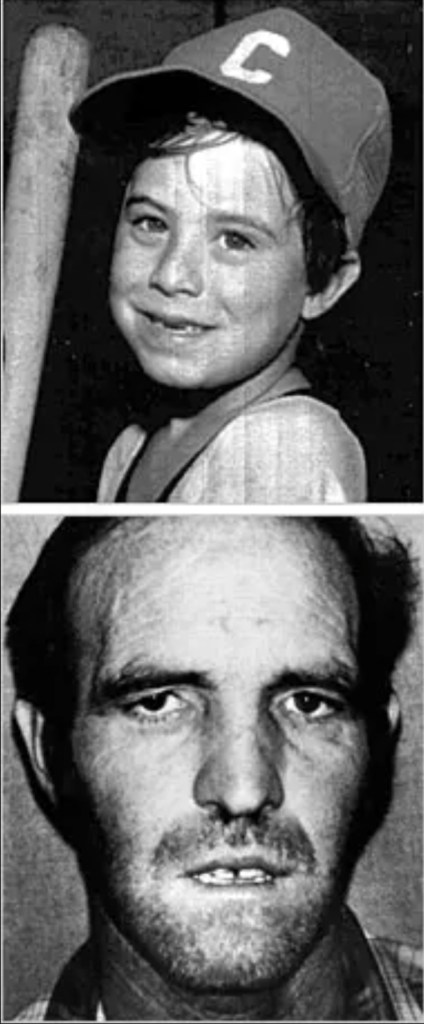
In 1981, six-year-old Adam Walsh disappeared from a Sears department store in Hollywood, Florida. His mother, Revé, had stepped away for a few minutes — an act that, until then, was not considered a high-risk constitutional gamble.
When she returned, Adam was gone.
Two weeks later, his remains were found over 100 miles away. America stood still. Not merely because a child had been murdered, but because the nation discovered — to its horror — that there was no system.
No central missing-children database.
No coordinated police response.
No national protocol.
Adam Walsh did not just die at the hands of evil; he died in an administrative vacuum.
And then something extraordinary happened.
Instead of issuing condolences and moving on, the American system took the insult personally. Adam’s parents — Revé and John Walsh — turned grief into reform. Their advocacy led to the creation of the National Center for Missing & Exploited Children, stronger inter-agency coordination, and eventually America’s Most Wanted, which helped law enforcement capture over 1,000 fugitives.
Adam Walsh became a precedent — the sort judges pray never comes before them again.
Painful. Tragic. But systemically effective.
Now, with the court’s indulgence, let us transfer venue to Lagos State.
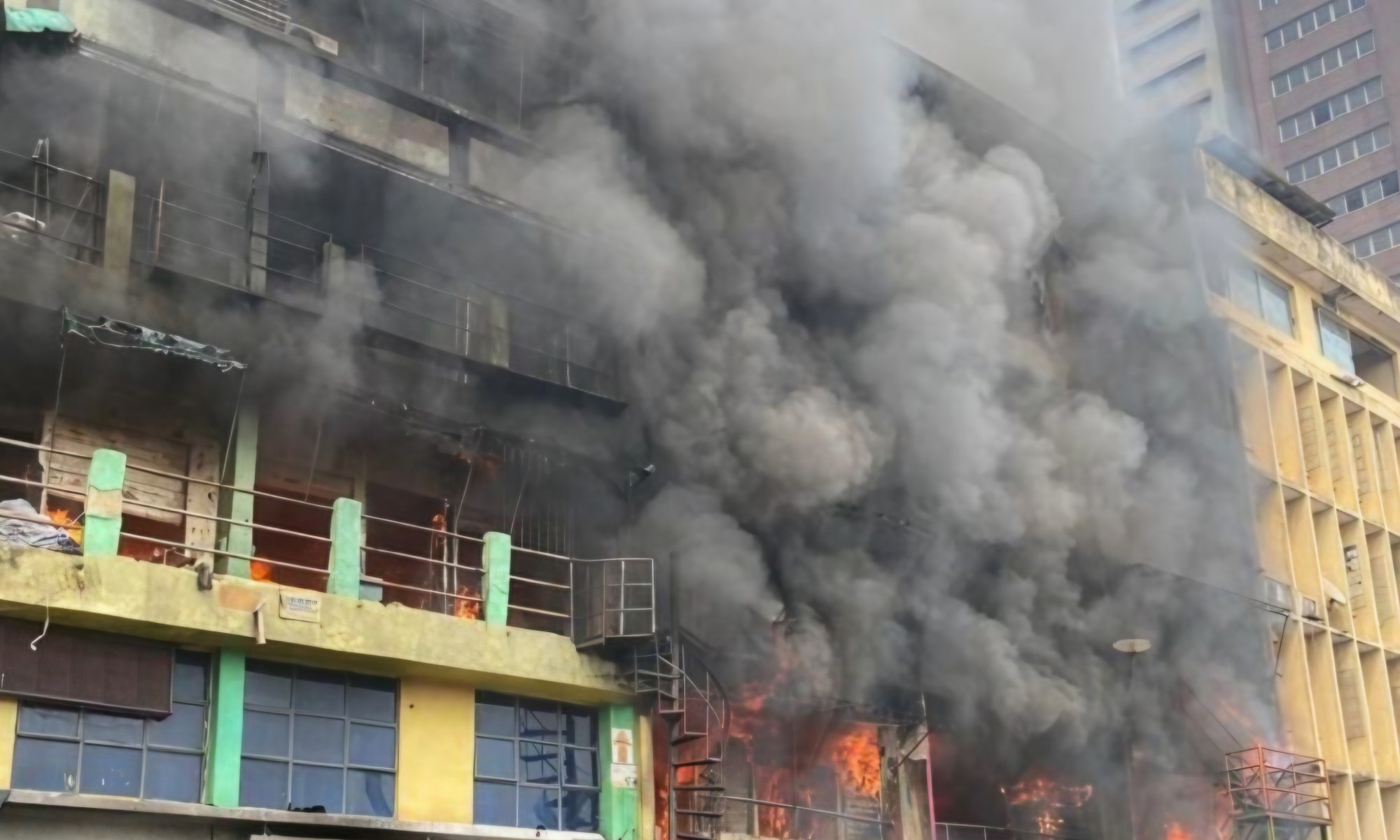
Every year — with the predictability of fuel scarcity before public holidays — Balogun Market burns. Sometimes it is electrical faults. Sometimes generator fumes. Sometimes “mysterious causes,” which in Nigerian administrative law translates to “we will not investigate beyond press statements.”
Billions of naira are lost. Traders are ruined. Lives are sometimes taken. And yet, year after year, the fire returns like a recurring decimal.
Let us call the roll of statutory actors.
- Lagos State Fire and Rescue Service arrives gallantly — often without water pressure.
- Lagos State Emergency Management Agency (LASEMA) coordinates emergency response with admirable press releases.
- Lagos State Building Control Agency (LASBCA) promises to look into structural compliance — after the ashes cool.
- Lagos State Safety Commission issues safety advisories that markets never read and officials never enforce.
- Local Government authorities collect market levies faithfully, because revenue, unlike safety, is justiciable.
- The Ministry of Physical Planning and Urban Development nods gravely and commissions another report.
Hovering above them all is the Lagos State Government, headed by the Governor — currently Babajide Sanwo-Olu — who expresses sympathy, visits the scene, and assures victims that “the government will get to the root of the matter.”
The root, however, remains remarkably intact year after year.
No permanent fire suppression systems are installed.
No mandatory rewiring or electrical audits are enforced.
No market shutdowns for safety compliance.
No official is sanctioned.
No trader is protected from repetition.
And yet, Lagos prides itself as a “smart city.”
Legally speaking, Lagos is not short of obligations.
Section 14(2)(b) of the 1999 Constitution declares that the “security and welfare of the people shall be the primary purpose of government.” Sadly, Chapter II also politely informs citizens that they may admire this provision from afar, as it is non-justiciable — a constitutional motivational quote, not an enforceable promise.
State fire regulations, urban planning laws, market safety rules, and environmental standards all exist. They are enforced vigorously when sealing small shops or demolishing roadside kiosks. Markets that generate massive revenue, however, enjoy what lawyers call regulatory discretion and ordinary citizens call “leave am alone.”
In the United States, one dead child produced a national overhaul.
In Lagos, decades of fires have produced… experience.
Experience without reform.
Experience without consequences.
Experience without systems.
This is not a capacity problem. Lagos has engineers, planners, safety experts, consultants, and retired officials who suddenly rediscover public service after disasters. What Lagos lacks is institutional embarrassment — that moment when failure becomes unacceptable.
In America, tragedy prompts reform.
In Lagos, tragedy prompts normalisation.
The first Balogun fire was a disaster.
The fifth was unfortunate.
The tenth became tradition.
Markets are rebuilt faster than systems. Committees are inaugurated faster than sprinklers. Press statements travel faster than fire trucks with water.
Adam Walsh should have grown up. He didn’t. But his death forced a society to mature legislatively and administratively.
Balogun Market burns every year. And the real tragedy is not the fire.
It is that no Lagos institution treats repetition as evidence of failure.
Court adjourned — till the next inferno, same parties, same submissions, same outcome.
 Centre for Nigeria Progress