


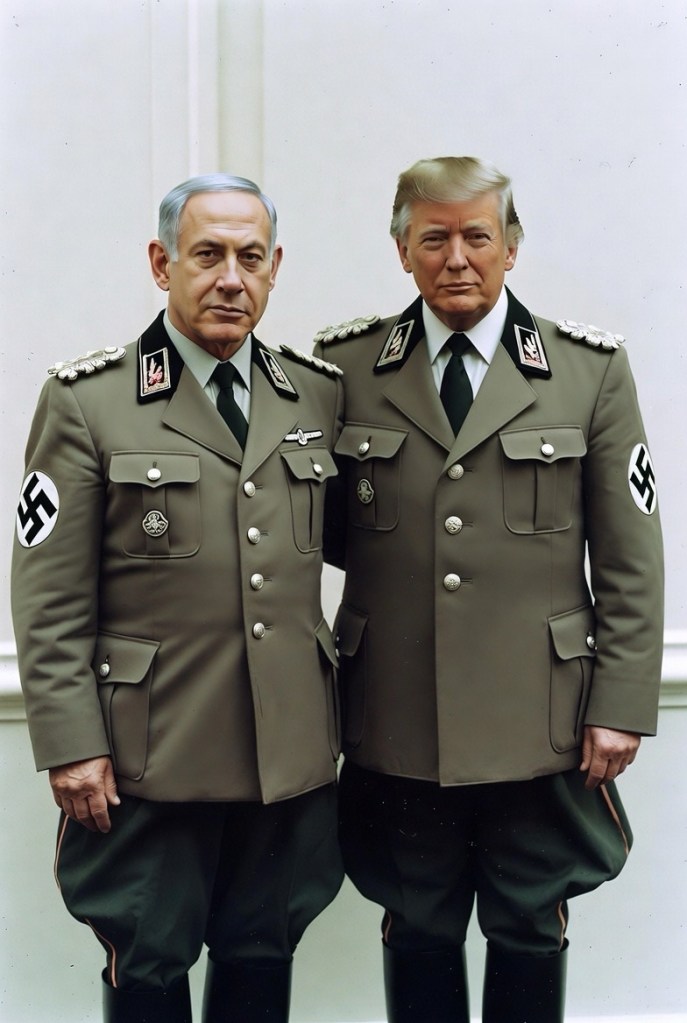
There are moments in a nation’s political life when power reveals character. And there are moments when it reveals capture.
Under Keir Starmer, Britain has stumbled into one of those revealing moments. Reports that British bases have been made available to support American and Israeli military action against Iran raise questions that go far beyond operational logistics. They go to sovereignty, legality, and moral coherence.
If Britain has facilitated offensive operations in what many international law scholars consider an unlawful escalation, then this is not simply “alliance management.” It is complicity.
And complicity has a political cost.
The Axis of Alignment: Washington, Tel Aviv, London
The United States under Donald Trump has pursued an aggressively unilateral posture toward Iran for years, from withdrawing from the JCPOA to escalating military brinkmanship. Israel under Benjamin Netanyahu has consistently framed Iran as an existential threat requiring pre-emptive or continuous confrontation.
The question is not whether those states pursue their interests. They do. The question is why Britain, a country that once prided itself on legalism and diplomatic equilibrium, appears to follow without parliamentary candour or public mandate.
When British sovereign territory becomes a launchpad, Britain is no longer an observer. It is a participant.
A Party That Forgot Iraq
For Labour, this is particularly galling.
The ghost of Tony Blair is not some distant historical abstraction. It is a living political warning. The Iraq War did not just damage Britain’s global credibility. It fractured trust between Labour and millions of its own voters.
Starmer was supposed to represent sobriety. A restoration of legal rigour. A carefulness about war powers. Instead, critics see a government that looks indistinguishable from the Atlanticist reflexes of old.
And British voters have long memories.
A Political Desert
The tragedy is not merely governmental conduct; it is the absence of viable opposition.
The Conservative Party, fractured and ideologically hollowed out, has drifted into culture-war populism. David Cameron once fronted a coalition project that reshaped the welfare state and introduced a student finance architecture many still resent. The aftershocks of austerity are still felt in food banks and council deficits.
Reform politics has found energy in grievance. Too often, that grievance finds racist expression in rhetoric aimed at migrants, Muslims, and the economically precarious, the very groups most exposed to policy volatility.
The Liberal Democrats carry the indelible memory of coalition compromise.
The Greens remain, for now, a flicker on the horizon rather than a governing alternative.
So where does that leave the British electorate?
The Internal Reckoning Labour Cannot Avoid
As Britain indeed facilitated military operations absent transparent legal justification, then the reckoning will not come solely from opposition benches. It will come from within Labour itself.
Political parties are not private corporations. They are coalitions of values. If members believe that leadership has compromised foundational commitments, on war powers, international law, or proportionality, they will agitate.
History suggests this is inevitable.
The Iraq schism was not immediate. It was cumulative. And when the internal break came, it reshaped British politics for a generation.
Sovereignty Is Not Subservience
There is a deeper constitutional question here. Under the UK’s uncodified constitution, the executive retains significant prerogative over foreign affairs and defence. But modern democratic norms demand parliamentary scrutiny when Britain moves from diplomacy to facilitation of war.
If British bases are used, Parliament must not be bypassed. Legal advice must not be concealed. The public must not be treated as an afterthought.
Otherwise, we are not practicing parliamentary democracy. We are performing it.
Political Oblivion Is Not Dramatic. It Is Gradual
Political decline does not arrive with a trumpet. It arrives with quiet disillusionment.
When voters conclude that all major parties are interchangeable on foreign intervention…
When communities feel rhetorically targeted rather than represented…
When economic insecurity meets geopolitical adventurism…
The centre does not hold. It hollows.
Starmer’s gamble, if this is one, assumes that the British public is fatigued, distracted, or resigned. That may be true in the short term. It is rarely true over a full electoral cycle.
The Final Question
Britain must decide whether it is a state that follows or a state that reasons.
Labour must decide whether it learned anything from Iraq.
And voters must decide whether internal party reform is possible, or whether a new political architecture is inevitable.
Because history is unkind to leaders who walk willingly into other nations’ wars without bringing their people with them.
 Centre for Nigeria Progress