

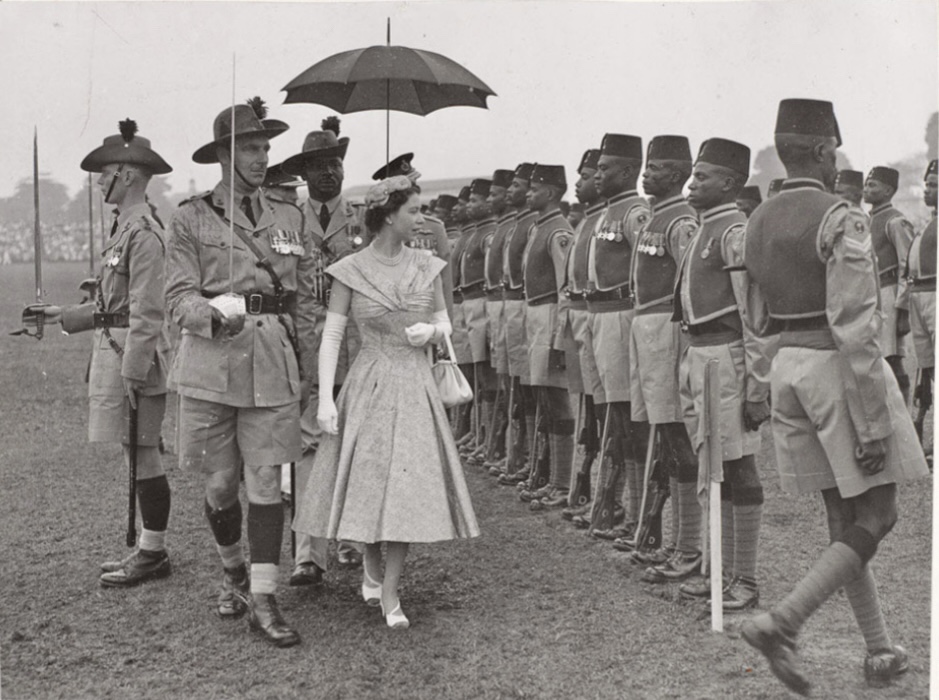

When we tell the story of colonial resistance, we speak of great leaders, fierce battles, and powerful kingdoms. We rarely speak of a tiny, buzzing insect. Yet, in the case of Nigeria, one of the most significant defenders of the land was not a warrior king or a diplomatic genius, but the lowly mosquito. This unassuming insect, acting as a vector for deadly malaria, created a biological shield so effective that it fundamentally shaped Nigeria’s colonial destiny, steering it away from the devastating path of white settler colonialism that ravaged parts of East and Southern Africa.
To understand this, we must first distinguish between two colonial models. In “settler colonies” like Kenya, Zimbabwe (then Rhodesia), and South Africa, European powers aimed to create permanent, large-scale white populations. This required the violent displacement of indigenous people from their most fertile lands, creating a dispossessed labor class and entrenching a system of brutal racial segregation. In contrast, the “administrative colony” model, which Nigeria largely became, focused on economic extraction with a minimal European presence. A small cadre of British administrators would rule indirectly through local structures, prioritizing trade and resource exploitation over land seizure for European farms.
The British initially had grand settler ambitions for West Africa. The region was seen as a potential “white man’s country,” a new frontier for plantations and European settlement. Explorers and colonial agents wrote glowing reports of the fertile soil and economic potential. But they encountered a formidable, invisible enemy: the Anopheles mosquito and the malaria parasite it carried.
The Unbreachable Shield: Malaria and Yellow Fever
For the indigenous populations of West Africa, malaria was a constant, endemic presence. Over centuries, many had developed genetic adaptations like sickle cell trait that provided some resistance. For Europeans, however, it was a death sentence. They had no acquired immunity, and the medical understanding of the late 19th century was powerless against it.
The disease was so rampant and fatal among Europeans that West Africa earned the grim nickname “the White Man’s Grave.” Mortality rates were staggering. It’s estimated that in the early 1800s, European death rates from malaria and yellow fever (another mosquito-borne disease) in West Africa could reach 50-75% within the first year of arrival. Soldiers, traders, and missionaries died in droves. A posting to the Niger Delta was often seen as a death sentence.
This high mortality rate made large-scale, permanent settlement a logistical and demographic impossibility. While the British could establish coastal trading posts and administrative offices, the idea of thousands of British families farming the Nigerian interior was pure fantasy. The mosquito ensured that the European presence would remain small, transient, and largely confined to the coast and a few administrative centers.
A Different Colonial Trajectory
The mosquito’s “success” had profound consequences for Nigeria’s socio-political development:
1. The Rise of Indirect Rule: Because widespread British settlement was impossible, Lord Lugard and other colonial administrators implemented the system of “Indirect Rule.” This system leveraged existing traditional structures—the Emirs in the North and the Obas in the South. While deeply flawed and often exploitative, it prevented the wholesale land theft that defined settler colonies. The fabric of traditional land tenure, though manipulated, was not completely destroyed.
2. A Different Economic Path: Without a settler class demanding vast tracts of land, the colonial economy in Nigeria was not built on large-scale white-owned farms. Instead, it was oriented around the extraction of cash crops like palm oil, groundnuts, and cocoa, which were produced by Nigerian smallholders. This fostered a class of indigenous farmers and merchants who retained control over agricultural production, a stark contrast to the dispossessed peasantry of Kenya.
3. The Preservation of a Demographic Majority: This is perhaps the most crucial point. Nigeria never experienced the creation of a politically and economically dominant white minority. The demographic balance remained overwhelmingly in favor of the indigenous population. This meant that the struggle for independence was not complicated by a powerful, entrenched settler community fighting to preserve its privileged status, as was the bloody case in Algeria and Zimbabwe.
A Bittersweet Victory
It is vital to note that the mosquito did not save Nigeria from colonialism itself. The British still colonized the territory, imposed their rule, extracted its wealth, and drew arbitrary borders with lasting consequences. Exploitation, cultural imperialism, and political subjugation were very real.
The mosquito’s “victory” was in saving Nigeria from a specific, particularly virulent form of colonialism—the settler variety. It spared the nation the deep-seated racial hatred, the systemic land dispossession, and the bitter, violent liberation struggles that continue to haunt other nations to this day.
In the grand, ironic tapestry of history, the story of Nigeria’s colonization reminds us that power is not always about sheer military force or technological superiority. Sometimes, the most powerful force can be a creature so small it is often swatted away without a second thought. The mosquito, an agent of death, inadvertently became a guardian of the land, ensuring that when the British flag eventually came down, the soil of Nigeria would be passed back, fundamentally, to the people who had always called it home.
 Centre for Nigeria Progress