

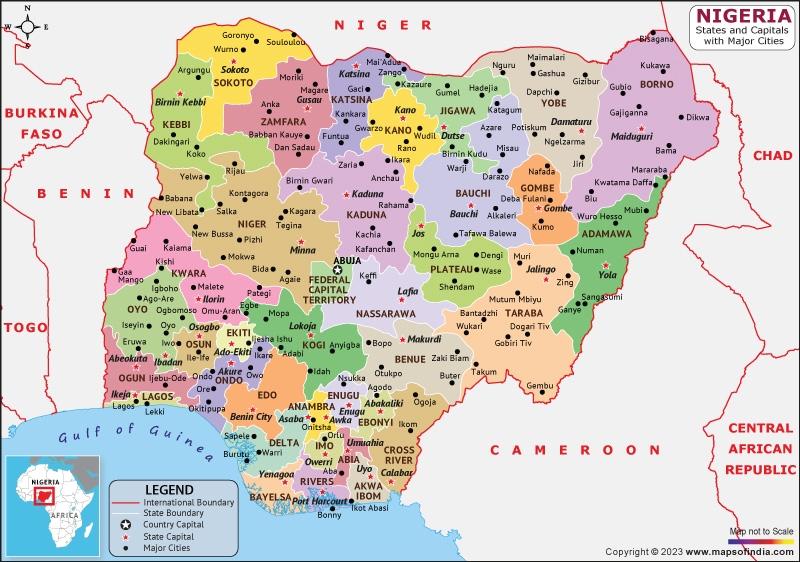
Nigeria likes to describe itself as a federation, but in truth it is a federation still under construction, with scaffolding left behind by decades of military rule. The structure exists, the blueprints are visible, but the builders keep disagreeing over which floor belongs to whom—and sometimes the foreman in Abuja simply takes over the entire site.
In theory, the Nigerian Constitution attempts a neat division of labour among the three tiers of government: federal, state, and local. In practice, the lines look less like constitutional boundaries and more like pencil sketches smudged by history, politics, and an enduring fear of autonomy.
At the top sits the Exclusive Legislative List. This is Abuja’s private preserve. Only the National Assembly may legislate here, and the subjects are those traditionally associated with sovereignty and nationhood: defence, foreign affairs, currency, banking, customs, and immigration. These are the heavy-duty instruments of state power, and no one seriously argues that Ekiti or Bayelsa should be running a foreign policy desk.
Next comes the Concurrent Legislative List, the constitutional equivalent of shared custody. Here, both the National Assembly and State Houses of Assembly may legislate, although with a familiar Nigerian caveat: when federal and state laws clash, federal law prevails. Education, health, and aspects of taxation live here, alongside newer arrivals such as railways and correctional services—formerly prisons—added after recent constitutional amendments aimed at devolving power.
Then there is the Residual Legislative List, the land of “everything else.” Anything not mentioned in the Exclusive or Concurrent Lists belongs to the states. In theory, this is where genuine federalism should breathe: local issues, local solutions, and local accountability. From here, states are meant to further devolve responsibilities to local governments, completing the federal chain.
The key concept tying this all together is overriding power. On concurrent matters, the centre ultimately has the final word, unless the states are legislating on areas the federal law has not touched. It is a sensible mechanism on paper, but in practice it has encouraged an overconfident centre and perpetually hesitant states.
Recent constitutional amendments have tried to correct this imbalance by devolving powers, nudging Nigeria away from its command-and-control past. Allowing states to play a role in railways and correctional services was meant to signal a maturing federation. Yet the legacy of military rule—centralisation by decree, obedience by habit—still looms large.
As a result, the boundaries are anything but strict. Powers bleed across tiers for political convenience, economic desperation, or sheer inertia. States, often lacking confidence or capacity, sometimes surrender their constitutional powers to the federal government. At other times, they eagerly take over functions constitutionally assigned to local governments, reducing councils to ceremonial outposts with little autonomy.
The judiciary, which ought to be the umpire of federalism, has not covered itself in glory. Rather than boldly giving life to constitutional intent, the courts have often preferred caution, technicality, or deference to central authority. The result is a federation whose spirit is frequently sacrificed to expedience.
Nigeria’s federalism, then, remains a work in progress—one delayed by khaki interruptions and sustained by centralising instincts. Until the states grow comfortable with power, the centre learns to let go, and the courts rediscover the courage of constitutional interpretation, the Nigerian federation will continue to function less as a partnership and more as a nervous arrangement held together by habit.
 Centre for Nigeria Progress