

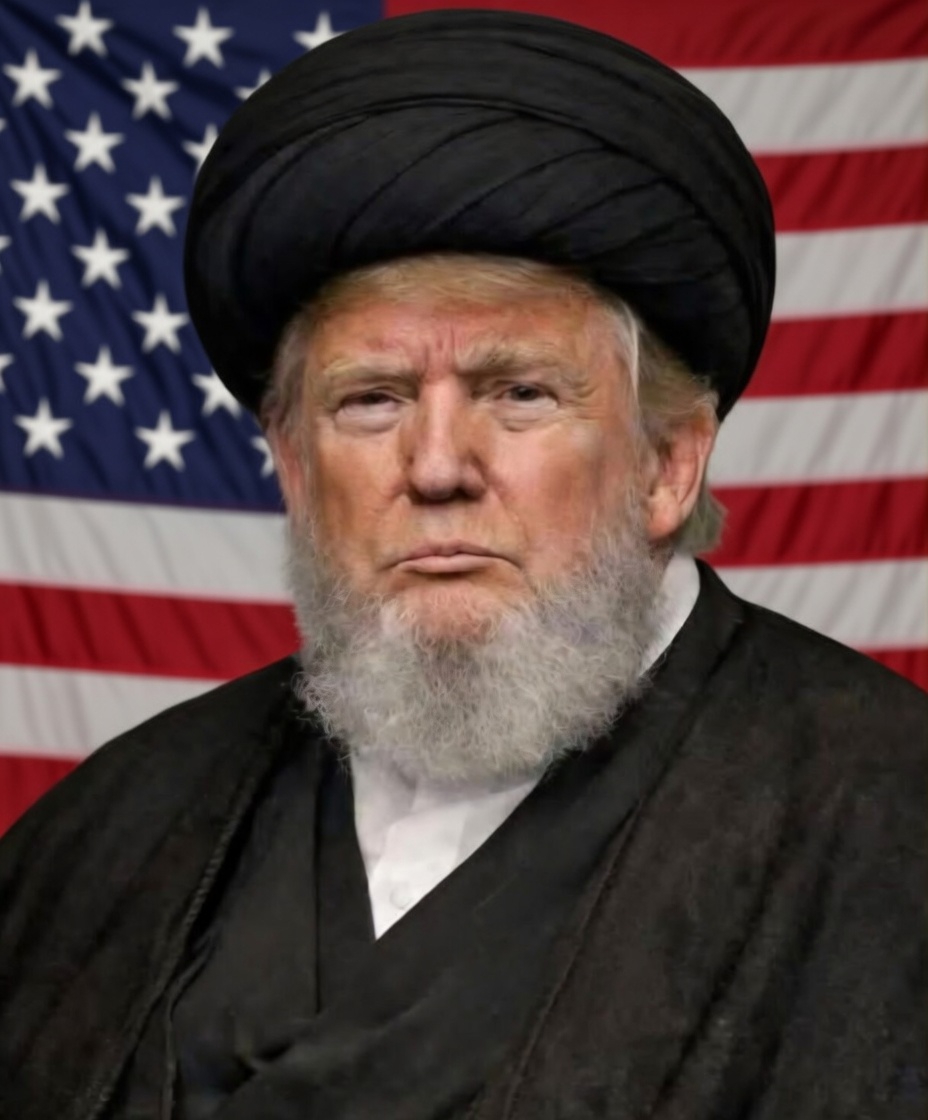
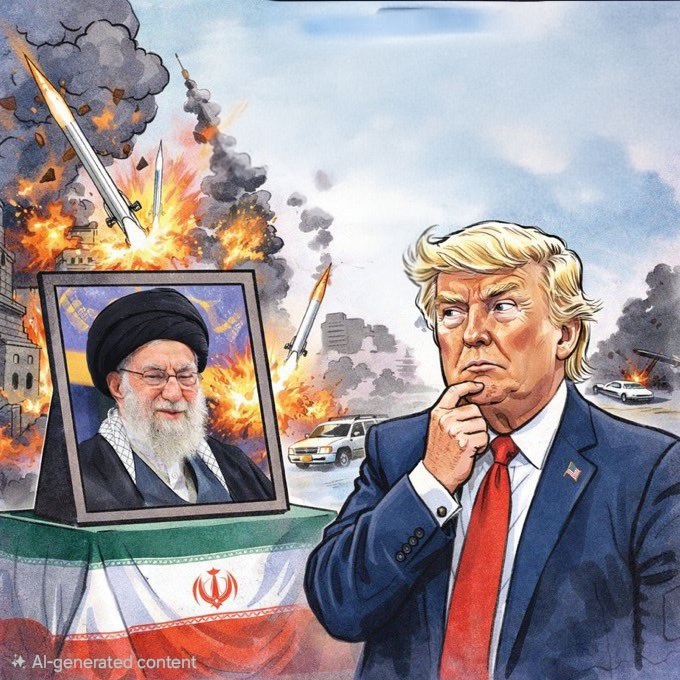
When we look at the modern political landscape, we often search for historical parallels to understand the moment we are living through. We compare leaders to strongmen of the past, caudillos, populists, or monarchs. But perhaps the most accurate analogy for understanding Donald Trump’s view of the presidency is not a general or a king, but a religious jurist: an Ayatollah.
Like a theocratic ruler who believes his power is divinely ordained, Donald Trump operates under the belief that he is the Supreme Leader of the United States, a figure who is not merely the head of government, but the embodiment of the state itself, immune to criticism and accountable to no one.
The “Conscience” Filter
Trump has famously stated that he relies on his “gut” and his conscience to make decisions. During his presidency, he framed this as a strength, a rejection of the “swamp” of advisors, intelligence agencies, and career civil servants. But in practice, this meant governing without a moral compass. When he says “only his conscience is his filter,” he is essentially declaring that he answers to no higher power, no constitution, and no electorate. In a theocratic framework, the leader’s interpretation of right and wrong becomes absolute law. For Trump, his personal preference is the national interest.
The Sectarian Divide
Just as a sectarian regime favors one group over another, Trump’s political project has always been rooted in division. His rhetoric has consistently targeted specific segments of society, African Americans, Mexican immigrants, and non-white folks in general. This isn’t just political incorrectness; it is the foundation of a hierarchical state.
His administration’s war on Diversity, Equity, and Inclusion (DEI) was never just about merit. It was a systematic effort to dismantle the infrastructure that allows minorities to compete on a level playing field. By rolling back DEI initiatives, he sent a clear signal: the state’s job is not to protect the marginalized, but to protect the dominance of his base, white Christian nationalists. In his view, positions of power are not for the most qualified, but for the most loyal to his vision of America. He actively promoted white figures who were less deserving of their positions, prioritizing racial and ideological loyalty over competence.
The Divine Mandate
Perhaps the most disturbing parallel to a theocratic leader is Trump’s apparent belief in a celestial mandate. He has frequently framed his political survival, from the 2016 election to his impeachment trials and his legal battles, as divinely ordained. This goes beyond the standard “God bless America” platitude. It is the conviction that he was chosen by a higher power to rule.
When a leader believes he has a celestial gift, he feels empowered to do whatever he feels like doing. Laws are obstacles. Norms are suggestions. The separation of personal interest and national interest dissolves. If God (or destiny) chose him, then opposing him is not just political disagreement; it is heresy.
The Institutionalization of Personality
Finally, Trump has succeeded in doing what authoritarian rulers dream of: he has institutionalized his personality on the state. The Republican Party is no longer a collection of ideas; it is a cult of personality. The civil service has been hollowed out and replaced with loyalists. The Department of Justice, the military, and even local school boards are viewed through the lens of loyalty to Trump.
He has grafted his persona onto the American system. The flag of the United States is now frequently flown alongside the “Trump flag” at his rallies, signaling that the nation and the man are one and the same.
Conclusion
Calling Trump the “American Ayatollah” is not to compare him to a specific foreign leader, but to describe a mindset. It is the mindset of a man who sees himself as a Supreme Leader, unbound by law, who views half the country as infidels unfit for equality, and who believes the entire apparatus of the state exists to serve his will. In his eyes, America is not a democracy; it is his dominion.
 Centre for Nigeria Progress