

Politics, like boxing, has a cruel rule: if you climb into the ring, the bell will eventually ring. And when it does, the audience quickly discovers who trained in the gym and who merely bought the gloves.
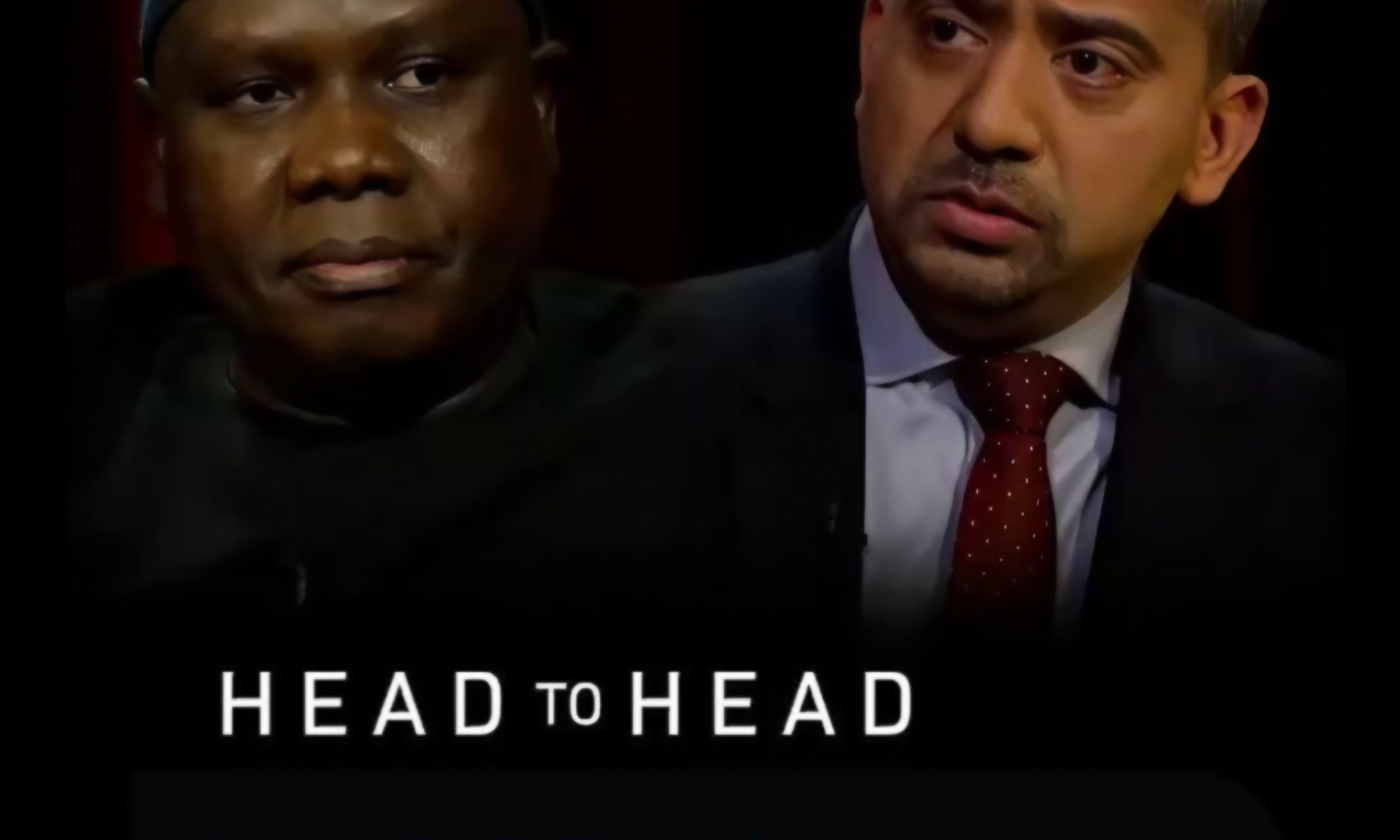
That lesson was recently delivered in high definition when Daniel Bwala stepped into a televised exchange with the formidable Mehdi Hasan. What followed was less a debate and more a wildlife documentary: Predator Meets Unattended Prey.
Within minutes, it became painfully obvious that Bwala had arrived at the intellectual battlefield armed with enthusiasm, vibes, and perhaps a half-charged talking point. Hasan, on the other hand, came with documents, dates, context, and the sort of questions that require answers rather than hand gestures.
It was, to put it gently, not a good evening for Bwala.
But before Nigerians start roasting him too enthusiastically, we must ask an uncomfortable question: who trained him to believe this would work?
The answer lies closer to home, inside our domestic television studios.
For years, large sections of Nigeria’s political class have been raised in a media environment that is less interrogation chamber and more political spa. When politicians appear on television, they expect warm lighting, gentle questioning, and occasionally a complimentary ego massage.
Two familiar figures often accused of contributing to this culture are Babajide Kolade-Otitoju of TVC News and Seun Okinbaloye of Channels Television.
Their programmes are influential. Unfortunately, they sometimes treat politicians like fragile museum artifacts rather than public officials handling billions in public funds.
Take the famous moment involving Nyesom Wike. When asked how he could afford a Rolls-Royce, his reply was the philosophical masterpiece: “So what?”
And astonishingly… the questioning moved on.
In most functioning democracies, that answer would be followed by approximately thirty-seven additional questions, a spreadsheet, three tax returns, and possibly a forensic accountant entering the studio.
But in Nigeria, the politician leaves the studio convinced he has just defeated the press. His supporters celebrate. The presenter adjusts his tie. The nation learns absolutely nothing.
Then there was the memorable episode where Monday Okpebholo responded to questions about alleged maladministration by offering Babajide Kolade-Otitoju a pinky-finger bet instead of an explanation.
In most countries, that would trigger the journalistic equivalent of a police chase.
Instead, the conversation politely died of embarrassment.
So Nigerian politicians have grown up believing television interviews are friendly chats where charisma replaces facts and deflection is mistaken for brilliance.
Then along comes Mehdi Hasan.
Hasan belongs to a different species of interviewer. The kind that actually listens to the answer and then asks… another question. A dangerous innovation.
His style is closer to cross-examination than conversation. A lawyer would recognise the method immediately: establish the claim, introduce the contradiction, then ask the witness to reconcile the two while the clock ticks loudly.
For someone raised in the Nigerian “So What School of Political Communication,” this is a traumatic experience.
Suddenly, hand waving doesn’t work.
Suddenly, slogans collapse.
Suddenly, you realise the interviewer has read more about your argument than you have.
The result was predictable.
But Nigeria should not merely laugh at Bwala’s discomfort. His performance is not the disease; it is the symptom.
The real problem is a media culture that too often treats accountability like optional homework.
Britain once had a similar problem. Politicians there also strutted about with oversized confidence—until satire and tough interviewing began puncturing the balloon.
One famous example was the savage political satire Not the Nine O’Clock News, which gleefully mocked the political class and stripped away the aura of untouchability surrounding them.
Humour, ridicule, and aggressive questioning did what polite journalism sometimes failed to do: they humbled politicians.
Once politicians know they can be publicly dismantled—fact by fact, clip by clip, joke by joke—they begin to prepare.
Miraculously, their answers improve.
Their arguments become coherent.
Their “So what?” suddenly transforms into a 15-minute explanation with footnotes.
Nigeria’s media ecosystem may now be approaching its own moment of reckoning.
If Bwala’s encounter with Hasan teaches anything, it is this: the global media arena is not a Nigerian television studio. The questions will not stop because you frowned confidently.
Hopefully, Nigerian journalists are watching carefully.
Because the day Nigerian politicians realise that television interviews can actually be dangerous is the day they will finally start doing their homework.
And when that day comes, the biggest beneficiaries will not be journalists.
It will be the Nigerian public—who, for the first time, might actually get answers instead of pinky-finger bets.
 Centre for Nigeria Progress