

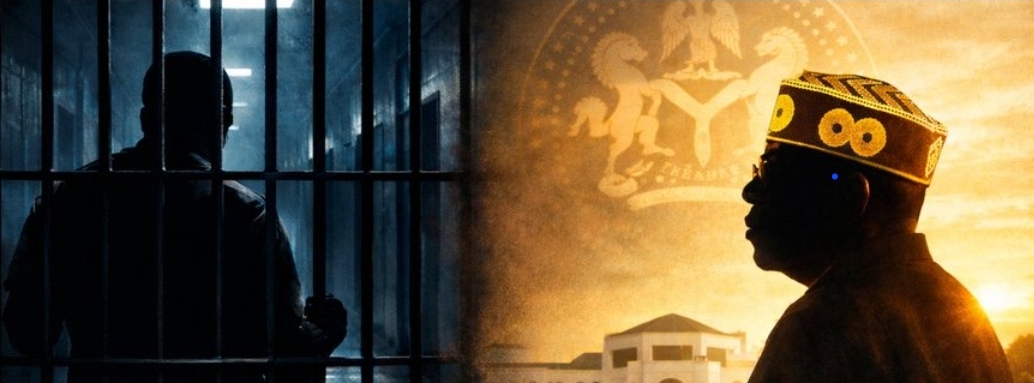
There are two documented biographies of Bola Ahmed Tinubu: one carefully constructed in Nigerian political mythology, and another recorded in the sterile, unforgiving files of U.S. federal law enforcement. For decades, the public narrative has emphasized his career as a corporate professional and political strategist—the “brilliant accountant” who rose from the private sector to national leadership. Yet, thousands of pages of federal investigative records, seizure warrants, bank filings, and court proceedings tell a harder story. They document declared monthly earnings of $2,400 alongside bank accounts that received $661,000 in 1990 and more than $1.2 million in 1991. They record the freezing of over $1.4 million across multiple accounts and a subsequent forfeiture of $460,000 identified in court filings as proceeds connected to narcotics activity. These documents are not new. They have circulated for years. What remains unresolved is not their existence, but their place in the national memory. How does a man once named in a U.S. federal forfeiture case ascend to the presidency of Africa’s most populous nation without that chapter ever being fully reconciled? For years, Nigerians comforted themselves with the belief that the excesses of post-colonial conspicuous kleptocracy belonged elsewhere. We studied the cautionary tales of Yahya Jammeh, Samuel Doe, Jean-Bédel Bokassa, Idi Amin, and Mobutu Sese Seko with a kind of intellectual detachment. We assumed that Nigeria, for all her flaws, was too sophisticated for such primitive leadership—that we were too “ready for prime time” to slide into that tradition of a leader stealing in broad daylight and flaunting it in our faces.
But sophistication does not eliminate rot. It refines it. In Tinubu, we see a more polished evolution of the same archetype: power consolidated, loyalty purchased, dynastic networks strengthened, and public sacrifice demanded while private wealth compounds quietly. The contrast is not theoretical. While inflation erodes wages and basic staples drift out of reach, members of the “First Family” circulate through global real estate and luxury collections that would fund entire local governments. The symbolism is not trivial. A Richard Mille RM 055 valued at roughly $550,000 worn by his son, Seyi Tinubu, while urging citizens to “endure” economic hardship, is not merely a watch. It is a message. A $350,000 Patek Philippe on the wrist of a president presiding over record insolvency is not an accessory. It is an emblem of distance. Until recently, defenders argued that whatever his past, he was at least not a man of open street brutality. But the mask is slipping. The brazen assassination attempt in Benin City yesterday, February 24, 2026, targeting Peter Obi and John Odigie-Oyegun, suggests a dark return to the primitive methods of the very despots we once mocked. Gunmen riddling the gate of a former governor’s residence with bullets following a political event is a signal that for this administration, power is not a mandate—it is a possession to be guarded. After all, the murder of Funsho Williams—once the only major stumbling block to Tinubu’s Lagos hegemony—remains a cold case file that continues to haunt the nation. This article will not rely on rumor. It will rely on documents. The forfeiture exists. The deposits exist. The redactions exist. The political ascent exists. The question is no longer whether the records are real. The question is what they mean. I. The World of 1522 Taft Place: One Conspiracy, Two Endings The foundation of Bola Tinubu’s financial rise was laid in the late 1980s, an era defined by the crack cocaine epidemic and the federal government’s aggressive “War on Drugs.” Federal agents were conducting a massive investigation into a “white heroin” distribution network operating across the Chicago metropolitan area and Gary, Indiana.
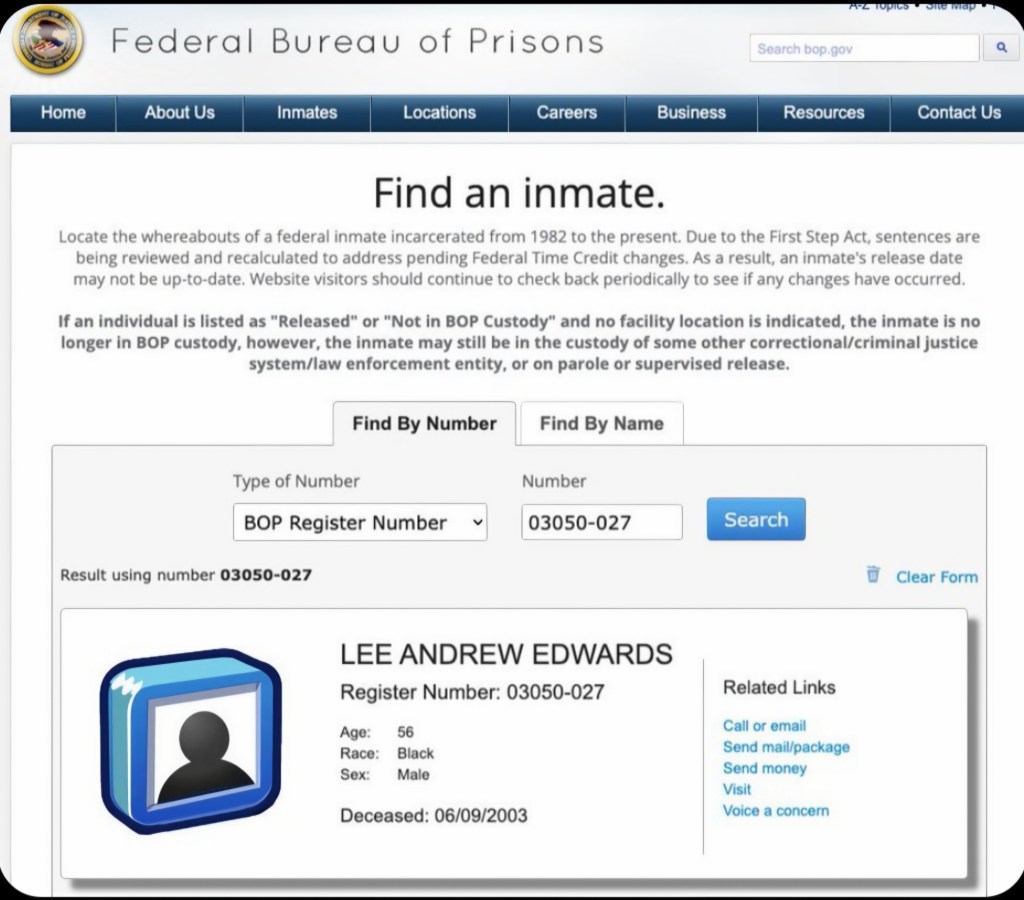
At the center of this world was a nondescript residence at 1522 Taft Place in Gary. This ring was headed by Lee Andrew Edwards, a man who faced the full weight of the U.S. justice system. In 1994, Edwards was convicted of multiple counts, including engaging in a Continuing Criminal Enterprise (CCE)—a charge often reserved for drug kingpins—conspiracy to distribute heroin, and firearms offenses (Cause No. 92 CR 113).
The scale of this enterprise was so vast that the U.S. Court of Appeals (77 F.3d 968) upheld the district court’s sentence: three concurrent life terms plus an additional 110 years for distribution and firearms offenses.
While his Nigerian associates returned home, and one, Bola Tinubu, ascended to the highest levels of power, Lee Andrew Edwards remained behind bars until his death in federal prison on June 9, 2003.
The primary associates in this network, identified in the “Moss Affidavit” and bank records, were Adegboyega Mueez Akande and Abiodun Agbele.
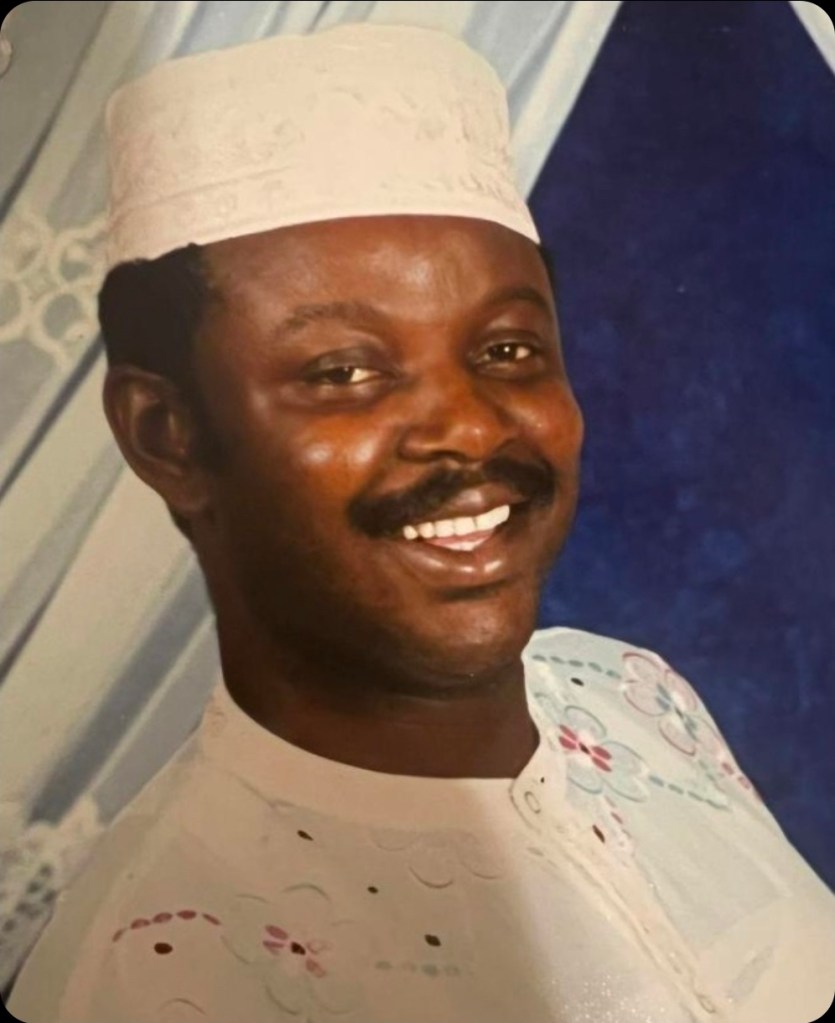
Akande, identified as Tinubu’s “cousin,” introduced him to the Chicago banking system in 1989 with an initial $80,000 wire transfer. The sequence of events suggests a coordinated strategy of cooperation. While Lee Andrew Edwards perished in a cell, his associates secured their freedom by providing the government with the testimony it needed to bury the leader. The court records in United States v. Edwards explicitly label Abiodun Agbele as a ‘cooperating witness.’ In an October 1991 interview with DEA Agent Balbo, Agbele admitted to selling 463.5 grams of ‘white’ heroin to Edwards, providing the specific transactional details that solidified the life sentences. The ‘snitching’ was not limited to suppliers. Lee’s own brother, Jimmie Edwards, began cooperating with the FBI in the summer of 1990, serving as the catalyst that allowed agents to secure the wiretaps that dismantled the ring. Other key players, including James Davis and Robert Matthews, testified pursuant to cooperation agreements, revealing the ‘prearranged’ code words used to facilitate the shipments.
Agbele, Akande and Tinubu returned to Nigeria in unison to begin simultaneous political careers. This pattern forces a critical question: How does one man in a conspiracy receive three life sentences while his primary financial associates and suppliers walk away from the same investigation without a single day of jail time? The documents don’t say, but the pattern of a negotiated “package” settlement—trading financial forfeiture for intelligence cooperation—is unmistakable.
II. The Corporate Cover: The $2,400 Entry-Level Veneer
While the political biography of Bola Tinubu projected an image of high-level corporate success, federal investigators documented a different reality. On January 6, 1990, Tinubu submitted a sworn credit application for a modest $8,000 auto loan to purchase a Nissan 240X. On that document, he declared his monthly take-home pay was a mere $2,400—the income of a nameless and faceless entry-level employee at best. Tinubu was not the Treasurer of Mobil Oil, a Fortune 500 Company, but the Treasurer of the Edwards-Akande drug ring, which court records indicate pulled in millions of dollars in narcotics proceeds.
Despite his self-reported $28,800 annual income, the ledgers of First Heritage Bank reveal a staggering alternative: a single money market account in his name received deposits totaling $661,000 in 1990 and over $1.2 million in 1991. When federal agents confronted Mobil Oil, the corporate giant’s response was a total disavowal. Under oath, Mobil representatives stated that Tinubu was never authorized to hold company money in his personal accounts, nor was he permitted to transfer corporate funds. The “Treasurer” narrative was the cover; the cash was the reality.
III. The 1992 Pivot and the Informant Narrative The link between the narcotics and the bank accounts was solidified through Abiodun Agbele. As a co-signatory on accounts linked to Tinubu, Agbele’s status as a ‘cooperating witness’ was the bridge the DEA used to connect the $1.4 million in cash to the 463.5 grams of heroin he admitted to selling. When Agbele began ‘snitching’ in 1991, he didn’t just bury Lee Edwards; he provided the government with the leverage it needed over Tinubu’s millions—leverage that was ultimately ‘settled’ behind the black ink of FOIA redactions.
The legal walls closed in on January 10, 1992, when a U.S. Magistrate Judge issued seizure warrants for over $1.4 million in Tinubu’s accounts. Rather than staying in the U.S. to defend the funds, Tinubu executed a calculated pivot. He returned to Nigeria to win a Senate seat in 1992—an ascent widely believed to have been financed by the very proceeds his Chicago career had generated.
The divergence in the final adjudication is the smoking gun of this partnership. The case against Tinubu ended in a Stipulated Settlement in 1993, where he walked away after agreeing to a forfeiture of $460,000—funds specifically identified in court as proceeds of narcotics trafficking. In the exact same case, with the exact same evidence, his partner Lee Andrew Edwards—the only natural-born U.S. citizen in the conspiracy—was handed three life sentences. The system buried the American and polished the Nigerian.
To this day, the U.S. government continues to protect the specifics of this “double standard” behind a wall of FOIA legal jargon:
- Exemption (b)(1): Used to withhold information that is properly classified to protect national security.
- Exemption (b)(3): Protects information prohibited from disclosure by another federal law (frequently used for CIA or NSA statutes).
- Exemption (b)(7)(C): Withholds records that “could reasonably be expected to constitute an unwarranted invasion of personal privacy” for third parties.
In the FOIA files released so far, these exemptions appear as a sea of black ink, redacting the names of his associates and the specifics of their cooperation to protect “intelligence sources and methods.” The message is clear: the U.S. government isn’t protecting a private citizen; they are protecting a managed investment.
IV. The Asset in Aso Rock: The 2015 “Managed Transition” The 2015 election appears to be the culmination of this decades-long asset management. The U.S. “Deep State” did not just watch the APC rise; the sequence of events suggests they engineered the optics of it to legitimize their asset for the national stage. Washington signaled its preference by dispatching David Axelrod’s firm, AKPD Message and Media—the primary branding team for the Obama administration—to rebrand the APC for the Nigerian electorate.
Simultaneously, on January 25, 2015, U.S. Secretary of State John Kerry flew into Nigeria to deliver a blunt warning to the incumbent, Goodluck Jonathan, against any “interference” in the democratic process—a move that effectively paralyzed resistance to the APC’s momentum. The intellectual seal on this partnership was the 2013 publication of the political manifesto Financialism: Water from an Empty Well.
Though presented as a co-authored work between Tinubu and former U.S. Consul General Brian Browne—who reportedly moved into the Tinubu estate in Lagos—nothing in either man’s background indicates the academic or economic capacity to produce such a dense, theoretical text. If one reads the book, it bears the unmistakable hallmarks of a Washington think tank or a CIA-drafted “legitimization” project. It was not a book; it was a script designed to give a street-level intermediary the intellectual veneer of a global statesman. VI. The WikiLeaks Record: Verbiage of an Asset The WikiLeaks archives contain over 100 entries detailing Tinubu’s cooperation. These cables show a man viewed by Washington not as a former narcotics suspect, but as an indispensable “intelligence source” through whom U.S. policy in West Africa could be funneled.
He didn’t just meet with diplomats; he provided granular, internal readouts of his rivals’ movements. Here is the language of asset management:
- Feb 20, 2003 (Consul General, Lagos): Describes Tinubu as the “only political operator” capable of delivering the Southwest to U.S. interests and stabilizing the region for foreign investment.
- July 13, 2007 (Ambassador, Abuja): Details a private meeting where Tinubu provided a “play-by-play” readout of internal party rifts, effectively exposing the weaknesses of his own political allies.
- Sept 21, 2009 (U.S. Mission, Nigeria): Notes Tinubu is “highly cooperative” in sharing intelligence regarding regional security threats and the movements of northern political blocs.
- March 3, 2011 (Political Officer, Lagos): Records Tinubu “confiding” in U.S. officials about his strategy to dismantle the PDP, seeking “understanding” from Washington for his consolidation of power.
- May 15, 2012 (Consul General, Lagos): Documents Tinubu providing a “candid assessment” of then-President Goodluck Jonathan’s “vulnerabilities”—the early blueprint for the 2015 “managed transition.”
- Oct 11, 2012 (U.S. State Dept): Identifies Tinubu as a “shrewd and indispensable” partner who possesses an unmatched “situational awareness” of the Nigerian political underworld.
VII. The Sovereign Subcontractor: Nigeria as a Western Outpost
The 30-year investment in Bola Tinubu is now yielding its final dividend: the total alignment of Nigerian policy with U.S. strategic interests, even at the cost of national dignity. While other African nations are asserting their independence, the Tinubu administration is operating as a high-level subcontractor for the “America First” agenda.
1. The “Christmas Present” Airstrikes (December 25, 2025)On Christmas Day 2025, the U.S. military launched Tomahawk missiles into Sokoto State, targeting the Lakurawa group. President Donald Trump publicly described the operation as a “Christmas present” to “ISIS terrorist scum.”
- The Silence: Despite a foreign power launching missiles onto sovereign Nigerian soil, the Tinubu administration offered no protest. Instead, it retroactively characterized the unilateral strike as a “joint operation,” effectively providing domestic cover for a violation of national air space.
2. The First U.S. Military Bases (February 2026)For decades, Nigeria prided itself on refusing permanent foreign military bases. That changed in February 2026. Under the guise of “technical and training assistance,” roughly 200 U.S. troops and heavy equipment arrived at the Bauchi Airfield and sites in Borno and Sokoto. This deployment—the first of its kind—serves as a regional replacement for the U.S. intelligence hub lost in Niger, turning Nigeria into the new frontline for Western Sahelian interests.
3. The $5.1 Billion Data Harvest (December 2025 – April 2026)In December 2025, Tinubu signed a 5-year, $5.1 billion Health MoU under the “America First Global Health Strategy.” While framed as “aid,” the deal includes the Digital Health Bill 2025, which streamlines the extraction of Nigerian genomic and epidemiological data.
- The Contrast: While Tinubu signed off, the government of Zimbabwe—citing “asymmetrical exchange”—formally withdrew from a similar $367 million deal on February 25, 2026. Zimbabwe refused to hand over its citizens’ biological resources and data without guaranteed access to the resulting medical breakthroughs. Nigeria, under Tinubu, has made no such demand, effectively treating the nation’s genetic data as an export commodity.
4. The Religious Pivot (January 2026)To satisfy his handlers, Tinubu has allowed the domestic security narrative to be reframed through a Western sectarian lens. Following the U.S. designation of Nigeria as a “Country of Particular Concern,” the administration has accepted $200 million in funding specifically earmarked for Christian faith-based healthcare providers—a move that opposition groups warn will deepen the very religious fractures the “Deep State” uses to manage the country.
VIII. The Debt Trap: Nigeria as a Financial Vessel
If the military bases and data extraction are the “operational” side of the asset, the borrowing is the “collateral.” In just under three years, the Tinubu administration has broken every historical record for debt accumulation, effectively mortgaging the nation to the IMF and World Bank.
- The Record Breaker: In 2025, the Senate approved a massive $21.19 billion external borrowing plan for the 2025–2026 cycle. This is the largest single borrowing proposal in Nigeria’s history.
- The $100 Billion Ceiling: As of February 2026, Nigeria’s total public debt has surged to a record $103.94 billion (₦153.29 trillion). For context, the debt-to-GDP ratio has now blown past the government’s own 40% “safety” ceiling, hitting over 50%.
- The 65% Tax: Nigeria is no longer a country that spends on its people; it is a country that spends on its creditors. In 2023, debt servicing consumed 64.5% of total revenue. By 2026, debt service is projected to hit ₦15.52 trillion—nearly four times the entire budget of 2022.
- The “Vessel” Policy: To satisfy IMF “neutral fiscal stance” requirements, Tinubu has implemented aggressive tax collection, effective this year. These aren’t domestic policies; they are “conditionalities” designed to extract every kobo from the poor to pay back the “Deep State” loans.
Conclusion: The Architecture of Power
The rise of Bola Tinubu is a narrative constructed by layering official titles over a foundation of documented financial discrepancies. By using a Senate seat as a shield and becoming a vital informant for U.S. interests, he traded a $460,000 financial forfeiture for power and immunity.
Today, his presidency is defined by the same kleptocratic greed that fueled his Chicago days. From the extraction of national data to the silence over foreign missiles and the crushing weight of IMF-driven debt, his administration is the final installment of the debt he owes for the redactions that keep his past buried as a classified American secret.
 Centre for Nigeria Progress