

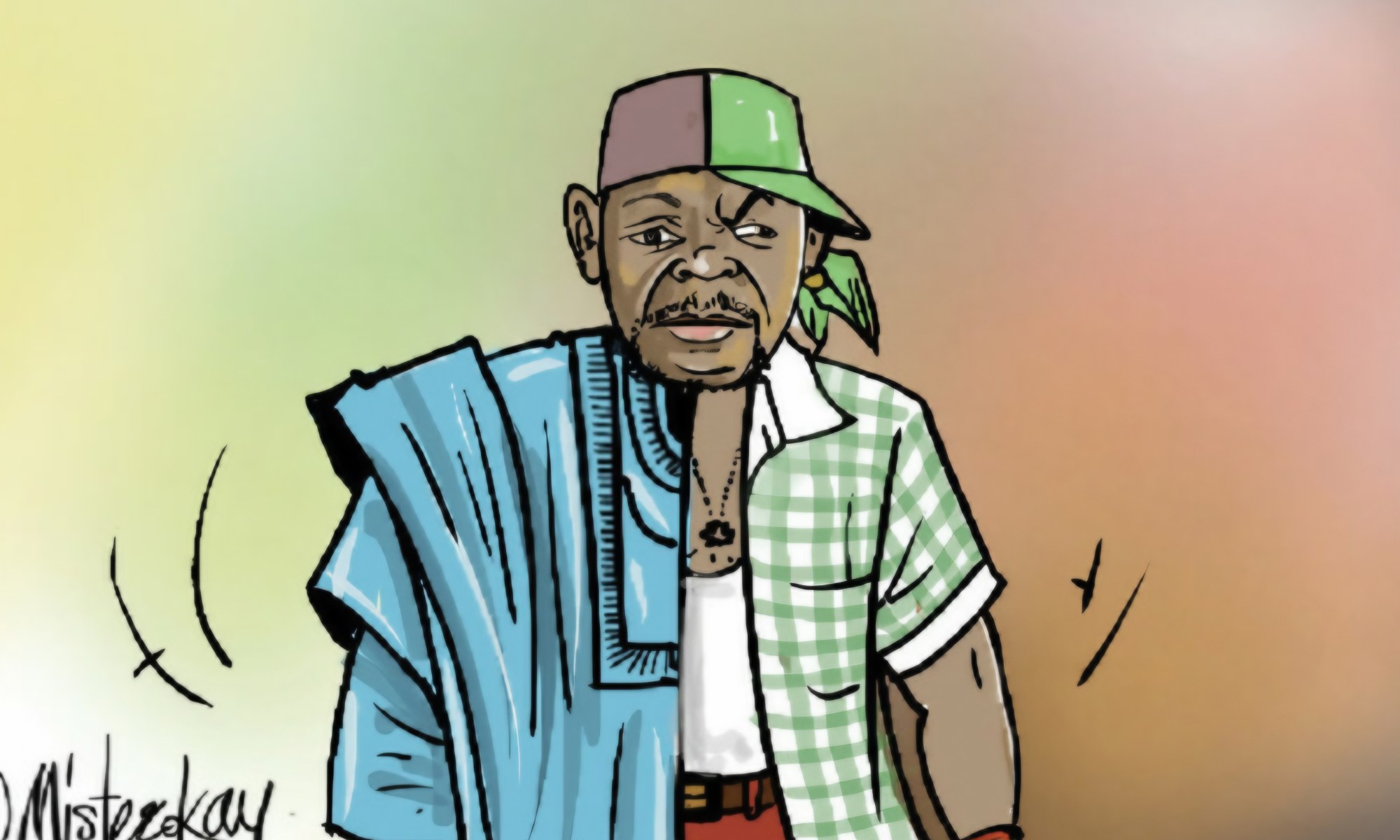
Nigeria’s political class occupies a familiar paradox in the national imagination: revered in ceremony but reviled in practice; envied for power, yet widely suspected (and in some cases proven) of looting that power for personal gain. In moments of national strain, when prices soar, wages stagnate, institutions wobble, and public patience thins, this contradiction becomes impossible to ignore.
It is in this context that elite rascality best describes Nigeria’s governing culture. Once whispered in frustration, the term now circulates openly, reflecting a growing recognition that irresponsibility, impunity, and moral indifference are no longer incidental features of governance; they are its organising logic. Elite rascality explains the grotesque entitlement that makes it appear Nigeria belongs to a narrow political class, their children and circle of friends alone; the casual disregard for the rule of law; and the peculiar habit of discovering injustice and crying wolf only when power slips from their hands.
Elite rascality is not about isolated misconduct or individual failure. It is a political culture in which power is treated as private property rather than a public trust. It thrives where office holders see the state as a resource to be harvested, not a responsibility to be discharged.
In such a system, accountability is performative, reform is rhetorical, and public suffering is an acceptable externality. The most disturbing feature is not the scale of wrongdoing, but the absence of remorse. Policies are announced with flourish and abandoned without explanation. Promises are recycled across election cycles. Hardship is acknowledged in speeches but insulated from elite experience.
This is the ecosystem in which democratic norms are hollowed out while institutions are kept alive only as symbols.
The Arrogance of Ownership and Impunity
The arrogance at the heart of elite rascality is the belief, which is rarely spoken but constantly drummed into our collective consciousness, that Nigeria belongs to those who control political power. Citizens are reduced to spectators whose role is to endure, applaud, or wait patiently for relief that never quite arrives.
This mindset is most visible in the dissonance between elite comfort and public suffering. At a time when households are adjusting to rising costs, shrinking purchasing power, and eroding social protections, political life continues largely uninterrupted, convoys glide through traffic, allowances expand quietly, war chests for the 2027 elections grow and state resources fund lifestyles detached from everyday reality.
Budgets that prioritise governance overheads over social investment are passed. Grand projects are announced while basic services decay. Citizens are urged to tighten their belts, even as the belts of power loosen. This is not merely tone-deaf governance; it is elite rascality in motion; it is privilege without restraint and authority without empathy.
Elite rascality endures because impunity has become normalised. Nothing illustrates Nigeria’s democratic contradiction more starkly than the impunity with which the elite operates. The rule of law remains intact in theory, but elastic in practice. Legal processes stretch endlessly. Investigations begin loudly and end quietly. Institutional procedures are followed just enough to preserve appearances, but rarely enough to deliver justice.
In moments of political realignment, familiar patterns emerge. Legal interpretations shift. Institutional enthusiasm rises or wanes. Processes that once seemed impossible suddenly accelerate, while others stall indefinitely. The signal is unmistakable: justice is not blind; it is attentive to power.
For ordinary Nigerians, this dual reality is deeply corrosive. When laws apply differently depending on status and political alliances, faith in the state collapses. When accountability appears selective, legality loses moral authority. Over time, injustice stops shocking and begins to feel inevitable.
Entitlement, Nepotism and Selective Outrage
Elite rascality also expresses itself through entitlement; the assumption that access to power is a birthright or a reward for loyalty rather than service. Political offices circulate within familiar networks. Names change but faces remain recognisable. Party labels shift, but governing habits persist.
In moments of political transition, the language of renewal is loud and frankly old, but the substance remains thin. New alliances form rapidly, old disagreements dissolve overnight, and yesterday’s critics become today’s defenders. Ideology matters less than positioning. Public interest is secondary to elite accommodation.
This constant recycling of power suffocates innovation and blocks generational renewal. It signals to capable citizens, particularly young people, that competence is optional and integrity negotiable. The cost is a leadership pipeline increasingly disconnected from merit or public purpose and stuck in the dark ages.
Even more infuriating is the fact that nothing reveals elite rascality more clearly than the habit of selective outrage. Nigeria’s political class routinely discovers the language of democracy, justice, and institutional integrity only when outcomes threaten elite comfort, positioning and freedoms.
Electoral processes are celebrated or condemned depending on the results. Courts are praised or vilified depending on their judgments. Institutions are strong or compromised depending on who they inconvenience. Principles are not defended consistently; they are deployed strategically.
This behaviour has intensified in recent times, as political competition sharpens and public scrutiny grows. The loudest cries about democracy often come from those who were silent when democratic norms were undermined in their favour. This pattern does not strengthen institutions; it cheapens them.
Unfortunately, as citizens, we let this behaviour persist. Oh, how we love our chains and those who oppress us! We quietly wish to be them; we wait for our turn and will do anything to protect and defend them at any cost while throwing our own to the wolves.
The Human Cost of Elite Indifference
Elite indifference is often discussed in political terms, but its consequences are profoundly human. It is visible in households forced to choose between food and transport, in students navigating an education system stripped of investment, and in families confronting insecurity with little state support.
It is also evident in the growing emotional distance between citizens and the state. Patriotism is strained when governance feels extractive. Civic duty weakens when leadership appears self-serving. Over time, resignation replaces hope. No country can sustain itself when citizens are asked to sacrifice endlessly while elites remain insulated from consequence.
Nigeria does not suffer from a shortage of reform agendas. What it lacks is elite self-restraint. Reforms falter because they threaten entrenched advantages. Accountability stalls because it disrupts delicate power balances. Institutions are preserved symbolically but undermined practically.
As long as public office is treated as entitlement rather than service, reform will remain cosmetic, announced at conferences, debated on panels, and abandoned in implementation.
Elite rascality has turned governance into a transaction and leadership into a privilege. It has weakened institutions, eroded trust, and deepened inequality between those who rule and those who endure the consequences of rule.
Yet this moment also carries possibility. Citizens are paying closer attention. The language of accountability is harder to dismiss. The cost of elite indifference is becoming politically visible.
Nigeria’s way forward begins with rejecting the normalisation of elite impunity and insisting through law, institutions, and civic pressure, that public office is a duty, not an entitlement. Until accountability becomes unavoidable and leadership is measured by service rather than access to power, the indifference and impunity of the elite will remain our most enduring political tradition.
The question confronting Nigeria is no longer abstract. It is immediate and unavoidable: will the indifference of the elite continue to define political life, or will leadership finally be reimagined as responsibility rather than reward?
History has little patience for ruling classes that mistake endurance for consent.
 Centre for Nigeria Progress