

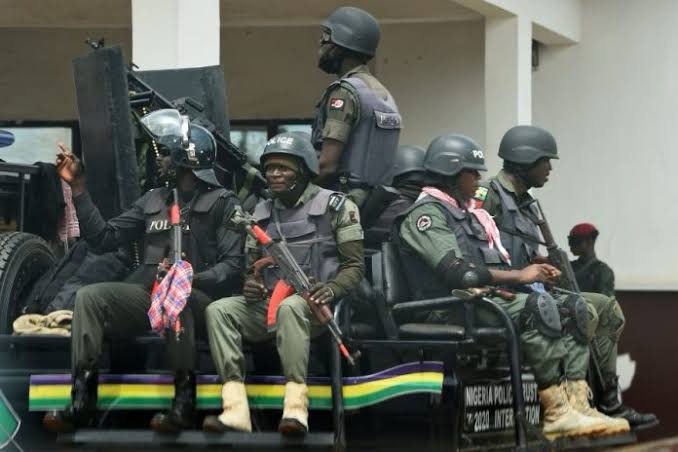

The decision of the Federal High Court in Suit No. FHC/WR/CS/87/2025, delivered by Justice H. A. Nganjiwa, is more than a routine fundamental rights ruling—it is a doctrinal intervention in Nigeria’s constitutional order. At its core, the judgment addresses a recurring friction in Nigerian public life: the uneasy interface between coercive state power and citizen oversight.
What the court has done—quietly but decisively—is to constitutionalise accountability in everyday policing.
I. The Legal and Constitutional Architecture
The applicant’s case was strategically constructed under the Fundamental Rights (Enforcement Procedure) Rules, 2009, invoking a broad sweep of constitutional guarantees. The court’s acceptance of all reliefs sought signals a robust, rights-forward interpretive approach.
1. Right to Dignity – Section 34
Police harassment, intimidation, and arbitrary interference—particularly in the context of stop-and-search—were framed as affronts to human dignity. The court’s ruling implicitly recognises that degrading treatment need not be physical; coercive encounters in public spaces can suffice.
2. Right to Personal Liberty – Section 35
The prohibition on arresting citizens for recording police activity is significant. It curtails a long-standing abuse where “obstruction” or “suspicion” is weaponised to justify unlawful detention.
3. Right to Fair Hearing – Section 36
Though less direct, the ruling touches on procedural fairness. Arbitrary confiscation of devices—often containing exculpatory evidence—undermines a citizen’s ability to defend themselves.
4. Right to Privacy – Section 37
At first glance, recording police officers may appear to conflict with privacy rights. The court resolves this tension by drawing a distinction between private space and public duty. A police officer performing official functions in a public space has a diminished expectation of privacy.
5. Freedom of Expression – Section 39
This is the doctrinal anchor of the judgment. The act of recording is treated as an extension of expression—what American jurisprudence might call “expressive conduct.” The court effectively affirms a right to gather information as a precursor to speech.
6. Freedom of Movement – Section 41
Routine stop-and-search operations, particularly when conducted by unidentified officers, were implicitly scrutinised as potential constraints on movement.
7. Enforcement Jurisdiction – Section 46
The court’s willingness to grant damages (₦5 million) and costs reinforces the potency of Section 46 as not merely declaratory but remedial.
II. The African Charter Dimension
Nigeria’s domestication of the African Charter on Human and Peoples’ Rights elevates it to a quasi-constitutional status. The Charter’s provisions on dignity, liberty, and expression provided interpretive reinforcement.
The court’s reasoning aligns with regional human rights jurisprudence: state actors are subject to heightened scrutiny, especially where power asymmetry exists.
III. Identification as a Constitutional Imperative
Perhaps the most operationally transformative aspect of the judgment is the directive that police officers must:
Wear visible name tags Display force numbers
This is not mere administrative tidiness—it is a constitutional safeguard. Identification enables:
Traceability Accountability Legal redress
Anonymity in policing, the court suggests, is incompatible with constitutional democracy.
IV. The Right to Record: A Doctrinal Breakthrough
The recognition that citizens may lawfully record police activity in public spaces is a watershed moment.
This does three things:
Bridges the evidentiary gap – In a system where “your word against the officer’s” often prevails, video evidence rebalances the scales. Deters misconduct – The awareness of being recorded introduces behavioural discipline. Democratises oversight – नागरिक journalism becomes a decentralised accountability mechanism.
In effect, the court has endorsed what might be termed participatory policing oversight.
V. Public Policy Implications
1. Policing Reform by Judicial Fiat
Where legislative and executive reforms have lagged, the judiciary has stepped in. This judgment may compel the Nigeria Police Force to revise its Standard Operating Procedures (SOPs).
2. Institutional Resistance
Expect friction. Policing culture—particularly in Nigeria—has historically resisted external scrutiny. Compliance may be uneven without internal enforcement mechanisms.
3. Litigation Cascade
This ruling will likely trigger a wave of rights-based litigation. Citizens now have a judicially validated template to challenge police excesses.
4. Insurance and Fiscal Impact
Damages awards—even modest ones like ₦5 million—create fiscal pressure. Repeated violations could translate into significant liability for the state.
VI. Political Ramifications
1. Recalibrating State-Citizen Power Dynamics
The judgment subtly shifts the balance of power. Citizens are no longer passive subjects but active monitors of state conduct.
2. Narrative Control and Public Perception
In an era of social media, recorded encounters shape public discourse. This ruling legitimises that ecosystem, potentially exposing systemic abuses more rapidly.
3. Executive Accountability
By naming the Nigeria Police Force, the Inspector-General, and the Attorney-General as respondents, the case underscores that policing is not an isolated function—it is politically supervised. Failures now carry constitutional consequences.
4. Reform Politics
Expect this decision to enter the rhetoric of reform advocates and opposition figures. It provides a concrete judicial endorsement of long-standing civil society demands.
VII. The Jurisprudential Bottom Line
This is not merely a case about a citizen with a camera. It is a case about:
Visibility versus opacity in governance Power versus accountability Authority versus legality
By affirming the right to record and mandating police identification, the court has embedded transparency into the operational DNA of policing—at least in principle.
The real test, as always in Nigeria, lies not in the elegance of the judgment but in the stubbornness of its enforcement.
 Centre for Nigeria Progress