


If government policy were a Netflix series, Britain’s approach to deporting Nigerians would be deep into Season 12 — same plot, new cast, slightly improved lighting, and now featuring special guest appearances by “UK letters.”
From Theresa May to Keir Starmer, the script hasn’t changed much:
“Why house them here when we can send them there?”
Only now, the sequel comes with fresh dialogue from 2026: a new UK–Nigeria agreement that promises to “speed up deportation of criminals, failed asylum seekers and visa overstayers,” recognising UK‑issued diplomatic letters as valid identification for return — for the first time ever.
Let’s pop the cork on this plot twist.
One Agreement to Rule Them All (Plus Press Releases Galore)
The legal backbone of this whole affair remains the 2014 UK–Nigeria Prisoner Transfer Agreement, the treaty often dusted off for speeches and headlines. Everything else has been:
- A remix
- A rebrand
- Or a press release in a new suit
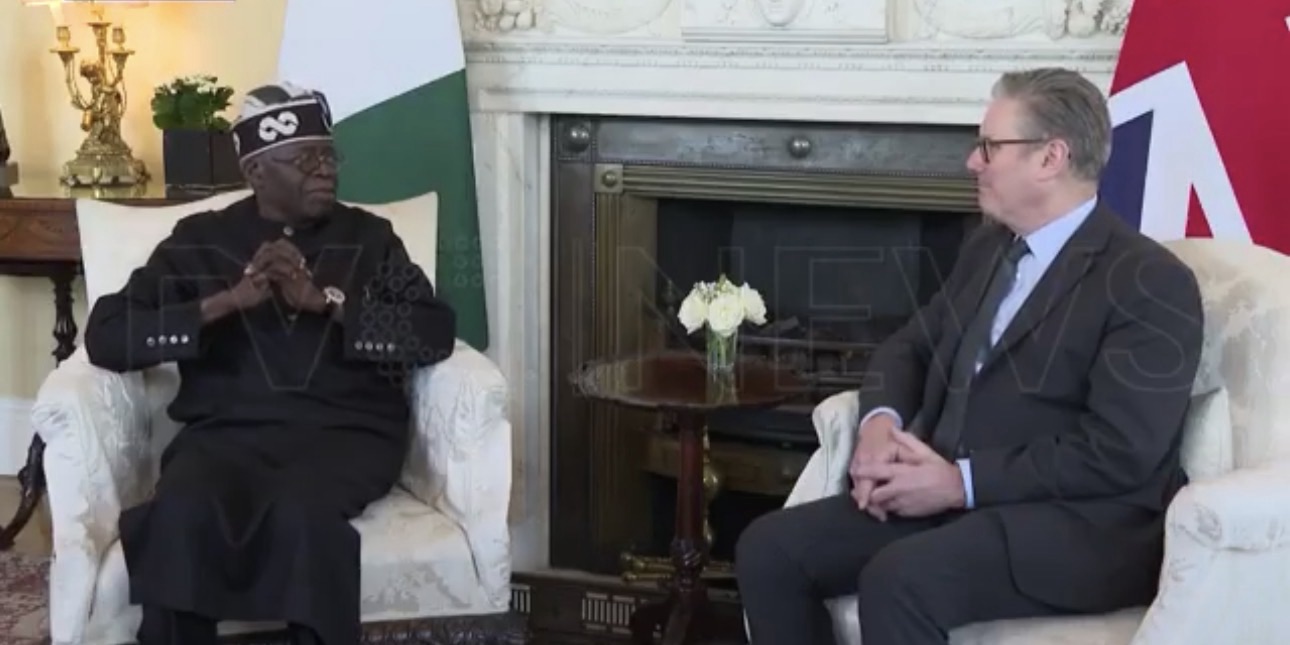
But the 2026 press release — issued during the state visit of President Bola Tinubu — gives this effort a shiny new tagline:
“We’re making it easier and faster to send people with no right to be here back home.”
“We” in this case refers to the UK Home Office leadership, who argue that recognising UK‑issued diplomatic notes avoids the old bureaucratic slog of waiting for Nigerian emergency travel documents. And that’s meant to sound like progress.
Which, let’s be honest, in policy terms is the equivalent of announcing that you’ve upgraded your stapler while the office is still on fire.
From Efficiency to “Order at the Border”
In the UK’s telling, this is a triumph of administrative efficiency.
According to the official brief:
- Failed asylum seekers will be removed more swiftly
- Visa overstayers and foreign criminals will be easier to return
- Recognition of UK letters eliminates an old bottleneck
It’s framed as part of a broader mission to “restore order to the border by ensuring those who have no right to be here are swiftly removed.”
In short:
If bureaucratic complexity was the enemy, they’ve found a new sword.
But Hold Up: What Are “UK Letters,” Exactly?
Here’s where it gets interesting — and where the critique sharpens from satire to sober nuance.
The agreement reportedly allows Nigeria to accept UK‑issued diplomatic notes (“UK letters”) as sufficient identification for return, instead of requiring Nigerian passports.
At first blush, that sounds like an administrative detail.
But legally and diplomatically, this is a big deal.
Normally, a sovereign state issues passports to confirm its own citizens’ identities. If another government’s paperwork starts doing that job instead, questions arise:
- Who decides who actually is Nigerian?
- Does Nigeria relinquish a small piece of its sovereign authority by accepting external IDs?
- What happens if someone is deported based on a foreign government’s paperwork — and they turn out not to be who the UK said they were?
These are exactly the sorts of questions that make lawyers and diplomats reach for coffee in the middle of the night.
Sovereignty vs. Speed: The New Trade-Off
Critics — human rights groups, constitutional lawyers, and civil society — argue this shortcut could undermine Nigeria’s sovereign administrative authority. And it may increase the risk of returning people wrongly categorised as Nigerian.
There’s even a subtle risk that the system might sweep up:
- Non‑Nigerians who appear or sound Nigerian
- Trafficking survivors misidentified as deportable
- People whose records are incomplete but nevertheless hit the deportation queue
This isn’t just abstract legal trivia — it’s the human cost of speeding things up.
Contradictions: Stars in the UK, “Burden” Out the Door
Here’s a subplot that refuses to sit quietly in the back row:
The UK actively recruits highly skilled Nigerian professionals — doctors, nurses, engineers — as part of its labour strategy. Yet at the same time, it’s accelerating the removal of people who have lived in the UK for years, even decades, simply because their legal status didn’t stick.
It’s a bit like opening the front door to welcome guests and locking the back door to throw others out — and then pretending it’s coherent policy.
Human Rights and International Law: A Quiet Rip Current
There’s also a legal constraint the UK can’t entirely ignore: the principle of non‑refoulement, which forbids returning individuals to places where they face serious threats to life or well‑being.
With Nigeria experiencing insurgencies in parts of the country, critics argue that some removals may edge close to that grey zone. And when enforcement is sped up as a matter of administrative convenience, that grey zone can widen quietly.
This isn’t a guaranteed outcome — legal safeguards do exist — but it’s a real tension between efficiency and rights protection.
Diplomacy With Strings Attached?
Another sensitive part of the press narrative is how this deal sits alongside wider UK–Nigeria cooperation.
For instance, recent investment and infrastructure packages (such as port modernization) took place in the same political space as these deportation arrangements. Critics see this as a form of transactional diplomacy — aid not charity, but conditional cooperation. It’s the classic:
“We’ll help… if you help us send people back.”
That is the heart of the neo‑colonial critique — the idea that the richer power uses economic leverage to secure cooperation on contentious issues.
System Strains: Two Countries, Different Pressures
In the UK, the immigration debate now dominates political headlines, press releases and poll chatter alike — and the recent record backlog of asylum appeals shows how strained the system is.
Meanwhile in Nigeria, absorbing thousands of people returning at speed — some of whom may not have lived in the country for decades — creates its own set of challenges:
- Reintegration headaches
- Employment uncertainty
- Social and security pressures
This isn’t “sending someone home”; it’s repatriation with complex social aftershocks.
Same Policy, Sharper Edges
So yes, the story is still what it has always been:
One agreement. Many press releases.
But the 2026 iteration adds:
- new administrative shortcuts
- broader removal categories
- and a media framing emphasising speed and enforcement
…without fundamentally changing the underlying policy blueprint.
Final Boarding Call
Britain calls it migration control.
Nigeria calls it cooperation.
Critics call it a mix of power asymmetry, legal risk and administrative expediency.
Perhaps the most honest description is:
A long‑distance arrangement where one country exports its problems — with diplomatic letters — and the other negotiates how much jurisdiction and responsibility it keeps.
The plane is still boarding.
The press releases are still rolling.
And somewhere between Heathrow and Abuja, the line between policy, sovereignty, and political theatre keeps getting blurrier.
 Centre for Nigeria Progress