

There is an unwritten constitution in Nigerian politics, and it has proven more durable than the one printed on paper. Since our return to civil rule in 1999, a quiet but powerful understanding has guided who governs and when. It is not found in Chapter Two of the 1999 Constitution, but every serious player in Abuja knows it exists. Call it zoning. Call it rotation. Call it federal character in motion. Whatever name you choose, this political settlement has been the shock absorber that has kept Nigeria’s delicate vehicle from careening off the cliff.
As we look toward 2027, that settlement is under threat again. And the man threatening it may inadvertently be doing the incumbent president the greatest favour of his political career.
The Pact That Built a Democracy
When the PDP assumed power in 1999, it did so without any formal process but with a clear understanding: the presidency would rotate between North and South. The June 12, 1993, wound was still fresh. A Southerner, M.K.O. Abiola, had been denied his mandate. It was time to heal that wound. Olusegun Obasanjo, a Yoruba man from the Southwest, became the beneficiary of that healing.
The pact was simple. The South would take eight years. Then the North would take eight years. Then back to the South. Like a metronome, the presidency would swing, and with each swing, the country would steady itself.
For a while, it worked.
The First Test: Obasanjo’s Third Term
But power has a way of making men forget their promises. By 2006, Obasanjo had done his eight years. He had governed through two terms. It was time to hand over to the North. But Obasanjo got selfish. The aura of Aso Rock had consumed him. He wanted to extend his tenure beyond the agreed limit.
The North, waiting patiently for its turn, refused to budge. The third-term agenda crashed and burned in the National Assembly. The message was clear: the settlement was not a suggestion. It was a binding contract.
The Yar’Adua Interregnum and the Jonathan Complication
What happened next was politically ingenious but ultimately disastrous. Obasanjo, perhaps nursing a grudge or simply wanting to maintain influence, engineered the emergence of Umaru Musa Yar’Adua, a northern governor whose failing health was an open secret. Yar’Adua won in 2007. Two years later, he was gone.
The constitutional route was clear: Goodluck Jonathan, the southern vice president, should take over. The North resisted. They had barely begun their eight years. But Nigeria’s unity was fragile, and the country could not afford a prolonged crisis. Jonathan was sworn in.
Here was a chance for Jonathan to be a statesman. He could complete Yar’Adua’s term, hand over in 2011 to a northerner, and secure his place in history as the man who honoured the pact. Instead, he got sucked into the aura of office. He ran in 2011. He won. Then, rather than step aside in 2015, he sought another term.
That decision tore the PDP apart.
The northern bloc within the party, feeling cheated of their rightful turn, revolted. The nPDP broke away. They merged with others to form the APC. And in 2015, Muhammadu Buhari walked through the door that Jonathan’s ambition had blown open. The North had its eight years back.
Buhari’s Eight and the Return South
Buhari governed for eight years. Whatever one thinks of his performance, the rotation principle was honoured. By 2023, it was the South’s turn again.
The APC, despite its many internal contradictions, understood this arithmetic. They ran a Muslim-Muslim ticket, yes, but critically, they ran a southern candidate. Bola Tinubu, whatever his flaws, was the vehicle through which the South would reclaim its slot in the presidency.
The implicit bargain of 2023 was this: the South gets eight years. Tinubu gets eight years. The region gets its turn. The metronome swings again.
The Trouble With 2027
This brings us to the present moment.
Tinubu has governed for two years. His performance, by any honest assessment, has been poor. The economy is struggling. Insecurity persists. The cost of living is crushing ordinary Nigerians. There is genuine anger in the land. The conditions are ripe for an opposition victory.
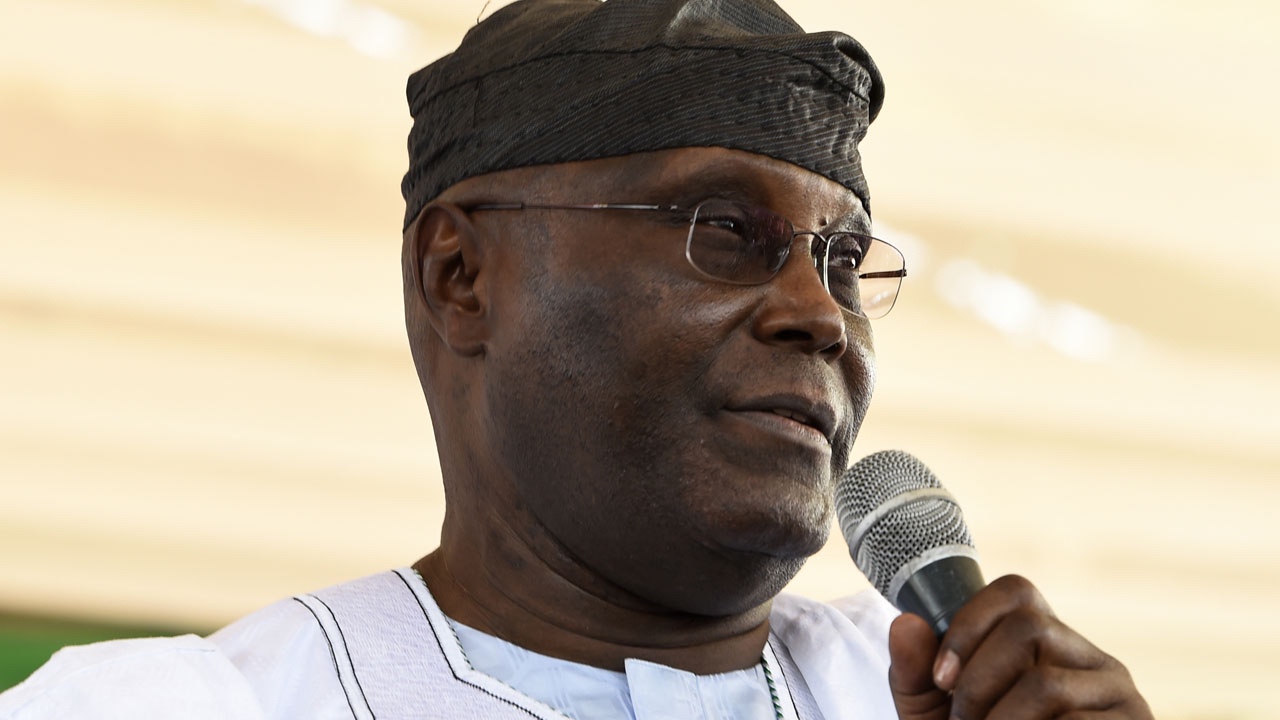
Enter Atiku Abubakar.
Atiku is a northerner. A Fulani man from Adamawa. He has been running for president since 1993, which is not an exaggeration. He was in the trenches with Obasanjo. He was in the trenches with Jonathan. He was in the trenches with Buhari. He is in the trenches now. At 79 years old, this will likely be his last dance.
But there is a problem. By running in 2027, Atiku is asking the North to interrupt the South’s turn. He is asking Nigerians to do in 2027 what Jonathan asked them to do in 2015. And we all remember how that ended.
The Obi Factor
Peter Obi has positioned himself shrewdly. He has said, publicly and repeatedly, that he would be happy to serve one term. Just one term. Complete the eight years for the South. Then hand over to the North in 2031.
This is not just clever politics. It is constitutional patriotism. Obi is saying: I respect the settlement. I am not here to disrupt the rotation. I am simply asking for the remaining four years of the southern slot.
For northerners who care about the long-term stability of the country, this is a reassuring message. For southerners who feel their region is entitled to its full turn, this is an appealing message. For Nigerians tired of Tinubu but wary of triggering another constitutional crisis, this is a sensible message.
The Spoiler Effect
Here is the hard truth Atiku does not want to face.
If he runs in 2027, he will split the opposition vote. Tinubu will hold his base in the Southwest. He will make deals in the North. He will appeal to the logic of continuity. And in a three-horse race, he will win.
Atiku, by insisting on running, is guaranteeing the continuation of the very government he seeks to unseat. He is acting as a spoiler. And the tragedy is that by 2031, when the North’s turn naturally comes around again, Atiku will be too old to contest. He will have spent his last political capital fighting a battle that could not be won, in a year that was not his turn.
The Settlement Must Hold
Nigeria is not a normal country. We are a collection of nations held together by agreements, some written, most not. The rotation of power between North and South is one of those agreements. It has survived third-term plots. It has survived death in office. It has survived defections and party realignments. It has survived because the alternative is too terrifying to contemplate.
Jonathan broke the pact, and it destroyed his party. Buhari honoured the pact, and it preserved the peace. Tinubu is entitled to his eight years, not because he has governed well, but because the South is entitled to its eight years. That is the deal.
If Atiku wants to be president, he should wait for 2031. He should build. He should organize. He should prepare for his region’s rightful turn. But running now is not ambition. It is sabotage.
And the saddest part is this: the man he is sabotaging will be the direct beneficiary.
The Bottom Line
Atiku Abubakar has every right to run for president. The Constitution guarantees it. But Nigerian politics has never run on the Constitution alone. It runs on trust. It runs on bargains. It runs on the understanding that if we do not take turns, we will take up arms.
The settlement of 1999 is fragile. But it is all we have.
Atiku, by insisting on running in 2027, is not fighting Tinubu. He is fighting that settlement. And if he succeeds in breaking it, he will not be the one to pick up the pieces.
By the time the North is due again, he will be watching from the sidelines.
And Tinubu, God help us, will still be in Aso Rock.
 Centre for Nigeria Progress