

There is something almost poetic about Nigeria’s infrastructure diplomacy: whichever direction we turn—East or West—we somehow arrive at the same destination. Only the accent changes; the terms do not.
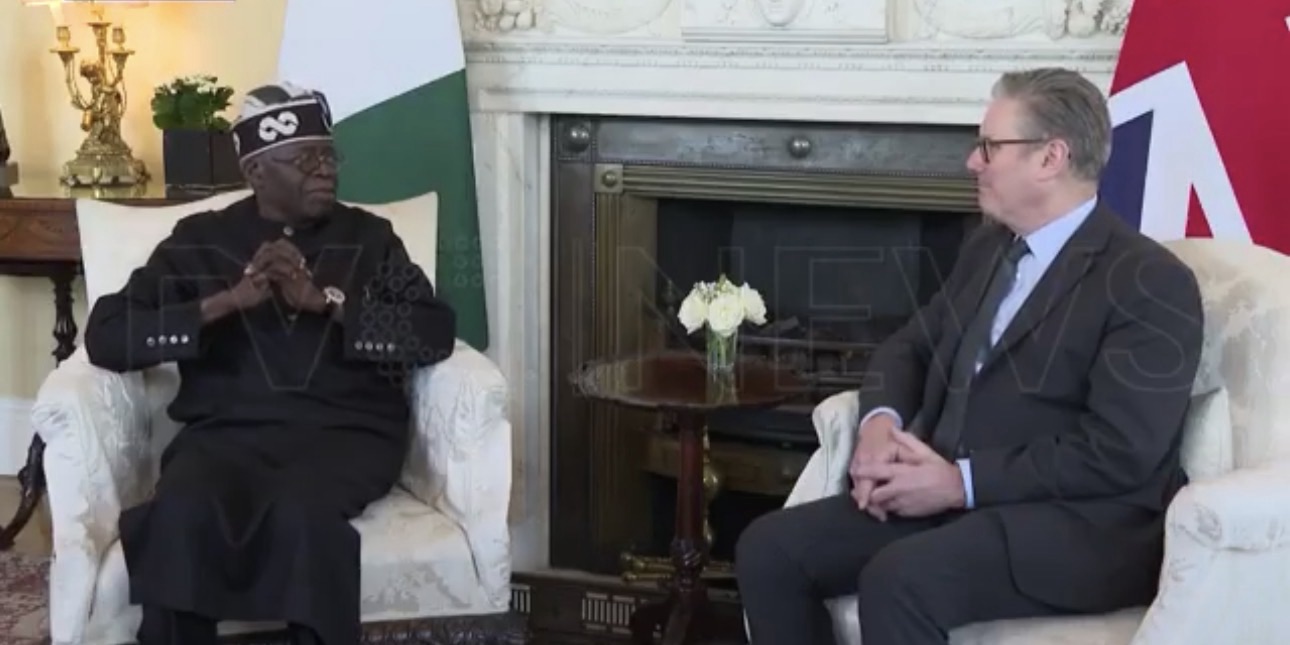
When Bola Ahmed Tinubu returned from the United Kingdom with a port development loan for Lagos, the official line sounded reassuringly modern: partnership, development, strategic investment. Then the fine print began to read like a Victorian sequel.
We are told:
A portion of the loan—about 20%—never leaves the UK. Critical inputs, like iron ore, are sourced from the UK. Management of the port remains effectively under UK control until repayment.
In other words, Nigeria borrows money, spends part of it in Britain, buys British inputs, and then hands operational leverage back to Britain until the debt is cleared. This is not just a loan; it is a carefully choreographed economic boomerang.
Now, before anyone accuses us of selective outrage, let us rewind to the era of Muhammadu Buhari and his government’s enthusiastic courtship of Chinese financing.
Through institutions like the Export-Import Bank of China, Nigeria secured infrastructure loans—railways, airports, roads—with terms that also came wrapped in patriotic Chinese packaging:
Contracts awarded primarily to Chinese firms Materials and labour imported from China Sovereign immunity waivers tucked into the legal undergrowth—essentially saying, “if we default, come and help yourselves”
Different continent, same choreography.
The Illusion of Choice: British Tailcoat vs Chinese Silk
Let us not pretend these are fundamentally different models. They are cousins at the same imperial reunion.
The UK Model (Polished Dependency):
Financial retention within the lender’s economy. Supply chain capture. Operational control dressed in contractual respectability.
The Chinese Model (Industrial Dependency):
Turnkey delivery by Chinese firms. Input and labour lock-in. Asset-risk clauses lurking behind sovereign waivers.
One arrives with a bowler hat and legal elegance; the other with speed, steel, and state-backed efficiency. Both arrive with a calculator—and leave with leverage.
The Missing Ingredient: Political Scrutiny (Or the Lack Thereof)
Here is where the story becomes less about foreign powers and more about domestic theatre.
In a functioning democracy, deals of this magnitude would trigger forensic legislative scrutiny, opposition outrage, policy papers, and perhaps the occasional dramatic walkout from parliament. In Nigeria, they trigger press statements, silence, and—most curiously—familiar faces.
Enter Rotimi Amaechi.
Now repositioning himself as a presidential hopeful under the African Democratic Congress (ADC), Amaechi should, in theory, be one of the loudest critics of the Tinubu administration’s borrowing strategy. After all, opposition politics thrives on exposing exactly this kind of vulnerability: questionable loan terms, external dependency, and compromised sovereignty.
But there is a small complication—history.
Amaechi was a central figure in negotiating and executing many of the Chinese-backed infrastructure loans under Muhammadu Buhari. The same structural issues we now observe in UK-linked deals—externalised procurement, tied financing, and asymmetrical obligations—were features, not bugs, of those earlier agreements.
Which raises an awkward question:
How does one indict a system one previously operated with enthusiasm?
Mutual Assured Silence
What Nigeria suffers from is not just weak opposition; it is compromised opposition.
When the key actors in yesterday’s deals become today’s critics, scrutiny turns into a delicate dance:
Criticise too hard, and you expose your own record. Stay too quiet, and you validate the current administration.
The result? A bipartisan understanding best described as “mutual assured silence.”
Bola Ahmed Tinubu cannot be robustly challenged on loan opacity by those who presided over similarly opaque frameworks.
Rotimi Amaechi cannot convincingly demand due diligence reforms without inviting a retrospective audit of his own tenure.
And so, the Nigerian public is treated to a peculiar form of political debate where:
Everyone talks about development No one interrogates the terms And accountability is politely avoided like an awkward family secret
Why the Cycle Persists
This lack of scrutiny is not accidental—it is structural.
1. Revolving Door Governance
The same individuals cycle through power, opposition, and back again. Today’s critic is yesterday’s signatory.
2. Institutional Weakness
Parliamentary oversight exists more in theory than in practice. Committees rarely bite the hands that may soon feed them.
3. Elite Consensus on External Borrowing
Across party lines, there is broad agreement—not disagreement—on the desirability of these loans. The dispute is not whether to borrow under such terms, but who gets to sign.
4. Public Fatigue and Information Asymmetry
Loan agreements are complex, technical, and often opaque. This shields policymakers from sustained public pressure.
Sovereignty on Layaway
The most dangerous illusion is that these are merely financial agreements. They are not. They are control agreements disguised as credit facilities.
When:
Inputs are controlled externally Management is outsourced Legal protections are diluted
…what you have is not development financing. You have outsourced sovereignty on a repayment plan.
East or West—Same Chains, Different Polish
Under Muhammadu Buhari, we were told China was the efficient partner of the future.
Under Bola Ahmed Tinubu, we are rediscovering the reassuring familiarity of Britain.
Hovering in the wings is Rotimi Amaechi, offering himself as an alternative—while standing on a record built from the same template.
Different actors. Same script.
Conclusion: A Country That Keeps Leasing Itself
Nigeria does not lack options. It lacks accountable decision-making.
Until political actors can critique borrowing practices without implicating themselves, scrutiny will remain shallow, and reform will remain rhetorical.
And so the cycle continues:
Borrow from the East Pivot to the West Debate loudly Examine quietly Repeat endlessly
The only real question left is this:
if both the government and the opposition are fluent in the same language of dependence, who exactly is negotiating Nigeria’s freedom?
 Centre for Nigeria Progress