

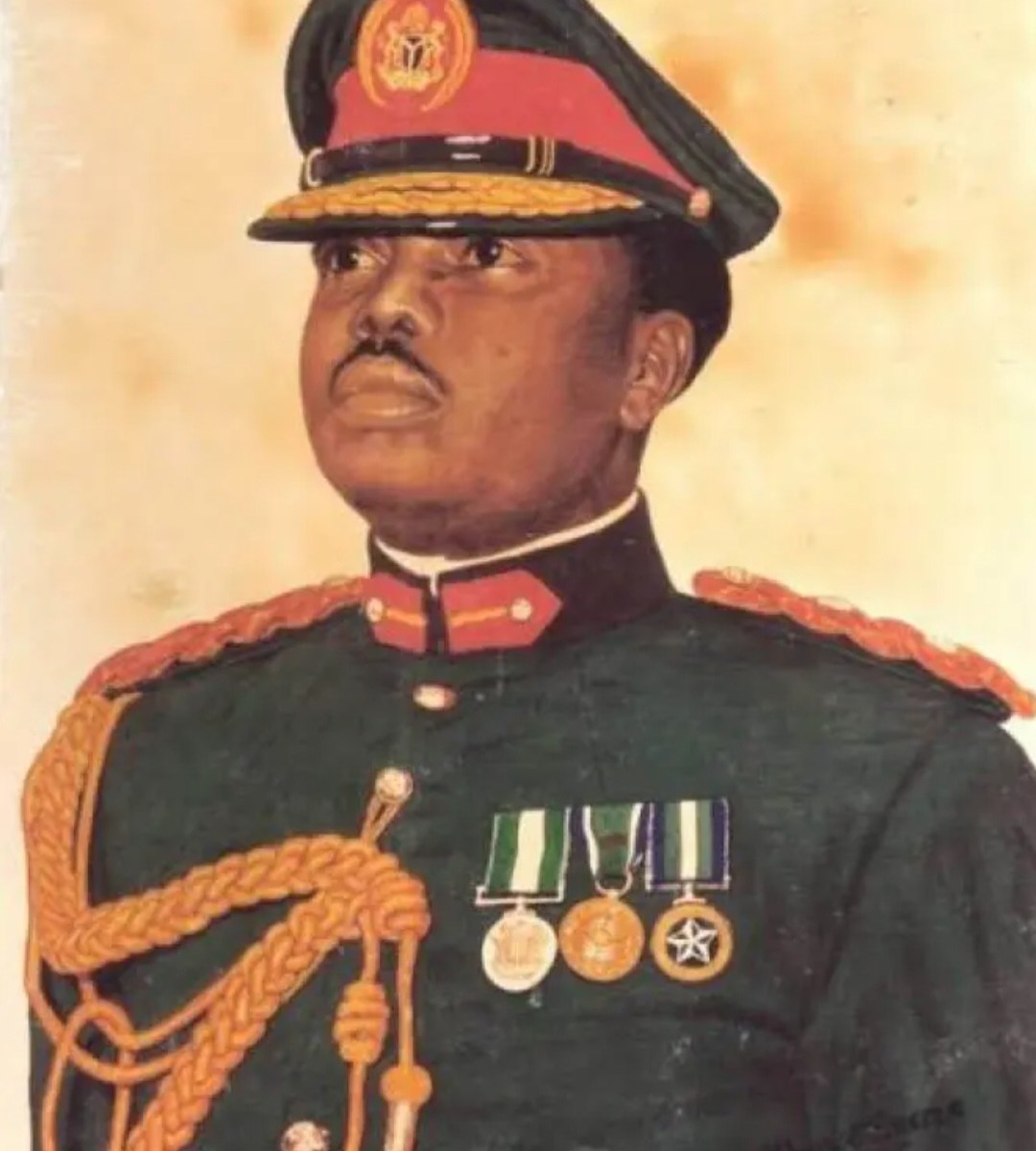
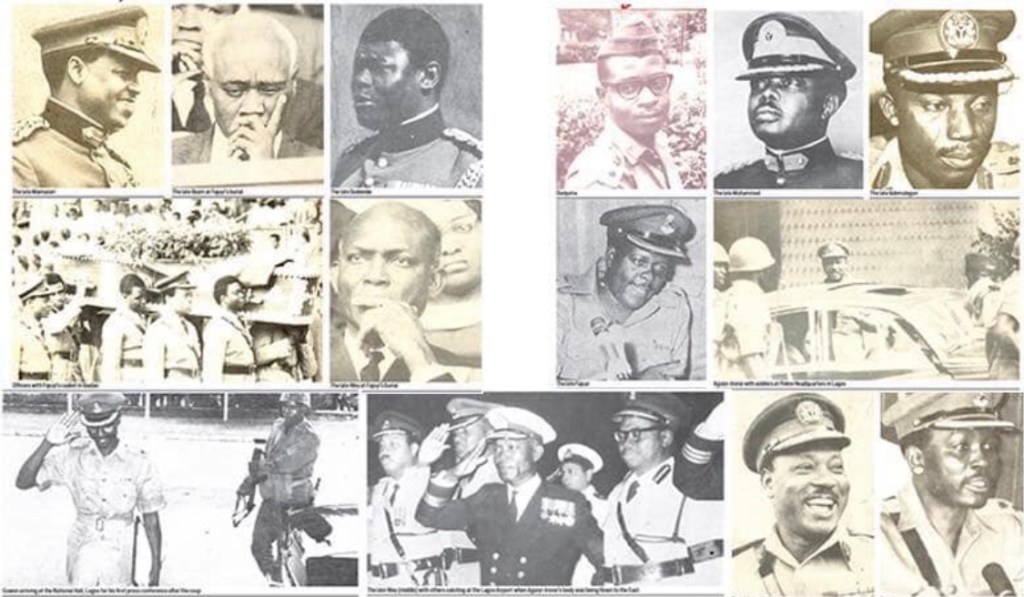
The July 29, 1966, counter-coup in Nigeria was not merely a change of government; it was a seismic event that shattered the fragile unity of the young nation, reversed the political order, and set the country on an inexorable path to civil war. Occurring just seven months after the violent January 15 coup, the July “Rematch,” often called the “July Counter-Coup” or “July Mutiny,” was a bloody, Northern-officer-led reaction that fundamentally altered Nigeria’s destiny.
The Trigger: Grievances and a Nation on Edge
The reasoning of the coup plotters stemmed directly from the aftermath of the January coup, led predominantly by young Igbo officers. That first coup had resulted in the assassination of key Northern and Western political leaders, including Prime Minister Abubakar Tafawa Balewa and Northern Premier Ahmadu Bello, while the Igbo President, Nnamdi Azikiwe, was abroad. Major General Johnson Aguiyi-Ironsi, an Igbo, took power.
Although the January coup plotters claimed pan-Nigerian motives, their execution was perceived in the Northern and Western regions as an Igbo ethnic coup. Ironsi’s subsequent governance, particularly his Unification Decree No. 34 of May 24, 1966, which abolished the federal structure and instituted a unitary government, was seen as the final proof of a plan to dominate the North. Northern officers and rank-and-file soldiers, already grieving lost leaders and humiliated by the dismantling of regional power, feared their military institution—where Northerners dominated the other ranks but were fewer in the officer corps—was being purged and sidelined.
The Plotters and Their Aims
The counter-coup was executed primarily by Northern Nigerian junior and mid-level army officers, with the tacit support or reluctant acceptance of many senior Northern officers. Their core aims were stark:
- To reverse the January coup: Seen as an ethnic power grab, it had to be avenged and undone.
- To restore Northern sovereignty and political power: This meant dismantling Ironsi’s unitary system and returning to a federal arrangement that protected Northern interests.
- To exact revenge for the killing of Northern leaders and soldiers.
- To prevent perceived Igbo domination of the army and the country.
Key Participants:
· Major Murtala Mohammed: The 29-year-old de facto leader of the plot. Charismatic and fiercely loyal to the North, he coordinated the uprising from his base in Abeokuta.
· Captain Joseph Garba: Played a crucial role in Lagos. He would later gain fame as Nigeria’s Ambassador to the UN and Chairman of the UN Special Committee Against Apartheid.
· Lieutenant Colonel M. D. Yusuf: A senior figure involved in the planning, who later became Nigeria’s Police Inspector-General.
· Lieutenant Colonel Joe Akahan: A senior Northern officer who became Chief of Army Staff after the coup.
· Major Theophilus Danjuma: A pivotal figure who reportedly arrested and ordered the execution of General Ironsi in Ibadan. He would become a long-standing power broker in Nigerian politics.
· Captain James Abu: A Northern Christian officer involved in the operations.
· Lieutenant Muhammadu Buhari: A young officer who participated in the coup in the North. He would later become Military Head of State (1983-1985) and elected President (2015-2023).
· Lieutenant Ibrahim Babangida: Also a participant, he would later become Military President (1985-1993).
· Lieutenant Sani Abacha: Took part in the operations; he later became Military Head of State (1993-1998).
· Lieutenant Ibrahim Bako, Lieutenant William Walbe, and numerous other Northern NCOs and soldiers formed the operational backbone of the mutiny across the country.
Bloodshed and the Road to Biafra
The coup was marked by extreme violence. General Ironsi and his host, Lieutenant Colonel Francis Fajuyi (the Western Region Governor), were captured and executed in Ibadan. Across military barracks nationwide, a horrific purge of Igbo officers and soldiers occurred. Hundreds were massacred, effectively cleansing the army’s officer corps of its Igbo element.
The coup initially lacked a clear political directorate. After days of confusion, power was handed not to a civilian politician but to the Chief of Army Staff, Lieutenant Colonel Yakubu Gowon (a Northerner from a minority Christian background). Gowon’s ascension was controversial (he was outranked by Brigadier Ogundipe) but was accepted as a compromise to prevent total disintegration.
The effects were catastrophic for the Nigerian state:
- Collapse of Trust: Any semblance of inter-ethnic trust within the army and the polity evaporated.
- Massive Retaliatory Violence: The pogroms against Igbos in the North, which began in May, escalated horrifically after July, leading to the deaths of an estimated 30,000 Igbos and the flight of over a million back to the Eastern Region.
- The Move to Secession: The Eastern Region, under Lieutenant Colonel Chukwuemeka Ojukwu, saw the events as proof that Igbos could not be safe in Nigeria. Failed negotiations (the Aburi Accords) and irreconcilable differences over revenue and security led to the region’s secession as the Republic of Biafra on May 30, 1967, triggering the Nigerian Civil War (1967-1970).
Lasting Political Effects
The legacy of the July counter-coup is etched deeply into Nigeria’s political DNA:
· The Northern Hold on Power: It established a precedent of Northern dominance in the military and, by extension, national leadership for decades. For 38 of the next 42 years, Nigeria would be ruled by either a Northern military officer or a Northern-led political arrangement.
· Militarization of Politics: It cemented military intervention as a “corrective” tool in politics, leading to a cycle of coups (1966, 1975, 1983, 1985, 1993).
· Institutionalized Ethno-Regional Suspicion: The coup entrenched a zero-sum, winner-takes-all view of federal power, where control of the center is seen as essential for regional survival, fueling perennial tensions.
· The “Nigerian Question”: It made the issue of federalism, state creation, and resource control the central, unresolved debate in Nigerian constitutional politics.
· A Culture of Impunity: The success of the violent, ethnically-driven counter-coup without significant repercussions for its architects created a dangerous template for resolving national disputes.
In conclusion, the July 1966 counter-coup was the pivotal fracture point. It transformed a post-colonial state struggling with governance into a nation at war with itself. Its participants, many of whom became the dominant figures in Nigerian leadership for a generation, achieved their immediate aim of reclaiming Northern power. But in doing so, they unleashed forces of ethnic nationalism and mistrust that continue to challenge the very idea of “One Nigeria” to this day. The coup didn’t just lead to a war; it rewired the Nigerian state’s political circuitry, leaving a legacy of fragile unity built on a foundation of unforgotten trauma.
 Centre for Nigeria Progress