

There is a peculiar danger in believing the flattering stories written about you. Public figures often fall victim to this affliction, but institutions are equally susceptible. When praise becomes echo, and echo becomes doctrine, the result is policy built not on reality but on self-congratulatory mythology.
Nowhere is this more visible than in the Western media’s treatment of the so-called Global South.
The narrative is often delivered with a mixture of condescension and intellectual laziness. Countries across Africa, Asia and parts of Latin America are routinely portrayed as passive spectators in world affairs—economically dependent, politically fragile, and perpetually waiting for instruction from the enlightened North. Complexity is replaced with caricature; agency with pity.
It is a comforting narrative for those who produce it.
The danger, however, arises when policymakers begin to believe their own press clippings.
For decades the media ecosystem in the West has reinforced a particular worldview: that the Global South lacks cohesion, lacks leverage, and ultimately lacks the capacity to act independently of Western approval. In this telling, international politics is a stage where Western powers move the pieces and the rest merely react.
Reality, however, has repeatedly challenged this assumption.
The wars in Iraq and Afghanistan are instructive examples. Both interventions were undertaken with the underlying belief that the governments in those countries were detached from their populations and that Western military pressure would quickly expose that divide. The expectation was that once the regimes were removed, the societies themselves would quickly align with Western political models.
Yet the opposite occurred.
The societies in question, fragmented as they were, demonstrated an extraordinary capacity for endurance and resistance. Insurgencies formed, local networks mobilised, and the wars dragged on for years—costly, exhausting conflicts that ultimately forced the West to reassess its assumptions.
The lesson was simple: populations outside the West are not passive observers of history. They are participants in it.
Yet that lesson appears to be periodically forgotten.
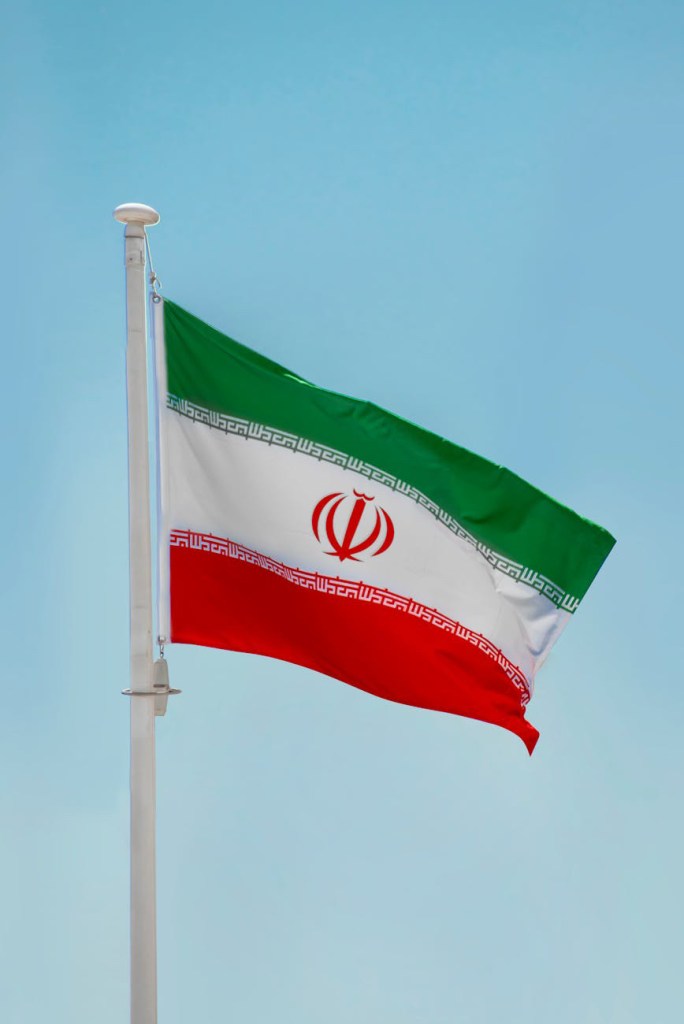
In the current confrontation involving the United States, Israel, and Iran, echoes of those earlier assumptions can still be heard in sections of Western commentary. Some analyses appear to assume that internal dissatisfaction within Iran will inevitably translate into political collapse once external pressure intensifies.
It is a familiar theory: the government is unpopular, therefore external pressure will cause society to fracture.
But history suggests a different possibility.
External threats often produce the opposite effect. Instead of division, they generate solidarity. Political disagreements that exist during peace are temporarily suspended when populations perceive a foreign adversary.
This phenomenon is not unique to the Global South. Western societies demonstrated the same pattern during World War II. During that conflict, the populations of Britain, the United States and other Allied nations displayed immense resilience and sacrifice in defence of their countries.
Yet a curious assumption sometimes emerges in Western strategic thinking: that such resolve is uniquely Western.
The implicit narrative is that bravery, endurance and national cohesion are qualities largely monopolised by Western societies, while populations in Asia, Africa or the Middle East will inevitably fracture under pressure.
Such thinking is historically questionable and analytically dangerous.
Vietnamese resistance during the Vietnam War, Afghan resistance during the Soviet–Afghan War and subsequent conflicts, and Iraqi insurgencies after 2003 all demonstrated extraordinary levels of endurance and sacrifice.
These were not societies lacking courage or resolve. They were societies fighting wars on their own soil.
Which raises a difficult but necessary question: why do these miscalculations persist?
One possible explanation lies in the intellectual framework through which much of the Global South is viewed in Western discourse. If the societies of Africa, Asia and the Middle East are subconsciously perceived as politically immature, socially fragmented, or psychologically incapable of sustained resistance, then strategic planners may underestimate their capacity for mobilisation.
That is not merely a policy mistake; it may also reveal deeper cultural assumptions.
In its mildest form, it is paternalism—the belief that Western societies possess superior political maturity. In its harsher form, it begins to resemble a kind of embedded racial or civilisational hierarchy: the idea that resilience, courage and strategic sophistication are disproportionately Western attributes.
If such assumptions exist, even unconsciously, they inevitably distort judgement.
They encourage decision-makers to underestimate adversaries, misread populations, and assume that pressure will produce collapse rather than cohesion.
History repeatedly demonstrates the opposite.
People everywhere—whether in Europe, Asia, Africa or the Middle East—are capable of extraordinary resilience when confronted with external threats. Courage is not a Western monopoly, nor is endurance a cultural anomaly confined to certain societies.
It is a universal human trait.
The danger of believing one’s own press clippings is that flattering narratives eventually begin to masquerade as strategic analysis. When that happens, policies are shaped not by reality but by assumptions.
And in geopolitics, assumptions are often the most expensive mistakes a nation can make.
 Centre for Nigeria Progress