

Africa was colonised by empires with delusions of grandeur. Britain had its civilising mission, France its assimilationist fantasy. Belgium, by contrast, arrived with neither ideology nor competence—only appetite. And yet, for a country barely able to agree on its own language policy, Belgium managed to leave behind some of the most enduring wreckage on the African continent.
Measured by landmass, Belgium was a minor colonial player. Measured by consequences, it punches far above its weight.
Colonialism as a Private Business Venture
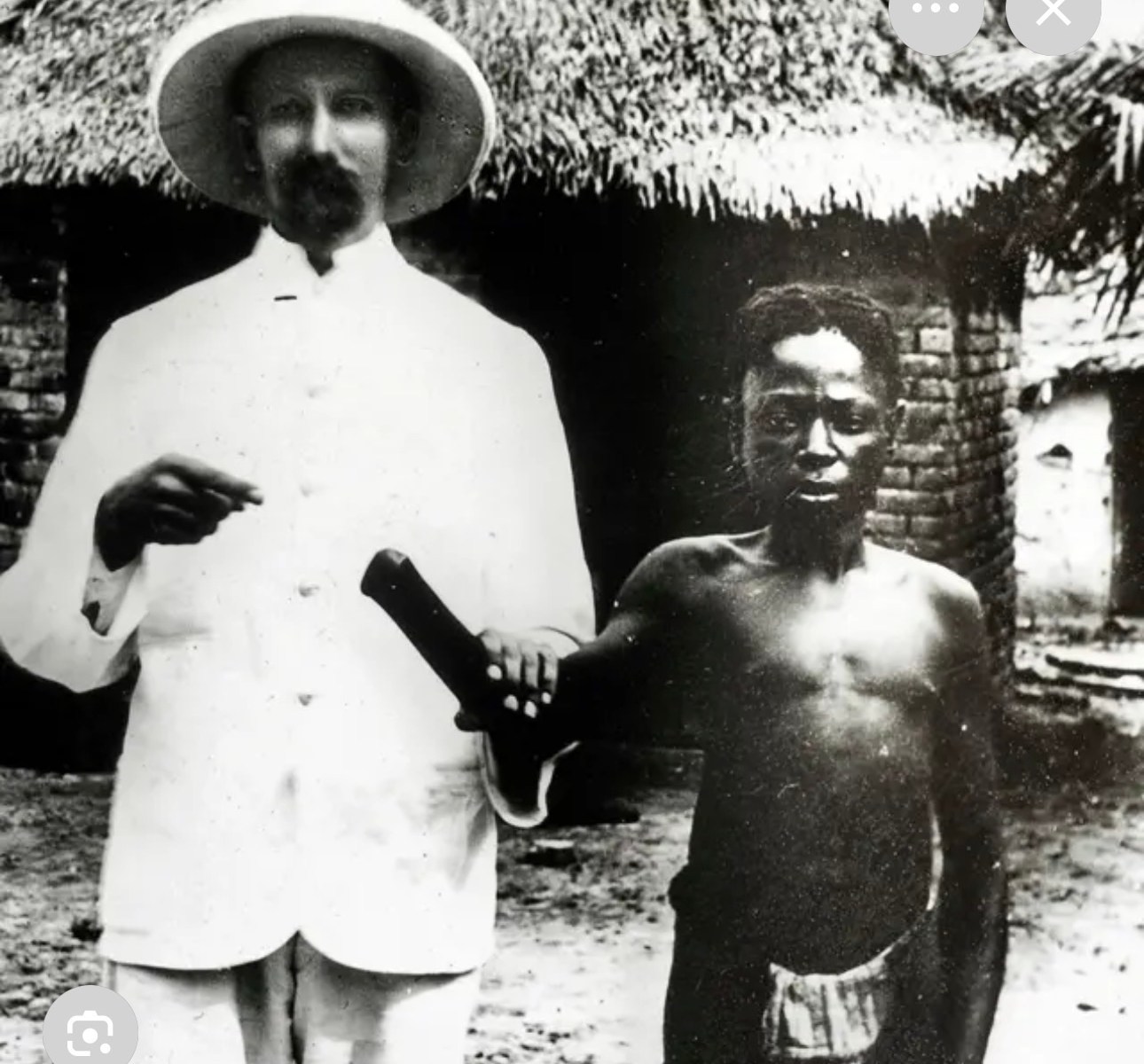
Belgium’s African adventure did not begin as a national project but as a personal criminal enterprise. The Congo Free State was not a colony of Belgium; it was the private property of King Leopold II. A whole country owned like a weekend estate. No parliament. No accountability. Just quotas, whips, severed hands, and death tallies.
This was not colonialism with pretensions of order. It was organised plunder with stationery. Leopold did not intend to govern Congo or prepare it for anything resembling a future. He intended to extract rubber and ivory until the land—or its people—gave out. The result was millions dead and a state constructed entirely without institutions, legitimacy, or moral restraint.
That origin story matters. Violence was not a side effect of Belgian rule; it was the operating system.
Rwanda: How Paperwork Became a Weapon
If Congo was Belgium’s crime of brutality, Rwanda was its crime of imagination. Or more precisely, its crime of racial imagination. The Belgians did not invent Hutu and Tutsi, but they froze them, ranked them, racialised them, and bureaucratised them. Fluid social categories were turned into permanent biological destinies, reinforced by identity cards and pseudo-scientific nonsense imported from European racial anthropology.
Belgium decided who was tall enough, thin enough, or “Hamitic” enough to rule. Power followed phenotype. Once identity becomes law, it becomes lethal. Once it becomes lethal, it outlives the law that created it.
The Rwandan genocide did not happen because Belgium wanted genocide in 1994. It happened because Belgium had already done the most dangerous thing decades earlier: it rewrote society as a zero-sum ethnic hierarchy and then walked away, leaving the bomb ticking.
Colonialism did not swing the machete. It manufactured the logic that made the machete thinkable.
Congo After Independence: Sabotage Disguised as Stability
Belgium’s exit from Congo was not a decolonisation; it was an abdication followed by interference. Having spent decades ensuring Congolese people were excluded from political participation, Belgium suddenly declared them “independent” and looked shocked when chaos followed.
When Patrice Lumumba—Congo’s first democratically elected prime minister—spoke the language of sovereignty instead of obedience, he was swiftly eliminated. With Belgian complicity. Democracy was acceptable only if it remained decorative. A functioning, independent Congo was never the plan.
What followed was not an accident of African governance but a predictable outcome: a hollowed-out state, endless proxy wars, resource theft dressed up as international concern, and instability profitable to everyone except the Congolese.
Congo’s tragedy is often framed as mysterious, ancient, or inevitable. It is none of those things. It is engineered fragility.
Did Belgium Export Its Own Dysfunction?
This raises an awkward question. Belgium itself is a state permanently negotiating its own coherence—linguistically divided, politically fragmented, frequently unable to form a government without lengthy mediation. One wonders whether Belgium exported to Africa what it had not resolved at home: an inability to manage identity, power, and difference without collapse.
But the real charge is not dysfunction; it is irresponsibility. Britain ruled arrogantly. France ruled patronisingly. Belgium ruled negligently and then intervened maliciously when Africans attempted self-rule.
It governed without vision, departed without repair, and interfered without remorse.
The Long Shadow of a Small Empire
Colonialism is not an event; it is a structure with a long tail. In Rwanda, that tail ended in genocide. In Congo, it continues as chronic instability and mass death. Belgium’s role is often underplayed because its empire was smaller and less theatrical. But when measured by human cost per square mile, Belgium may be Africa’s most destructive coloniser.
Small country. Enormous crimes. Rolling consequences.
History has already delivered its verdict. Belgium’s problem is that the evidence keeps resurfacing.
 Centre for Nigeria Progress