

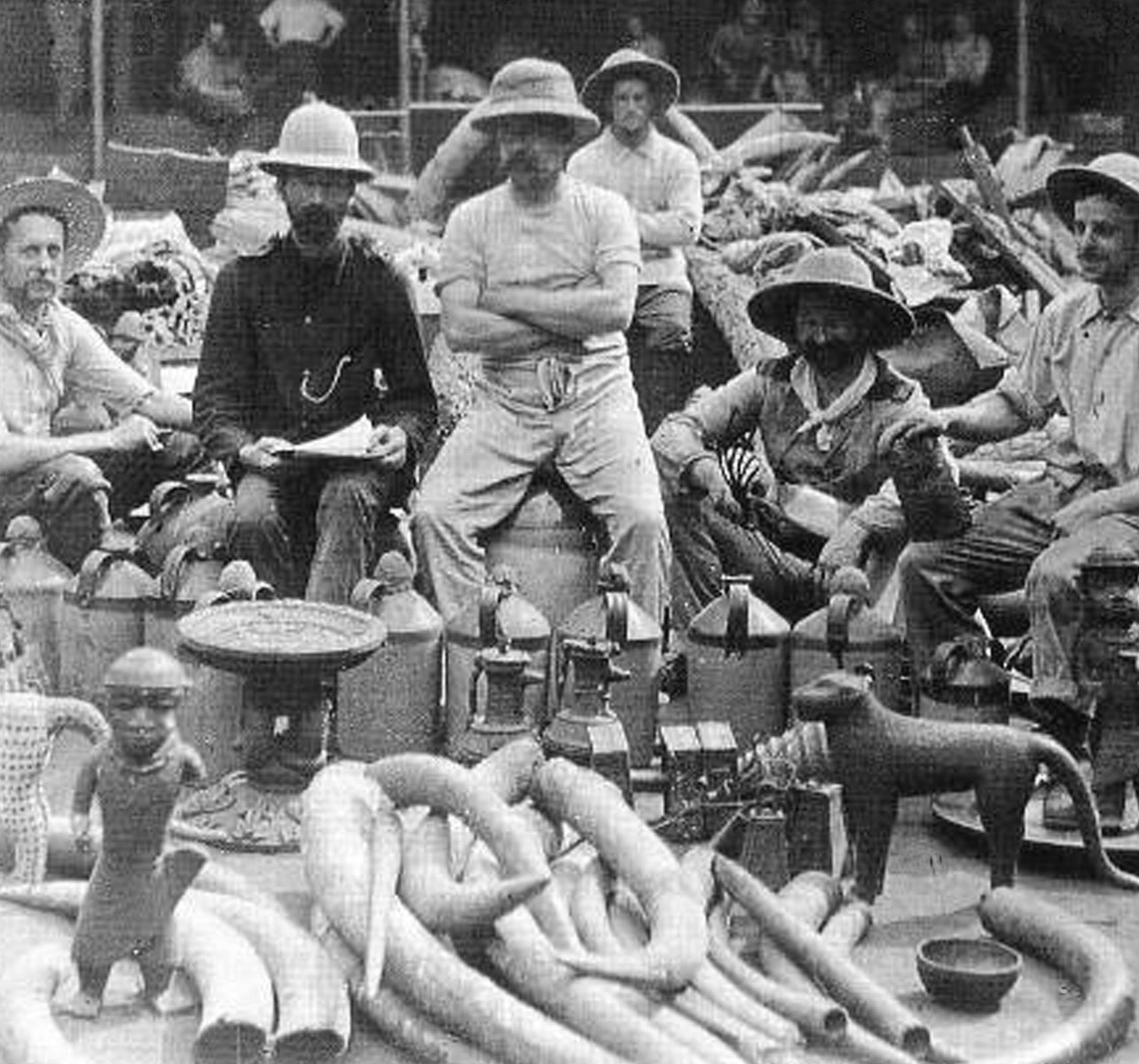

The Kingdom of Benin was a highly organized, urbanized state that thrived for centuries in what is now Edo State, Nigeria. At its height, Benin City was a marvel—laid out with wide streets, massive earthworks (the Benin Walls, among the largest man-made structures in the world at the time), a sophisticated court system under the Oba, guilds of specialized artisans, and diplomatic/trade relations that reached across continents, including early contact with Portuguese explorers in the 15th–16th centuries.
The “Benin Bronzes” (actually mostly brass, cast using the lost-wax technique) were far more than decorative objects. Created by hereditary guilds of casters working for the royal court, they served as:
- Historical records (plaques depicting court ceremonies, battles, Portuguese traders with firearms, and daily life).
- Symbols of royal and spiritual authority (commemorative heads of Obas and queen mothers, altarpieces).
- Religious and ritual items tied to ancestor veneration and the divine kingship of the Oba.
A British Museum curator in 1897 reportedly said there was “absolutely nothing like them in any other part of the world” in terms of technical brilliance. This craftsmanship reflected a society with advanced metallurgy, organized labor, and a rich artistic tradition that challenged European stereotypes of pre-colonial Africa even at the time.
These pieces literally encode their ancestors’ worldview, achievements, and history. They documented a powerful, independent kingdom that negotiated with Europeans on its own terms for centuries before the violent rupture of 1897.
The 1897 Events: The “Punitive Expedition” and Its Human Toll
The bronzes as a “side show” in a larger power struggle between British colonial officer James Phillips and the Oba of Benin (Ovonramwen Nogbaisi). Phillips pushed for access despite repeated warnings from the Oba that the timing was inappropriate (during a sacred period). When a British party was ambushed in January 1897 (killing most Europeans and many African carriers), Britain launched a large-scale military response in February.
What the British called a “punitive expedition” involved:
- Overwhelming firepower against Benin forces.
- The sacking and burning of Benin City, including much of the royal palace.
- Significant loss of life among Benin defenders, civilians, and the city’s population—often described locally as a massacre far outweighing the initial incident.
- Systematic looting of thousands of artifacts (estimates range from 2,500 to over 4,000), which were then auctioned in London to recoup costs. Many ended up in the British Museum, German collections, and private hands.
This wasn’t isolated; it fit into the broader “Scramble for Africa,” where economic motives (control of palm oil trade routes) and imperial expansion played key roles. British accounts emphasized ending “barbarism” (e.g., references to human sacrifice), but historians note these claims were sometimes exaggerated or used as pretexts, while ignoring the violence and destruction inflicted by the expedition itself. Eyewitness and later accounts highlight the trauma: the exile of the Oba, the disruption of governance, and the cultural decapitation of a living tradition.
Nuances matter here. Not every bronze was ancient—some captured recent events—but all represented profound communal heritage. The invasion didn’t just steal objects; it shattered a system where these items lived in context, used in rituals and court life, rather than isolated in glass cases.
Personal and Communal Impact: What This Means for Benin/Edo Heritage
When heritage like this is discussed globally, it can evoke a mix of emotions for those with direct ties:
- Pride in the undeniable sophistication and ingenuity of your ancestors.
- Grief over the violence and the way these objects were removed under duress, then celebrated in Western museums while their full cultural meaning was often stripped away.
- Resilience in how Edo people and Nigerians have preserved oral histories, continued related crafts (though the traditional guild system has faced challenges), and kept advocating for return since the colonial era.
- Complexity around identity: Many from Benin live with this dual reality—seeing replicas or photos of the bronzes while knowing originals are scattered worldwide, some now returning.
Stories from Edo descendants often highlight how the bronzes symbolize unbroken lineage and civilization against narratives that portrayed Africa as “without history.” At the same time, practical concerns arise: How should returned items be cared for? Who holds ultimate custodianship—the royal palace (as recognized in some Nigerian government decisions), the National Commission for Museums and Monuments, or broader community institutions? Funding, security, climate control, and public access are real challenges.
Restitution Today (Early 2026 Landscape)
Progress has accelerated in recent years, but it’s not straightforward:
- Hundreds of bronzes (or related objects) have been returned or had ownership transferred to Nigeria in the last few years. Examples include transfers from Cambridge University (116 items in early 2026, with some on loan), German museums, the Horniman Museum (earlier), and recent moves involving Swiss institutions like Museum Rietberg in Zurich (ownership transfer in March 2026 for 11 objects, with some physical returns and loans).
- In 2026, more are expected from Sweden, Britain, and Germany. The Oba of Benin (Ewuare II) has been recognized in certain contexts as the rightful custodian, with management agreements involving the federal government.
- On the ground in Benin City: About 100 returned pieces have been displayed at the existing National Museum, though with basic labeling in some cases. Plans for a dedicated Benin Royal Museum or renovations (e.g., of an old theater) continue, but face funding hurdles. The Museum of West African Art (MOWAA) opened emphasizing contemporary work alongside heritage efforts.
- Challenges: Political tensions between federal authorities, the royal family, and state government have complicated housing and display. The traditional casting craft itself is struggling in Benin City, with fears of a dying guild despite the symbolic returns. Some returned items remain in storage pending better facilities. Loans and shared stewardship models are emerging as compromises in some cases.
Broader debates include:
- Moral vs. legal arguments: Many view the 1897 acquisition as illegitimate due to violence, regardless of 19th-century norms.
- Universal museums vs. source communities: Should encyclopedic institutions retain items for “global access,” or do originating communities have primary claims, especially when context and living traditions were disrupted?
- Edge cases: Provenance isn’t always crystal-clear for every piece; some returns involve research. Digital projects (like Digital Benin) help catalog and reconnect dispersed collections virtually.
These returns represent partial healing but also raise forward-looking questions: How can repatriation strengthen local education, tourism, and cultural revival in Edo State? How do we balance preservation with accessibility? What role should diaspora communities and global partners play?
Reflections and Moving Forward
This heritage is profound—technically masterful, historically rich, and deeply tied to identity. Its story involves both immense achievement and painful rupture, but also ongoing reclamation and dialogue. I’m here to explore any angle with the thoroughness it merits, without oversimplifying. What part of this resonates most with you right now, or what would you like to dive deeper into?
The storytelling approach—dramatic reconstruction, African-centered perspective, and interview with author Barnaby Phillips (of Loot: Britain and the Benin Bronzes)—particularly resonant. Max Siollun’s work often emphasizes African agency and avoids reductive tropes, which can feel validating when your own history is at stake.
 Centre for Nigeria Progress