

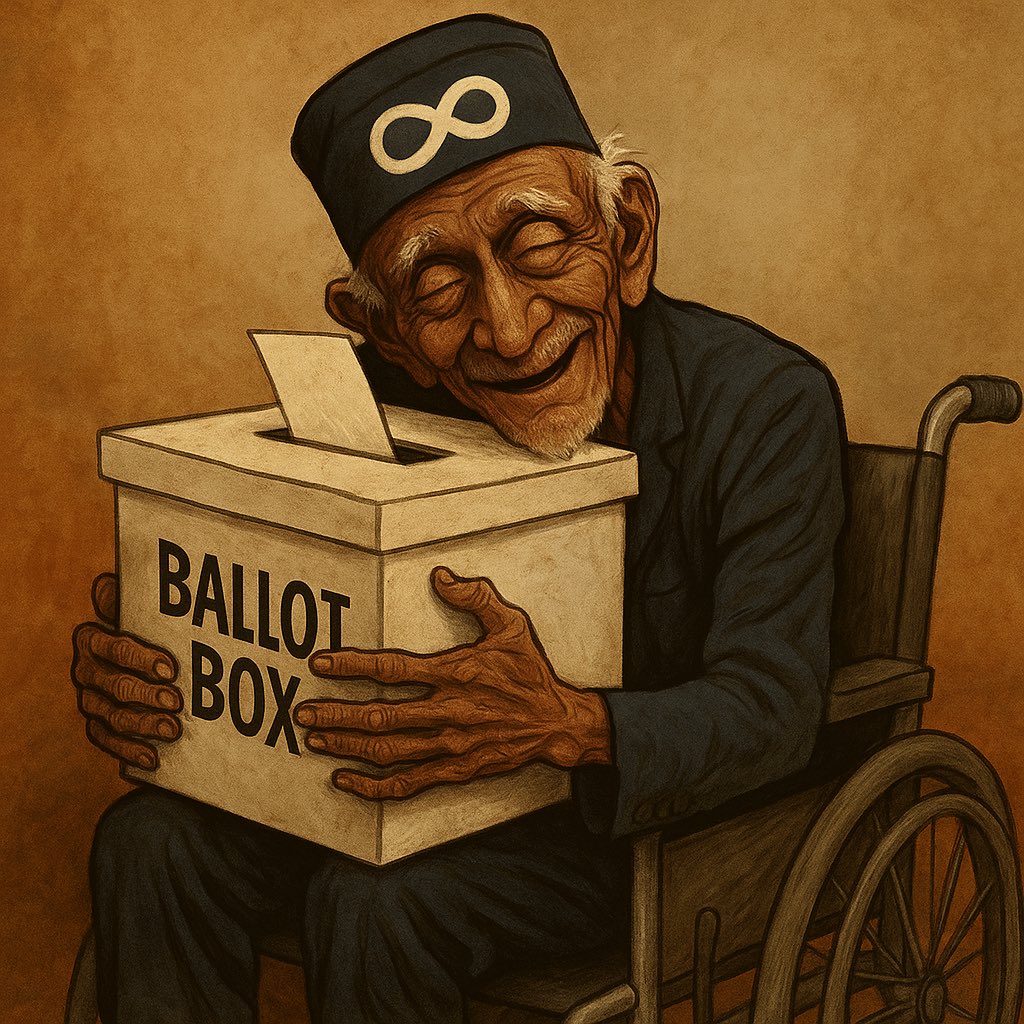

If governance were a smartphone, one suspects Bola Ahmed Tinubu would have long ago disabled the “silent mode,” misplaced the “settings” icon, and uninstalled the app called “optics.” What remains is a political operating system that runs at full volume, with push notifications enabled, and absolutely no parental controls.
This is not, strictly speaking, illegal. It is, however, deeply entertaining—provided you are not paying the subscription fee known as “living in Nigeria.”
The Doctrine of “It’s My Turn”
Every administration comes with a governing philosophy. Some invoke Keynes. Others quote Hayek. Tinubu, a man of refreshing ideological efficiency, distilled his doctrine into a single, memorable line: “It’s my turn.”
In a region where rotational politics often masquerades as democratic equilibrium, this was less a gaffe than a mission statement. Why bury the lede under policy white papers when you can simply announce the queue?
One half expected a follow-up executive order formalizing the concept:
“Henceforth, governance shall proceed on the basis of turn-by-turn navigation.”
Subsidy Removal: Shock Therapy Without the Therapy
On day one, the petrol subsidy vanished—less “phased reform,” more “magic trick.” The rabbit disappeared; the hat remained; the audience was left checking their pockets.
Now, economists will argue—correctly—that subsidies are distortive, fiscally unsustainable, and a magnet for rent-seeking. But even the most enthusiastic reformer understands the ancient democratic ritual known as preparing the public.
Tinubu skipped that step. The result felt less like policy sequencing and more like a surprise exam in a subject nobody remembered registering for.
The Ten-Minute Condolence Visit
In what will surely be studied in future courses on political communication, the President once informed mourners that he had precisely ten minutes to spare—owing to a prior engagement and, crucially, no electricity at the airport.
There are moments when a leader must choose between honesty and theatre. Tinubu, to his credit, chose radical honesty. Why drape solemnity in euphemism when logistics can be discussed in real time?
It was, in its own way, a masterclass: grief, but make it punctual.
Austerity for Thee, Procurement for Me
While citizens were acquainting themselves with the exciting new sport of “budgetary acrobatics,” the state appeared to be engaged in a different Olympic event: synchronized procurement.
A presidential aircraft acquisition here A vehicular fleet upgrade there A vice-presidential residence renovated with a budget that might cause small nations to blush
This is not hypocrisy, strictly defined. It is a more refined doctrine: parallel realities. In one Nigeria, belts are tightened. In the other, they are accessorized.
The Parisian Presidency
There is, of course, the small matter of geography. A presidency typically involves residing in the country one governs. Tinubu has treated this as more of a suggestion than a requirement.
Paris, it seems, offers certain advantages: reliable electricity, predictable infrastructure, and fewer Nigerians asking inconvenient questions. One cannot entirely fault the logic. If governance is stressful, why not outsource the ambiance?
At this rate, one half expects the next Federal Executive Council meeting to be held adjacent to the Seine, with croissants replacing communiqués.
Debates Are for Mortals
During the 2023 election cycle, Tinubu declined to participate in debates. This was widely interpreted as strategic. Why engage in unscripted exchanges when one can preserve the mystique?
Debates, after all, carry risk: questions may be asked; answers may be expected; comparisons may be drawn. Far safer to operate within the controlled environment of rallies, where the only rebuttal comes from the sound system.
Honours for the Historically Controversial
In a move that tested the elasticity of public memory, the administration conferred one of the nation’s highest civilian honours on a figure widely associated with the excesses of the Sani Abacha era.
This was not merely controversial; it was almost performance art. If politics is the management of symbols, this was symbol management with a mischievous grin.
The Tone From the Top
Leadership styles cascade. When the principal communicates with a certain brusqueness, the courtiers often upgrade it to condescension. Tinubu’s spokesmen and supporters have, at times, treated public inquiry as a nuisance—like background noise to be muted rather than feedback to be processed.
In a democracy, this is a bold strategy. Voters, inconveniently, have a habit of remembering how they were spoken to—especially when they are also remembering how much fuel costs.
The Curious Case of Electoral Amnesia
Perhaps the most fascinating aspect of this presidency is its apparent theory of the electorate: that citizens are, in equal measure, deaf, dumb, and perpetually distracted.
It is an optimistic hypothesis. It assumes that memory is short, pain is fleeting, and elections are decided on vibes rather than lived experience.
History, unfortunately for incumbents, has a different dataset.
Conclusion: Governance as Performance
Tinubu’s tenure, viewed charitably, is an experiment in unfiltered leadership—what happens when a politician dispenses with the rituals of persuasion and proceeds as if consent were a formality.
Viewed less charitably, it is a reminder that democracy is not merely about winning power; it is about continuously justifying it.
In the end, the electorate does possess a mute button of its own. It is called an election. And unlike smartphones, it does not require charging—only remembering.
 Centre for Nigeria Progress