

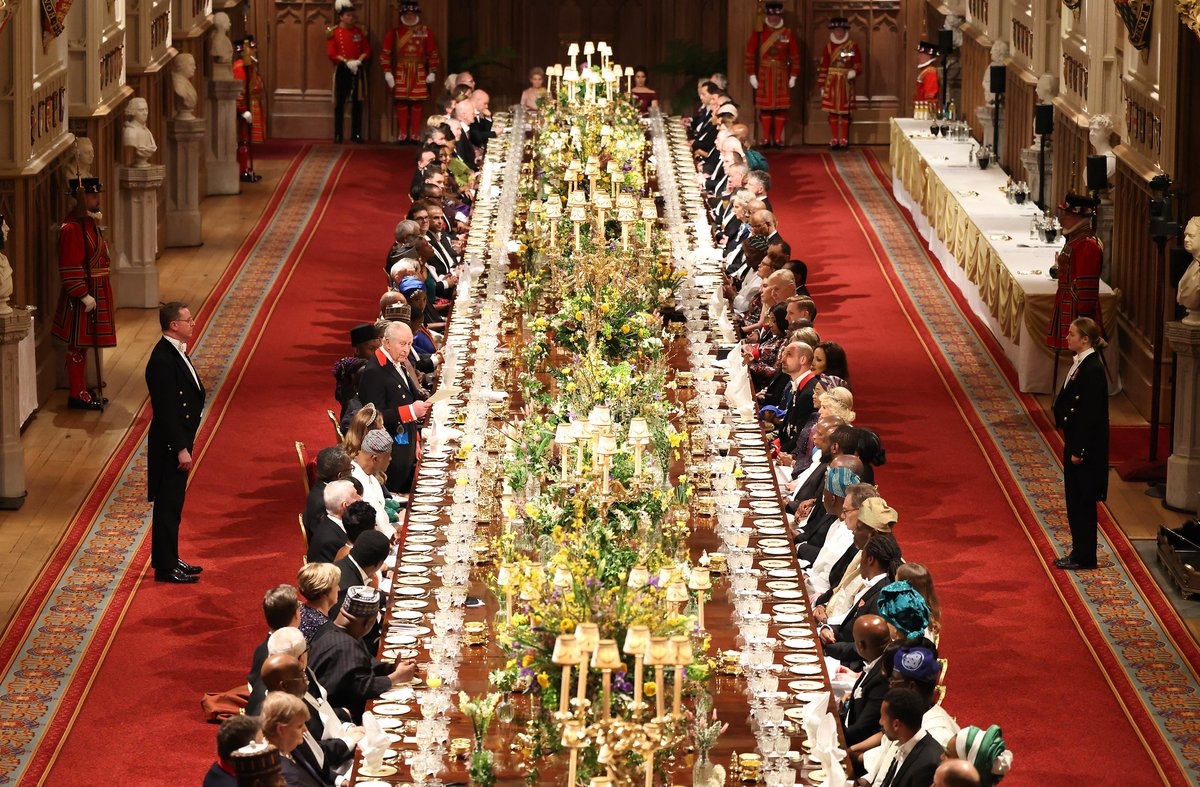
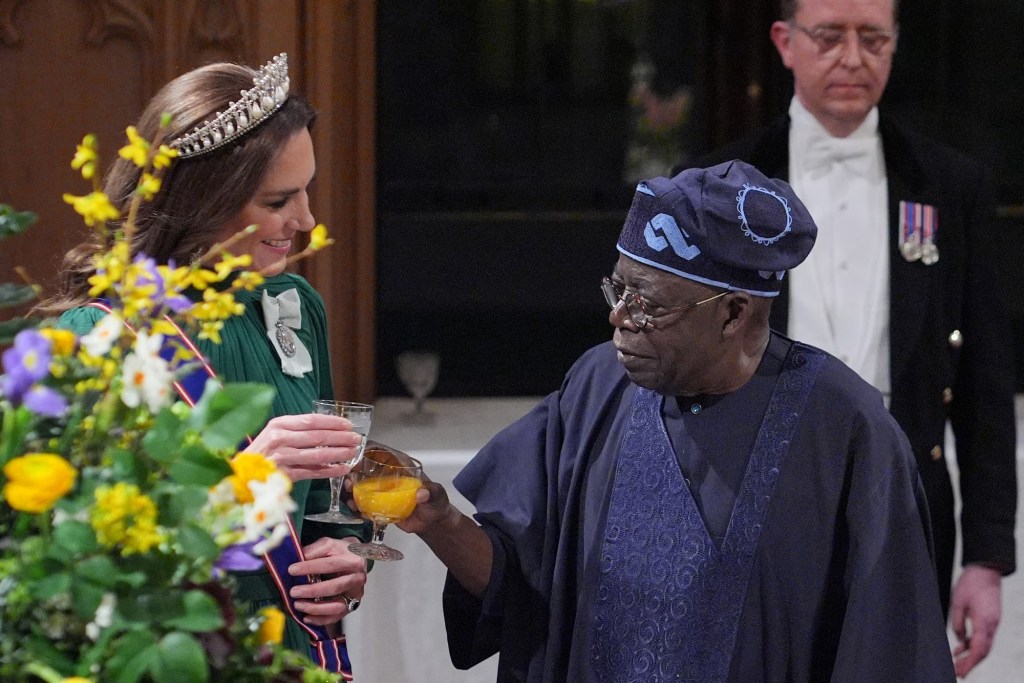
On March 18, 2026, President Bola Ahmed Tinubu will walk into Windsor Castle. The flags of the Union and the Green-White-Green will fly side-by-side, the Household Cavalry will provide a rhythmic jingle of silver and steel, and the British press will dutifully churn out op-eds about “enduring Commonwealth ties” and “shared democratic values.” But for those watching the tectonic plates of West African geopolitics, the pageantry is a thin veil over a deep-seated anxiety.
This is the first formal State Visit by a Nigerian leader to the United Kingdom since 1989. To put that in perspective, Nigeria has seen the end of military rule, the rise and fall of oil booms, and the birth of a tech revolution in the time it took for London to extend another invitation of this magnitude.
The question isn’t why it took so long, but why it is happening now. The answer lies not in the streets of London, but in the arrondissements of Paris. The Windsor visit is the ultimate “Booster”—a high-stakes, high-glamour diplomatic counter-offensive designed to pull Nigeria back from an accelerating drift into the French orbit.
The Subordinate Legacy and the IBB Precedent
To understand the current “Booster” strategy, one must look at the historical scar tissue of the mid-1980s. Following the Umaru Dikko Affair in 1984—a botched kidnapping attempt on British soil involving Nigerian intelligence—the relationship between London and Lagos entered a deep freeze. For years, the UK treated Nigeria with a mixture of colonial paternalism and diplomatic frost, a period where Nigeria was treated less like a sovereign partner and more like a misbehaving subordinate.
By the time General Ibrahim Babangida (IBB) took power in 1985, the vacuum left by the British was already being eyed by the French. Paris, always eager to expand its Françafrique influence into the Anglophone “Giant of Africa,” began a charm offensive. Sensing that they were losing their grip on their most important African partner, the British Foreign Office deployed its first major “Booster”: the 1989 State Visit for IBB, followed closely by the 1990 Royal Visit of Prince Charles and Princess Diana to Nigeria.
The pattern was established: whenever the UK senses Nigeria is “fading” from its influence, it reaches for the crown jewels. It uses the extreme prestige of the British Monarchy to remind the Nigerian ruling class of their “special” status—a psychological anchor intended to outweigh the practical, economic lures of Paris.
The Tinubu Pivot: “I am Enjoying My Time in France”
If the British were worried about IBB, they are more concerned by the current trajectory under Bola Tinubu. Since taking office, President Tinubu has displayed a geographical preference that has sent shockwaves through Whitehall. Paris has become his de facto second capital.
It is important to be clear: this is not about Tinubu as an individual, nor is it about whether he is accepted or rejected by Western powers. States do not operate on sentiment—they operate on interest. Britain does not care about Nigeria in any abstract sense. Britain cares about the United Kingdom.
At a high-profile reception at the Élysée Palace, Tinubu reportedly remarked to President Emmanuel Macron, “Oh yes, I am enjoying my time in France.” To the British diplomatic corps, those words signaled a significant shift in personal and political gravity.
The “Tinubu Pivot” appears increasingly institutional rather than just personal:
- The Financial Shift: Major Nigerian institutions such as UBA and Zenith Bank have begun expanding flagship European operations into Paris, signaling a gradual shift away from London as the default hub for Nigerian capital entry into Europe.
- The Macron Strategy: Unlike the British, who often approach Nigeria through the lens of legacy or development aid, Macron treats Nigeria as a high-stakes venture capital opportunity. He has courted Tinubu with “exceptional receptions” usually reserved for G7 leaders, offering multi-million euro deals in infrastructure, agriculture, and digital tax reform.
- The Security Shift: With the shifting dynamics of ECOWAS and the Sahel, Nigeria is increasingly engaging with French intelligence and military systems, exploring partnerships that bypass traditional British channels.
The Quiet Layer: Intelligence, Access, and Strategic Silence
Beyond the visible theater of State Visits and public diplomacy lies a quieter, more consequential layer of statecraft: intelligence alignment and strategic access.
The United Kingdom’s influence in Nigeria has never been limited to formal diplomacy. It has historically been reinforced through deep institutional ties in intelligence, security training, financial monitoring, and legal frameworks. Agencies such as MI6 operate less as headline actors and more as long-term infrastructure—building relationships, sharing intelligence, and shaping security cooperation behind the scenes.
As Nigeria diversifies its security partnerships—engaging more actively with French intelligence and military systems—the UK risks losing not just diplomatic influence, but informational proximity. In intelligence terms, proximity is power. The closer a partner, the greater the access. The greater the access, the greater the influence.
This helps explain an otherwise noticeable feature of the current moment: the relative silence from Downing Street.
In a typical diplomatic cycle, shifts of this magnitude would be accompanied by clear public positioning. Instead, the response has been restrained, almost deliberately muted.
That silence is not absence. It is strategy.
Public confrontation risks accelerating the very drift the UK is trying to prevent. By avoiding overt pressure, London preserves space for recalibration.
This raises a deeper question: who, exactly, is orchestrating this response?
The answer is less dramatic than it may appear—and more consequential.
There is no single “grand architect.” This is not the product of one agency or one decision-maker. It is the result of institutional alignment.
Strategic responses emerge from a network: the Foreign Office, Downing Street, intelligence services, and the Crown. Each plays a role. None acts alone.
What appears as a unified strategy is, in reality, a system responding through memory.
It is not a conspiracy. It is institutional continuity.
The Brexit Constraint: Why the UK Needs the Crown More Than Ever
The timing of the Windsor “Booster” cannot be separated from the structural limitations the United Kingdom now faces in a post-Brexit world.
Before Brexit, London’s influence over Nigeria was not just historical—it was institutional. As a gateway into the European Union, the UK offered Nigerian capital, talent, and political alignment direct access to the largest single market in the world. That made London not just a cultural center, but a financial necessity.
Brexit changed that equation.
Today, the UK must compete with Paris, Frankfurt, and Brussels as an external player rather than a central hub. For Nigerian institutions seeking seamless access to EU markets, regulatory alignment, and continental scale, Paris now presents a more efficient entry point.
This is the underlying constraint shaping British strategy.
- Where France can deploy: EU-backed financing Regulatory alignment Integrated market access
- The UK is increasingly limited to: Bilateral agreements Historical relationships Symbolic capital
This is where the Monarchy becomes strategic.
In a post-Brexit reality, the Crown is no longer just ceremonial—it is a geopolitical tool. State Visits, royal banquets, and Windsor pageantry are being used to compensate for structural disadvantages in trade and finance.
The Anatomy of a “Booster”
The UK recognizes it cannot easily match the aggressive, transactional nature of Macron’s diplomacy or the volume of EU-backed financing. Therefore, it leans into its most potent asset: cultural diplomacy at a nuclear level.
The 2026 Windsor State Visit is a “Booster” designed to trigger three specific reactions:
1. The Dazzle Factor
The Nigerian political elite remains sensitive to status signaling. Being the personal guest of the King at Windsor Castle is a level of prestige that the French Republic cannot replicate.
2. The Commonwealth Re-Branding
The UK is attempting to frame the Commonwealth as an exclusive “Business Club” where Nigeria is a senior partner.
3. Defensive Sovereignty
Every time the UK feels Nigeria is receiving into the French orbit, they use these visits to re-assert British standards in law, education, and finance.
The “Super-Booster” Question: Knighthood as Cultural Artillery
The natural next question is whether the Windsor visit escalates beyond ceremony into something more binding.
The short answer: technically, yes—but with a significant asterisk.
If deployed, an honorary knighthood would represent the UK’s highest form of symbolic statecraft in this context—a “Super-Booster” designed to consolidate influence at the elite level. However, such a move operates within clear diplomatic constraints.
1. The “Honorary” Reality
Nigeria is a republic, not a Commonwealth realm. That means Tinubu cannot be made a “Knight Bachelor.” Instead, he would receive an honorary knighthood within one of the senior British orders—most likely the GCB or GCMG.
The distinction is critical. He would not be styled “Sir.” He would carry post-nominal letters only (e.g., Bola Ahmed Tinubu, GCMG). The power of the gesture is symbolic, not titular.
2. Precedent and Strategic Purpose
This is not without precedent. Ibrahim Babangida received a GCB during the 1989 State Visit—the same “Booster” cycle referenced earlier.
The purpose is straightforward: to confer a level of elite recognition that reinforces alignment. It signals that the relationship is not merely transactional, but preferential.
3. The Competitive Context
France has already moved. Tinubu was awarded the Grand Cross of the National Order of the Legion of Honour during his Paris visit.
This creates a comparison problem. If the UK does not match or exceed that level of symbolic recognition, Windsor risks appearing as a diplomatic downgrade rather than a counterweight.
4. The Constraint
These honors are not automatic. They are recommended through the Foreign, Commonwealth & Development Office and must pass political scrutiny.
Given Nigeria’s current domestic challenges—security pressures and economic strain—the UK must weigh the optics of conferring such an honor at this moment.
5. The Strategic Calculation
If awarded, the knighthood would function as a “seal” on the Windsor visit—locking in elite-level alignment without requiring immediate policy concessions.
It is, in effect, a low-cost, high-signal move.
France offers recognition within a republic.
Britain offers incorporation into an order.
That distinction—between being honored and being absorbed into a system—is where the real leverage lies.
The Strategic Bet: Are They Betting on Tinubu Staying?
This raises a final, practical question.
If the UK is deploying this level of diplomatic capital, are they implicitly betting that Tinubu remains in power?
The answer is more nuanced.
States do not bet on individuals. They hedge across systems.
From the British perspective, the objective is not to secure Tinubu personally, but to anchor Nigeria institutionally. If influence is embedded at the level of elites, institutions, and networks, it survives leadership change.
Whether Tinubu remains, is replaced, or the political landscape shifts entirely, those underlying relationships endure.
This is not a wager on one man. It is an investment in continuity.
Agency vs. Influence: Who Is Playing Whom?
This raises an equally important question: is Nigeria being strategically outmaneuvered, or is it fully aware of the game being played?
The answer is more nuanced than it appears.
At the level of statecraft, it is highly unlikely that Nigeria’s leadership is unaware of the competing pressures. Engagements with both Paris and London are not accidental; they reflect a deliberate form of compartmentalization. By positioning trade-focused engagement in London—pushing for aviation reciprocity and port financing—while maintaining intelligence and security channels with Paris, Nigeria is attempting to extract maximum benefit without becoming fully dependent on any single orbit.
From this perspective, Nigeria is not simply being “played.” It is participating in a negotiation where leverage exists on all sides. However, asymmetry still matters.
The United Kingdom and France operate with decades of institutional continuity and coordinated policy frameworks. Their ability to align diplomacy, finance, and security into a coherent strategy gives them structural advantages. Nigeria, by contrast, operates within a more fluid environment where political cycles and internal pressures can limit long-term consistency.
This is where the question of intelligence sovereignty becomes critical. Efforts are already underway to close this gap. The Office of the National Security Adviser, through initiatives such as the NCTC Strategic Plan (2025–2030), is working to coordinate these disparate foreign engagements into a more unified national response.
Nigeria is not blind to the game. It is navigating opponents with deeper systems and longer timelines.
The real question is not whether Nigeria is being played.
It is whether Nigeria can synchronize its own institutions fast enough to play the same game—with the same level of coordination.
The Final Reckoning
The “Booster” has been administered.
But while Windsor provides ceremony, Nigeria demands substance.
London may win the optics.
Paris may win the deals.
But neither wins if Nigeria keeps losing at home.
The Nigerian people are still waiting to see who wins in reality.
 Centre for Nigeria Progress