


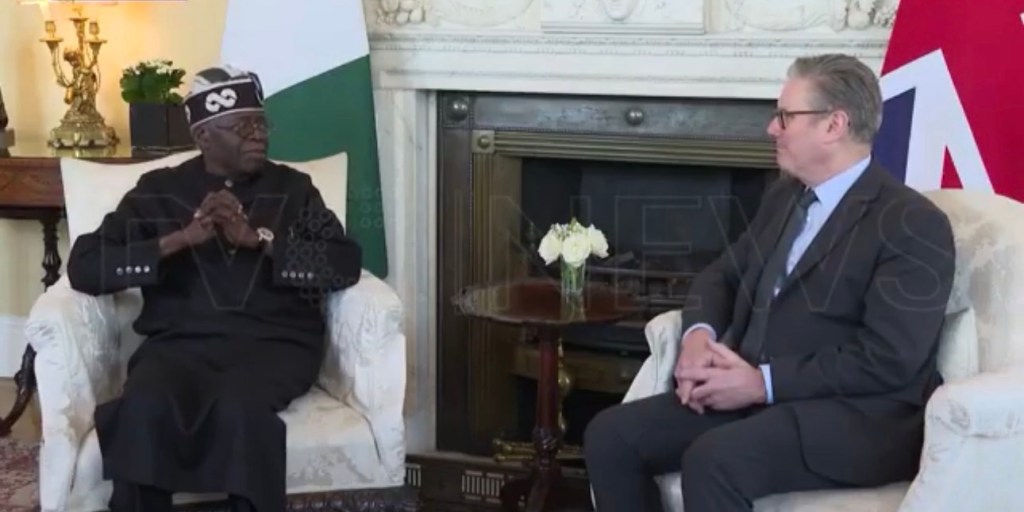
If policy ideas were frequent flyer miles, the UK government would have earned a platinum card on this one: “Let’s send foreign prisoners back home and let someone else deal with the bill.”
Nigeria, understandably, has been less enthusiastic about playing the role of Britain’s offshore correctional annex.
What looks, at first glance, like multiple shiny new “agreements” between London and Abuja is in fact something far more familiar in government: one old deal, endlessly reheated and served with fresh garnish by successive administrations—from Theresa May to Keir Starmer.
Chapter One: The Great Idea (Before It Was Fashionable)
Long before it became politically trendy to export your problems, Britain had a simple thought:
“Why are we paying to house foreign prisoners when their home countries have perfectly good prisons?”
Nigeria’s reply, politely translated, was:
“Define perfectly good.”
Early negotiations (circa 2009–2011) quickly ran into an awkward legal reality:
You cannot deport people into prison conditions that might breach human rights standards—unless you fancy a courtroom cameo at the European Court of Human Rights.
So Britain did what any pragmatic government would do.
It reached for its wallet.
Chapter Two: The 2014 Deal – The Original Script
In 2014, under the policy architecture shaped during Theresa May’s tenure at the Home Office, the UK and Nigeria signed the prisoner transfer agreement.
This was the real deal—the legal backbone.
Key features:
- Prisoners could be sent back to Nigeria to serve their sentences
- In some cases, consent was optional (a polite way of saying “you’re going anyway”)
- It applied both ways, though the traffic was never expected to be symmetrical
On paper, it was elegant.
In practice, it was… aspirational.
Chapter Three: A Small Problem – The Prisons
The agreement ran headfirst into a stubborn inconvenience:
Nigerian prisons were not built with British legal scrutiny in mind.
Overcrowding.
Infrastructure gaps.
Human rights concerns.
The courts essentially said:
“You can deport them, but not into that.”
So the UK improvised again—this time with development aid wearing a prison uniform.
Chapter Four: Britain Builds a Wing (Yes, Really)
To make deportations legally viable, the UK funded upgrades to Nigerian prison facilities—most notably at Kirikiri.
Let’s pause here.
Britain, having once exported governance structures across the globe, was now exporting correctional infrastructure funding… to facilitate deportations… of people it no longer wished to house.
History doesn’t repeat itself, but it does occasionally smirk.
Despite the investment, the results were underwhelming:
- Very few prisoners were actually transferred
- Bureaucracy, legal challenges, and logistics slowed everything down
In other words:
The plane was ready, but the runway was still under construction.
Chapter Five: Enter Starmer – Same Script, New Narrator
Fast forward to the era of Keir Starmer.
The rhetoric has evolved.
The branding is sleeker.
The objective? Exactly the same.
Modern agreements with Nigeria are:
- Broader (covering migration, not just prisoners)
- Less formal (often Memoranda of Understanding rather than treaties)
- Still quietly reliant on cooperation, capacity-building, and—yes—funding
The emphasis now includes:
- Returning immigration offenders
- Strengthening border systems
- Facilitating documentation and reintegration
It’s no longer just about convicted criminals.
It’s about anyone the UK would prefer to see at a safe administrative distance.
Spot the Difference (If You Can)
Era What They Called It What It Actually Was Pre-2014 Negotiations “Would you take them back?” 2014 Agreement “You’re definitely taking them back.” 2017–2018 Support & funding “We’ll help fix the prisons first.” Starmer era Migration partnership “Let’s broaden the category.”
The Real Story: Exporting the Problem
Strip away the legal language, the communiqués, and the polite diplomatic smiles, and the policy is remarkably consistent:
- The UK wants to reduce prison and migration pressure at home
- Nigeria wants to avoid becoming a dumping ground with liabilities attached
- Both sides engage in a careful dance of:
- Sovereignty
- Optics
- And who pays for what
Final Thought: The Agreement That Never Quite Lands
So how many agreements are there?
One real agreement (2014).
Everything else is:
- A workaround
- A patch
- Or a reboot with better PR
It’s less a series of new deals and more a long-running series titled:
“Prison Transfer: Season 12 – This Time It Might Work.”
Spoiler alert:
They’re still working on it.
 Centre for Nigeria Progress