

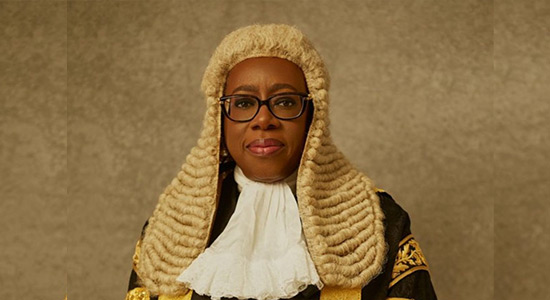

In a healthy democracy, the judiciary is the guardian of the electoral process, the final arbiter that ensures the will of the people, as expressed at the ballot box, is respected. In Nigeria, however, the judiciary has increasingly come to be seen not as a protector of electoral integrity, but as a significant impediment to its development. From a system of legal oversight, it has morphed into a parallel political arena where elections are often not won, but “judged.”
This shift from the ballot box to the courtroom is creating a crisis of legitimacy, fostering impunity among politicians, and eroding public trust in the very foundation of democratic governance.
The “Judicialization” of Politics: Elections are Fought in Court, Not at the Polls
The most glaring symptom of this problem is the sheer volume of election litigation. It is now a standard operating procedure for Nigerian politicians. Losing an election is no longer a final outcome; it is merely the first step towards filing a petition at the election tribunal.
This phenomenon creates several destructive consequences:
- Prolonged Insecurity and Governance Vacuum: Lengthy court battles, which can last for most of a winner’s term, create a state of political uncertainty. The declared winner cannot govern with full authority, knowing their mandate is under constant legal threat. Government programs are stalled, and appointments are made tentatively, as the specter of the tribunal hangs over every decision.
- A License for Electoral Malpractice: When politicians believe that any electoral outcome can be overturned by a clever legal team and a sympathetic judge, the incentive to win cleanly at the polls diminishes. This fosters a culture of impunity, where vote-buying, ballot box snatching, and falsification of results are seen as risks worth taking, knowing the judiciary provides a potential safety net.
The Crisis of Legitimacy: “Technicalities” Over the Will of the People
Perhaps the most damaging aspect of the judiciary’s role is the perceived preference for “technicalities” over substance. Nigerian courts have gained notoriety for overturning elections not primarily on the basis of “who won the majority of lawful votes,” but on procedural breaches often unrelated to the core question of the voters’ choice.
Elections have been nullified due to:
· Minor errors in election forms (like the failure to stamp the back of a ballot by an INEC official).
· Questions around the adherence to timelines for uploading results.
· Procedural non-compliance that did not materially affect the overall outcome of the poll.
When a governor or legislator is removed from office based on what the public perceives as a legal technicality, it severely undermines the legitimacy of both the judicial process and the eventual winner. The people are left bewildered, feeling that their votes have been invalidated by a judicial technicality they do not understand.
The Corruption Question: The Shadow of “Cash-and-Carry” Justice
The elephant in the room is the widespread perception of judicial corruption. The term “cash-and-carry justice” is often whispered in political circles, alluding to the belief that favorable judgments can be procured for the right price. The opulent lifestyles of some judges, juxtaposed with their relatively modest official salaries, fuels public suspicion.
While not every judgment is corrupt, the perception is enough to poison the well. Every ruling that goes against the incumbent is hailed as courageous, while every ruling in their favor is decried as being “settled.” This erodes faith in the entire system, making it impossible for any court verdict to be universally accepted as impartial and just.
The Way Forward: Reforming the System
Addressing this deep-rooted crisis requires multi-faceted reforms:
- Electoral Act Strengthening: The new Electoral Act 2022, which introduced technological innovations like the Bimodal Voter Accreditation System (BVAS) and electronic transmission of results, is a step in the right direction. It aims to reduce human interference and create a more transparent, verifiable process that leaves less room for legal manipulation. Its full and impartial implementation is crucial.
- Judicial Reform and Accountability: The National Judicial Council (NJC) must demonstrate a stronger commitment to investigating and punishing judicial misconduct. Fostering a culture of accountability within the judiciary is essential to restoring its credibility.
- Shifting Legal Focus: Election tribunals and courts must be encouraged by precedent and law to focus on the substance of elections: Did the declared winner truly secure the majority of valid votes? Technicalities should only matter if they are proven to have substantially affected the final result.
Conclusion
Nigeria’s judiciary, tasked with being the referee of democracy, has increasingly become a player. By allowing elections to be routinely decided in smoke-filled courtrooms rather than in polling units, it has weakened electoral accountability, encouraged malpractice, and created a devastating disconnect between the electorate and their leaders.
For Nigeria’s democracy to mature and for public trust to be restored, the power to choose leaders must be returned conclusively to the people. The judiciary must retreat from its role as a final decider and re-establish itself as a true guardian of the process, ensuring that the ballot box—not the courtroom—remains the sovereign stage of Nigerian politics.
 Centre for Nigeria Progress