


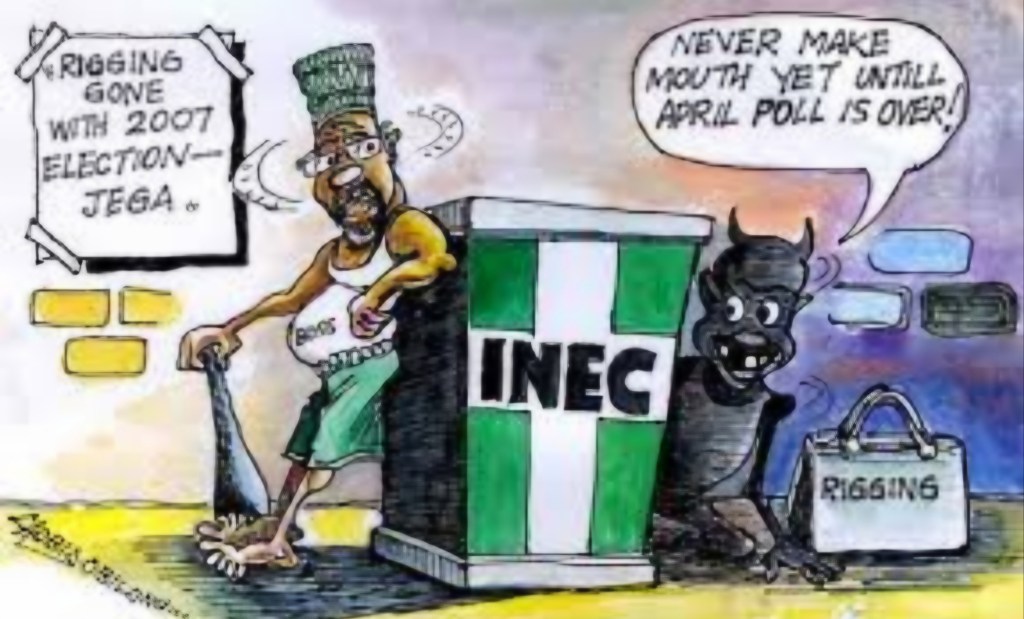
The Nigerian political system exhibits a strong focus on the mechanics of winning elections, often through transactional and sometimes destructive means.
· Transactional Politics and “Political Marketplaces”: Nigerian elections have been described as functioning like political marketplaces, where power is treated as a commodity to be bought, sold, and fought over. Elite deal-making and backroom negotiations often overshadow formal democratic processes.
· The Weaponisation of Disinformation: Political parties secretly pay social media influencers large sums of money to spread false narratives and disinformation about their opponents. Tactics include using old, unrelated images to stoke ethnic tensions and fabricating false associations between candidates and terrorist groups. One politician involved in such schemes defensively stated, “It is a game. Somebody had to win”.
· Electoral Reforms and Manipulation: Reforms intended to ensure clean elections, such as the Bimodal Voter Accreditation System (BVAS), have been met with logistical failures and varying levels of manipulation, which ultimately decreased public confidence in the election results.
The Consequences: Cynicism and Absent Governance
The focus on winning, rather than governing, has led to a crisis of confidence in the state’s ability to solve problems.
· Eroded Public Trust: Gallup polls show that public confidence in the national government has fallen dramatically, with only one in four Nigerians expressing confidence in their government in 2021—the lowest level in Africa. Trust in the judicial system and the honesty of elections has also plummeted.
· High Voter Apathy: This cynicism has translated into political disengagement. Voter turnout has seen a steady and dramatic decline, plummeting to 35% in the 2019 elections from a high of almost 70% in 2003. This suggests a widespread belief that participation may not lead to meaningful change.
· Governance Challenges: The government’s inability to deliver solutions is evident in pressing issues like rising violence, kidnappings, and a souring economy. More than half of Nigerians (53%) said they would like to move permanently to another country if given the opportunity.
The Ideological Vacuum in Nigerian Politics
The absence of an ideological core is a recognized and deeply detrimental feature of the political landscape.
· Ideological Orphans: Nigerian political parties are largely described as “ideological orphans,” devoid of defined philosophies like conservatism or socialism. They are united more by opportunism and personal ambition than by public good or a coherent vision.
· Policy Inconsistency: Without ideological foundations, government programs and policies lack consistency. Initiatives are often abandoned when a new administration takes over, not because they are ineffective, but simply because they were started by political opponents. This stunts national progress and development.
· Defections Without Principle: Politicians frequently switch parties not based on ideological disagreements, but in search of power, protection, or political patronage. The constitutional framework also contains a significant lacuna, as executive officeholders like governors can defect from the party they were elected under without facing any legal consequences, unlike legislators.Crosscurrents of Change
Crosscurrents of Change
Despite these challenges, the 2023 election cycle also revealed forces pushing back against the status quo.
· Civic Mobilization: The election saw the emergence of a competitive third-party candidate who harnessed long-standing grievances about poor governance. More importantly, it activated civic coalitions and led to unprecedented youth engagement, with many Nigerians engaging in politics for the first time.
· The Role of Fact-Checkers: A coalition of Nigerian fact-checking organizations worked to hold politicians accountable during the elections. In some cases, their direct interventions forced presidential candidates to recant false claims and correct misleading statements.
· Grassroots and Youth Potential: Grassroots movements and a young population (70% under 35) are seen as potential drivers of change. The #EndSARS protests were a watershed moment, demonstrating the capacity of young people to organize and demand reform.

