

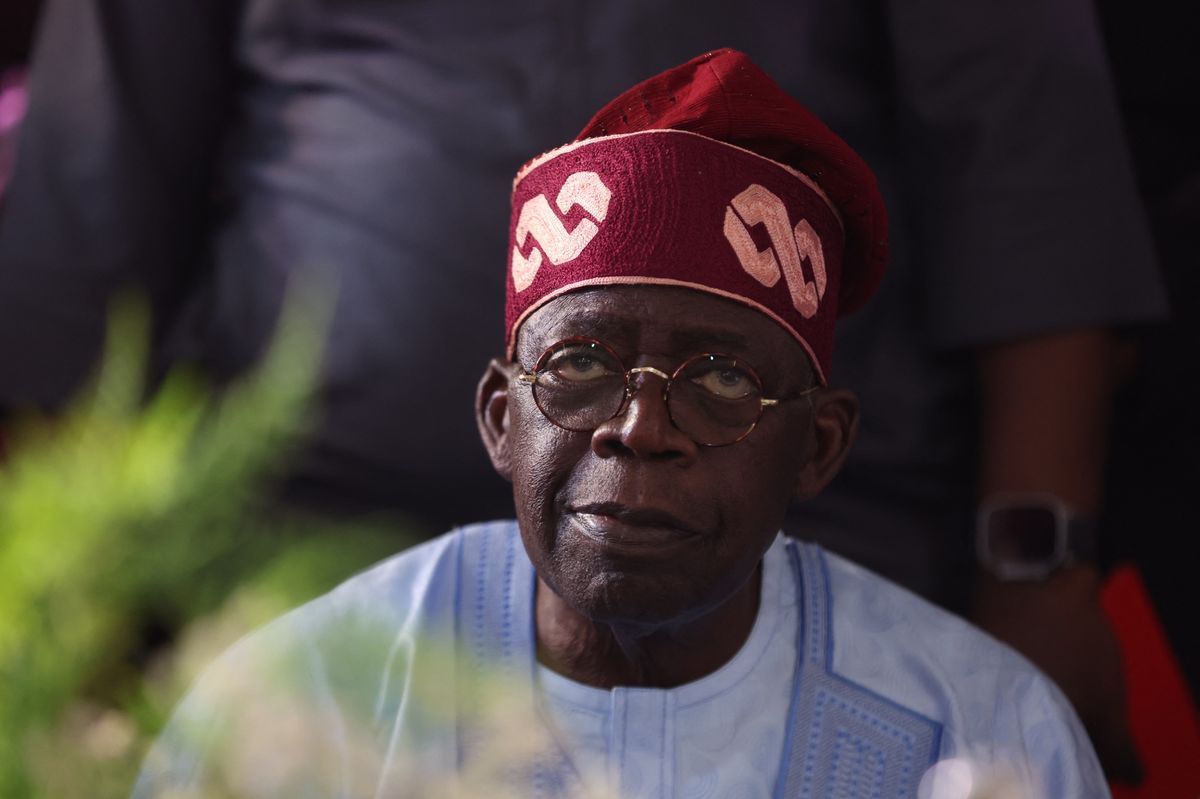

In the realm of executive powers, the prerogative of mercy stands as one of the most profound tools available to heads of state, allowing them to temper justice with compassion. In Nigeria, this power is enshrined in the 1999 Constitution, granting the President the authority to pardon convicted individuals. However, a recent controversy surrounding President Bola Tinubu’s decision to grant—and subsequently adjust—pardons to over 100 convicts has ignited a fierce debate: Can a presidential pardon, once officially gazetted, be legally revoked? This article explores the legal framework, the process of granting pardons, insights from the recent case involving figures like Maryam Sanda, and expert opinions on the matter, drawing on constitutional provisions, scholarly analyses, and judicial precedents.
The Legal Framework for Presidential Pardons in Nigeria
The foundation for presidential pardons in Nigeria is Section 175 of the 1999 Constitution (as amended). This provision empowers the President to:
- Grant a full or conditional pardon to any person convicted of an offense under federal law.
- Provide respite from punishment.
- Substitute a lesser punishment.
- Remit part or all of a sentence or penalty.
Critically, the President must exercise this power after consulting the Council of State, a body comprising key figures such as the Vice President, former presidents, governors, and judicial leaders. The Constitution does not explicitly mention the ability to revoke a pardon once granted, which has led legal scholars to argue that such actions are irrevocable under the principle of functus officio—meaning the authority is spent once exercised.
Gazetting plays a pivotal role here. According to legal experts, a pardon achieves full legal effect only after it is formalized through an instrument signed by the President and published in the Official Gazette of the Federation. This step concludes the process, making the pardon binding and, in theory, irreversible. Without gazetting, an announcement may be preliminary, allowing for revisions, but post-gazetting, revocation could violate constitutional norms and due process.
This aligns with common law traditions inherited from British jurisprudence, where pardons are generally seen as final acts of mercy. In comparative contexts, such as the United States, presidential pardons are considered irrevocable once delivered, as affirmed in cases like Ex parte Garland (1866). Nigeria, lacking specific revocation clauses in its Constitution, likely follows a similar path.
The Pardon Process: From Recommendation to Gazetting
The journey of a presidential pardon begins with the Presidential Advisory Committee on the Prerogative of Mercy (PACPM), which reviews applications from convicts who have typically served a significant portion of their sentences and demonstrated remorse or good conduct. Recommendations are forwarded to the Council of State for deliberation, after which the President makes the final decision.
Once approved, the pardon is documented and gazetted by the Attorney-General of the Federation (AGF). This official publication serves as public notice and legal proof, ensuring transparency and finality. Legal commentators emphasize that gazetting is not merely administrative but substantive, as it prevents arbitrary reversals and protects beneficiaries from uncertainty.
The Recent Controversy: Tinubu’s Pardons and the ‘Revocation’
The issue came to a head in October 2025 when President Tinubu, following a Council of State meeting on October 9, announced pardons for 175 convicts, including high-profile individuals convicted of murder, drug trafficking, kidnapping, and other serious crimes. Notable among them was Maryam Sanda, sentenced to death in 2020 for killing her husband, Bilyaminu Bello, but who had served over six years. The initial list, released on October 11 via the State House website, sparked immediate public outrage, with critics arguing it undermined justice and encouraged impunity.
In response to the backlash, the Presidency ordered a review. On October 23, an official gazette (No. 184) was issued by AGF Lateef Fagbemi, announcing a revised list that reduced the beneficiaries to 120. Controversial names, including Sanda’s, were removed, with her sentence adjusted to 12 years instead of a full pardon. The government cited reasons such as the gravity of offenses, victim sensitivities, law enforcement morale, and international obligations.
Media headlines described this as a “revocation” or “reversal,” but a closer examination reveals nuance. The original list appears not to have been gazetted; the October 23 publication was for the revised version. This suggests the process was adjusted before finalization, rather than a true post-gazette revocation. The AGF’s office relocated the PACPM secretariat to the Ministry of Justice and introduced new guidelines requiring consultations with prosecuting agencies, indicating an effort to prevent future mishaps.
Diverging Legal Opinions and Public Reactions
Legal experts are divided. Some argue that the President retains discretion to withdraw pardons, viewing the adjustment as within constitutional bounds and responsive to public will. Others contend the original list flouted procedures by including unremorseful convicts or those with unexhausted appeals, justifying the review.
Conversely, others assert that once a pardon is granted—even if not yet gazetted—it cannot be revoked, as the President becomes functus officio. Judicial precedents, such as in Falae v Obasanjo (No. 2), describe a pardon as an “act of grace” by the appropriate authority, reinforcing its finality. 24 Cases like Federal Republic of Nigeria v Achida & Anor have clarified that pardons apply post-conviction, but discussions around irrevocability draw from common law principles. Senior advocates have highlighted that pardons must accord with law and caution, but without explicit revocation mechanisms.
Public sentiment mirrored this split. Former Vice President Atiku Abubakar lambasted the reversal as “governance by trial and error,” demanding transparency. 5 Groups like Amnesty International argued that such pardons undermine the rule of law. 19 Political parties weighed in, with some commending responsiveness and others decrying inconsistency.
Conclusion: A Legal Gray Area with Clear Implications
Based on constitutional interpretation and precedents, revoking a presidential pardon after gazetting appears legally untenable in Nigeria. The absence of explicit revocation powers, combined with the finality of gazetting, supports the view that such actions are irreversible to maintain stability and trust in executive decisions. In the Tinubu case, the adjustment likely occurred pre-gazette, sidestepping a direct test of this principle.
This episode underscores the need for rigorous due diligence in pardon processes to avoid public distrust. As Nigeria grapples with crime and justice reform, the prerogative of mercy must balance compassion with accountability. Future administrations would benefit from clearer guidelines—or even constitutional amendments—to address such ambiguities, ensuring that mercy serves the greater good without eroding the rule of law.

