

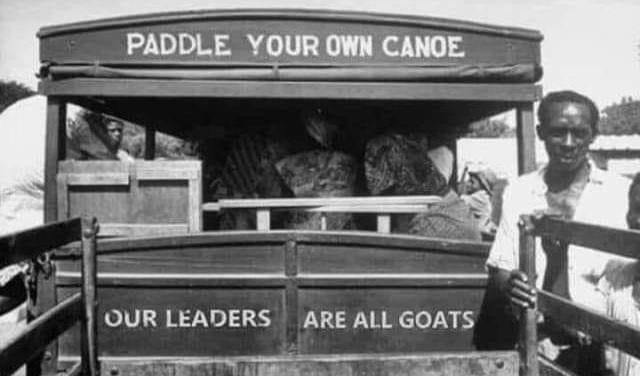
When the flags were lowered, anthems changed and colonial administrators sailed home, Africa stood at the dawn of independence with history-shaking promise. A continent rich in culture, people, resources and ingenuity finally had the keys to its own house. But instead of redesigning the structure, we simply changed the gatekeepers. The land was free, but the minds had not yet been liberated.
The Inheritance of a Damaged Mirror
Colonialism did more than seize territory and wealth — it distorted self-worth. It sold Africans a lie: that they were inferior and required “civilised” supervision. At independence, many African leaders failed to break this mental shackle. They inherited the coloniser’s house, adopted his furniture, his values, his contempt for his subjects… and tragically, for their own people.
Rather than affirm their own identity and culture as worthy and advanced, many of those who took over power wore the coloniser’s arrogance like agbada — oversized, uncomfortable, but worn with pride.
The Black Man’s Burden: Elites in Colonial Uniforms
Instead of dismantling colonial structures, our post-independence elites became their curators. They inherited extractive systems designed to benefit a foreign crown and maintained them — only this time, the beneficiaries were themselves and overseas interests.
The police state remained.
The exploitative economy remained.
The disdain for the common African remained.
The masses who expected freedom, development and dignity got new rulers with old habits, and the trauma of inferiority continued — now enforced by familiar faces with familiar names.
No Boots, No Bootstraps
While Asian nations — South Korea, Singapore, Malaysia, India, and others — confronted their colonial scars, rebuilt their self-belief, and dragged themselves into global relevance, Africa has struggled. The reason is not lack of ability; it is the absence of an enabling ecosystem rooted in self-belief.
To rise, you need boots.
To rise further, you need bootstraps.
Africa was left with neither, but told to “lift itself”.
We were handed independence without economic sovereignty, flags without factories, politics without power.
A Poverty of Spirit Before a Poverty of Pocket
The deepest poverty on the continent has never been solely financial — it is psychological. When a people doubt their worth, progress becomes a favour, not a right.
Colonial education glorified Europe and belittled Africa. Post-independence governance did little to rewrite that curriculum. Millions of African children still grow up learning more about British kings, French philosophers and European explorers than about the civilizations of Mali, Nubia, Ethiopia, Benin, Mapungubwe or the scholars of Timbuktu who taught the world.
How then do you expect self-confidence to grow?
The Turning Point We Still Refuse to Take
True independence required:
✅ Dismantling colonial economic structures
✅ Re-centering African identity and history
✅ Building a self-confident citizenry
✅ Creating industries beyond raw-material export
❌ Not replacing white masters with black overseers
But we chose the costume of the coloniser rather than the confidence of a free people.
It Is Not Too Late
Africa is at a crossroads — again. Our youth are more aware, more connected, and more restless than past generations. Many no longer believe the lie of inferiority. The global stage is shifting, and the 21st century offers Africa another opportunity to rewrite its destiny rather than photocopy someone else’s history.
But mental liberation is not gifted. It must be taught, fought for, and lived.
Independence is not the absence of foreign rule.
Independence is the presence of self-belief.
Until Africa reclaims its confidence, rewires its mindset, and rebuilds its economy to serve its people, the continent will remain free only on paper — a lion still caged by the memory of the whip.
r Independence: Free But Still Not Free
When the flags were lowered, anthems changed and colonial administrators sailed home, Africa stood at the dawn of independence with history-shaking promise. A continent rich in culture, people, resources and ingenuity finally had the keys to its own house. But instead of redesigning the structure, we simply changed the gatekeepers. The land was free, but the minds had not yet been liberated.
The Inheritance of a Damaged Mirror
Colonialism did more than seize territory and wealth — it distorted self-worth. It sold Africans a lie: that they were inferior and required “civilised” supervision. At independence, many African leaders failed to break this mental shackle. They inherited the coloniser’s house, adopted his furniture, his values, his contempt for his subjects… and tragically, for their own people.
Rather than affirm their own identity and culture as worthy and advanced, many of those who took over power wore the coloniser’s arrogance like agbada — oversized, uncomfortable, but worn with pride.
The Black Man’s Burden: Elites in Colonial Uniforms
Instead of dismantling colonial structures, our post-independence elites became their curators. They inherited extractive systems designed to benefit a foreign crown and maintained them — only this time, the beneficiaries were themselves and overseas interests.
The police state remained.
The exploitative economy remained.
The disdain for the common African remained.
The masses who expected freedom, development and dignity got new rulers with old habits, and the trauma of inferiority continued — now enforced by familiar faces with familiar names.
No Boots, No Bootstraps
While Asian nations — South Korea, Singapore, Malaysia, India, and others — confronted their colonial scars, rebuilt their self-belief, and dragged themselves into global relevance, Africa has struggled. The reason is not lack of ability; it is the absence of an enabling ecosystem rooted in self-belief.
To rise, you need boots.
To rise further, you need bootstraps.
Africa was left with neither, but told to “lift itself”.
We were handed independence without economic sovereignty, flags without factories, politics without power.
A Poverty of Spirit Before a Poverty of Pocket
The deepest poverty on the continent has never been solely financial — it is psychological. When a people doubt their worth, progress becomes a favour, not a right.
Colonial education glorified Europe and belittled Africa. Post-independence governance did little to rewrite that curriculum. Millions of African children still grow up learning more about British kings, French philosophers and European explorers than about the civilizations of Mali, Nubia, Ethiopia, Benin, Mapungubwe or the scholars of Timbuktu who taught the world.
How then do you expect self-confidence to grow?
The Turning Point We Still Refuse to Take
True independence required:
✅ Dismantling colonial economic structures
✅ Re-centering African identity and history
✅ Building a self-confident citizenry
✅ Creating industries beyond raw-material export
❌ Not replacing white masters with black overseers
But we chose the costume of the coloniser rather than the confidence of a free people.
It Is Not Too Late
Africa is at a crossroads — again. Our youth are more aware, more connected, and more restless than past generations. Many no longer believe the lie of inferiority. The global stage is shifting, and the 21st century offers Africa another opportunity to rewrite its destiny rather than photocopy someone else’s history.
But mental liberation is not gifted. It must be taught, fought for, and lived.
Independence is not the absence of foreign rule.
Independence is the presence of self-belief.
Until Africa reclaims its confidence, rewires its mindset, and rebuilds its economy to serve its people, the continent will remain free only on paper — a lion still caged by the memory of the whip.

