

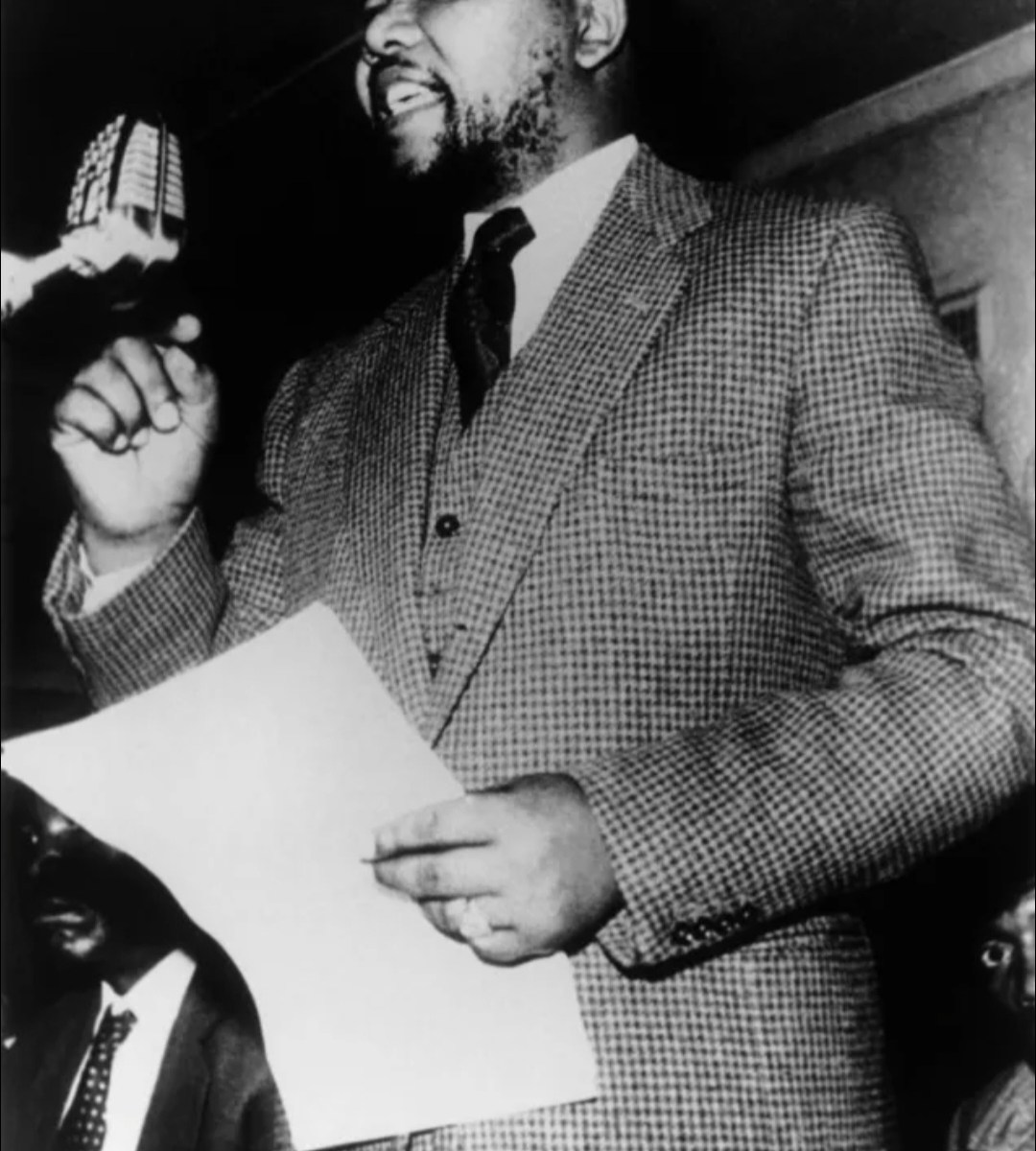

History has a way of placing two men in similar circumstances and allowing their conduct—not their slogans—to define their legacies. Nelson Mandela and Nnamdi Kanu both found themselves charged with terrorism by states they accused of oppression. Yet the way each man engaged the judicial process could not be more different. One treated the court as a battleground for ideas; the other treated it as a badly organised comedy show where banging the table substituted for legal reasoning.
Mandela: The Architect of His Own Defence
When the apartheid regime brought Nelson Mandela to trial during the Rivonia proceedings, their goal was simple: criminalise a political struggle by naming it terrorism. Mandela responded not with theatrics or insults, but with one of the most disciplined courtroom defences in modern political history.
Mandela walked into that courtroom with a legal mind sharpened by years of practice. He did not pretend the charges were invented; he admitted to certain actions but contextualised them within a political reality. Instead of abusing the judge, he used the court as a megaphone of moral argument. Instead of disdain, he offered clarity. Instead of rudeness, he deployed structured reasoning.
And in the climax of that defence, Mandela delivered the timeless line:
“It is an ideal for which I am prepared to die.”
Whether people agreed with him or not, everyone recognised that the man knew the gravity of his actions, understood the legal implications, and chose courage over melodrama.
Kanu: A Man in Court but Not in Control
Enter Nnamdi Kanu, a man charged with terrorism by the Nigerian state, a charge he rejects with passion but defends with… well, theatrics. Unlike Mandela, who treated the trial as a forum to articulate a philosophy, Kanu often treated the court as an unwelcome disturbance in his personal schedule.
Instead of presenting law or facts, he displayed open disdain for the process. Instead of delivering structured argument, he reportedly banged on tables, shouted at the judge, and sprinkled the proceedings with broad accusations—sometimes directed at the court, at the system, and on some occasions, at the intelligence of Black people… a group to which he visibly and undeniably belongs. It was less Rivonia, more reality TV.
Where Mandela elevated the courtroom, Kanu often escalated the drama.
Where Mandela grounded his defence in political theory and legal reasoning, Kanu opted for confrontation without coherence.
Where Mandela showed respect for the institution even while rebelling against the system, Kanu treated the court as though respect was a foreign language the judiciary had failed to translate for him.
Two Charges, Two Worlds Apart
The similarity between Mandela and Kanu ends at the word “terrorism charge.” From that point, the parallel collapses.
- Mandela used the courtroom to demonstrate leadership; Kanu used it to display frustration.
- Mandela gave the world a legal and moral framework for his struggle; Kanu gave the world an anthology of verbal skirmishes.
- Mandela understood that even an unjust system could be exposed by dignified engagement; Kanu acted as though the courtroom was beneath him, and therefore no rules—legal or rhetorical—were worth observing.
Why This Comparison Matters
Leadership is not merely defined by the cause one champions, but also by the conduct one displays when confronted by the law. A political trial often becomes the stage on which character is revealed. Mandela treated that stage as a place to articulate a destiny. Kanu treated it as a place to protest the furniture arrangement.
This is not to say one cause is noble and the other is not—that debate belongs elsewhere. But courtroom behaviour, unlike ideology, is visible, measurable, and comparable.
In the final analysis, Mandela walked into history because he understood that even handcuffs could be worn with dignity. Kanu, meanwhile, continues to demonstrate that a courtroom is only as meaningful as the discipline one brings into it.
And that, dear reader, is the difference between a defendant who defended his cause—and a defendant who attacked the table.

