

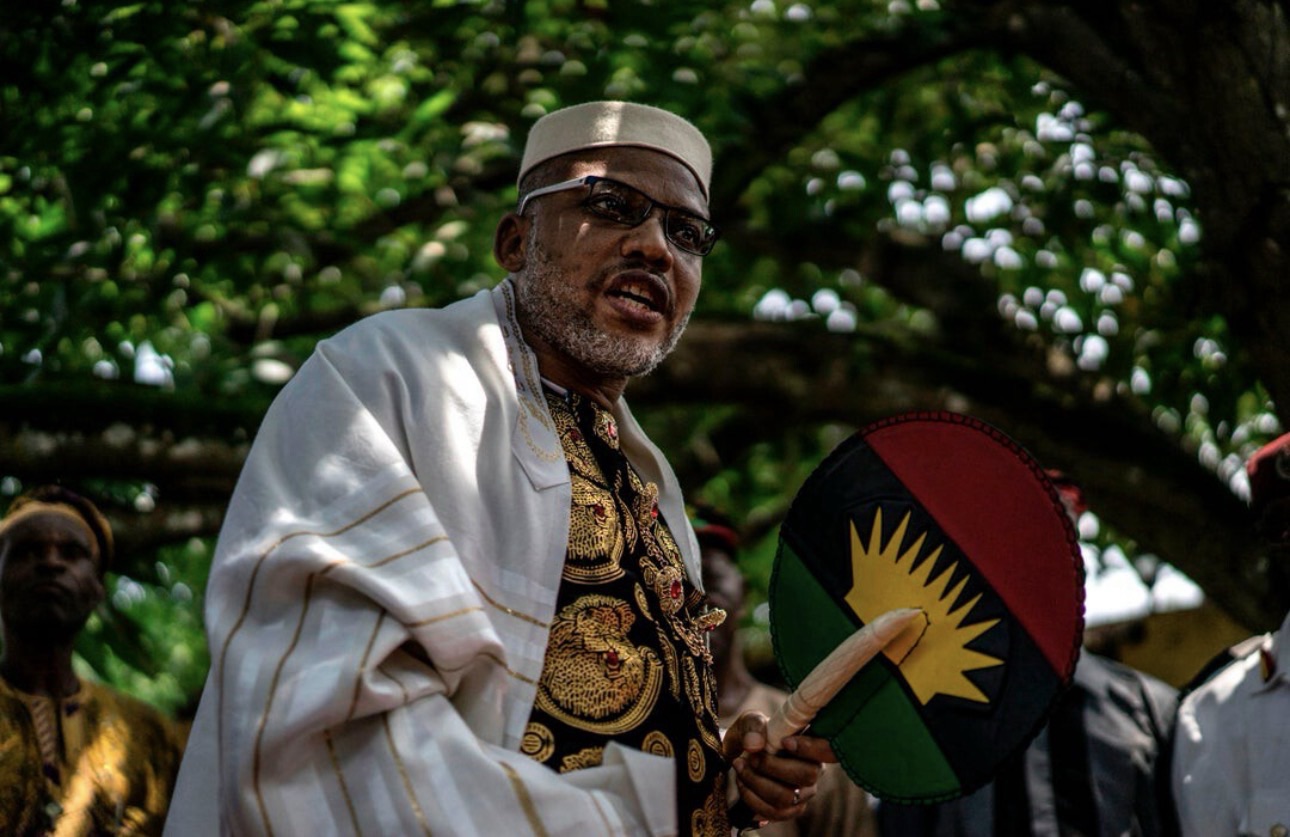

The judgment from Justice James Omotosho detailed a clear link between Kanu’s broadcasts and violent acts. The right to self-determination was acknowledged, but the court ruled that any such action not conducted within the bounds of the Nigerian constitution is illegal . The specific charges he was convicted on illustrate this distinction:
· Inciting Violence: The court found that Kanu made broadcasts “encouraging members of the public to kill Nigeria security officers” and “to attack officers of the Nigeria police force” . Another charge cited his broadcast with the “intention to threaten members of the public with sit at home order” .
· Leadership of a Terrorist Organisation: He was convicted for declaring himself the leader of IPOB, a group the Nigerian government had proscribed as a terrorist organisation in 2017 . The judge stated that threats of violence from his group were “nothing but terrorist acts” and described Kanu as an “international terrorist” .
💔 The Human and Economic Cost of Enforced Orders
The assertion that there is “no nexus” between Kanu and the atrocities in the Southeast ignores the widespread impact of the sit-at-home orders and associated violence, which the judgment directly addressed.
· The Stranglehold of Sit-at-Home: For years, a weekly sit-at-home order, initially proclaimed by IPOB to protest Kanu’s detention, has been enforced every Monday in the Southeast . This order has “shuttered schools, shops and other public places” for over three years, severely “crippling economic activities in the region and casting a thick pall of fear” . The court convicted Kanu for this, characterizing the sit-at-home order enforced through threats and violence as a terrorist act .
· A Climate of Fear and Violence: These orders have been violently enforced by armed elements. As reported, there have been “multiple, unprovoked attacks on security personnel and everyday Nigerians in the region” . One report notes that as many as 700 deaths have been linked to separatist militants since 2021 . This environment of casual violence has inflicted deep human and economic losses on the very people Kanu claimed to represent.
📢 The Propaganda Warfare
While Kanu and IPOB have consistently accused the Nigerian government and specific media houses of running a propaganda campaign against them , the court’s findings point to Kanu’s own use of media to incite violence.
The judgment was based on evidence including “video and audio recordings of some of Nnamdi Kanu broadcasts,” which contained messages where he was “ginger[ing] his followers make dem attack and kill army and police pipo” and destroy public property . This suggests a direct use of broadcast media not just for political agitation, but for encouraging illegal and violent actions.
Based on the evidence, it appears the court drew a critical distinction between the right to free speech and the criminal act of incitement to violence. The human and economic toll in southeastern Nigeria provides a somber backdrop to this legal conclusion.

