


Every state is an engine of power. To prevent that engine from careening off the road, democracies install sophisticated systems of restraint. We learn about them in school: the Constitution, the supreme law that delineates authority. Then, the external guardrails—the checks and balances between the executive, legislative, and judiciary. Each branch is meant to watch, question, and limit the others. This is the elegant theory of countervailing forces.
But theory meets messy reality. Guardrails, no matter how well-designed, are operated by human beings. They can be breached by omission—when institutions grow passive, complicit, or simply fail to act out of fear or favor. They can be breached by commission—when they are deliberately bent, ignored, or weaponized for partisan gain. A legislature that acts as a rubber stamp, a judiciary that delays justice or rules on technicalities over substance, an executive that flouts rulings—each represents a failure of these structural safeguards.
When these institutional brakes fail, what remains?
There is a final, foundational check that no document can create and no law can mandate: the personal character of the individuals in power. This is the internal guardrail. It encompasses integrity, a sense of restraint, respect for the spirit of the law, humility before the office, and an allegiance to the public good that supersedes personal or political ambition.
This character is the last line of defense. Because power, by its nature, seeks expansion. It tests boundaries. In the hands of a person of weak character, every restraint becomes a challenge to circumvent. The lack of an internal moral compass doesn’t just lead to personal ethical failures; it actively pollutes the external systems.
The levers of legislative oversight can be neutralized through coercion, patronage, or the appointment of pliant officials. Judicial independence can be pressured through public intimidation, strategic appointments, or the exploitation of opaque legal processes. The executive, untethered from internal restraint and facing weakened external checks, is free to operate in a space where power is limited only by audacity.
The result is a cascade of institutional corrosion. The external guardrails, designed to be impartial, begin to bend toward the will of the unchecked center. The safety net envisaged by the constitution develops holes—not through a single tear, but through the slow, relentless acid of bad faith and the abuse of power.
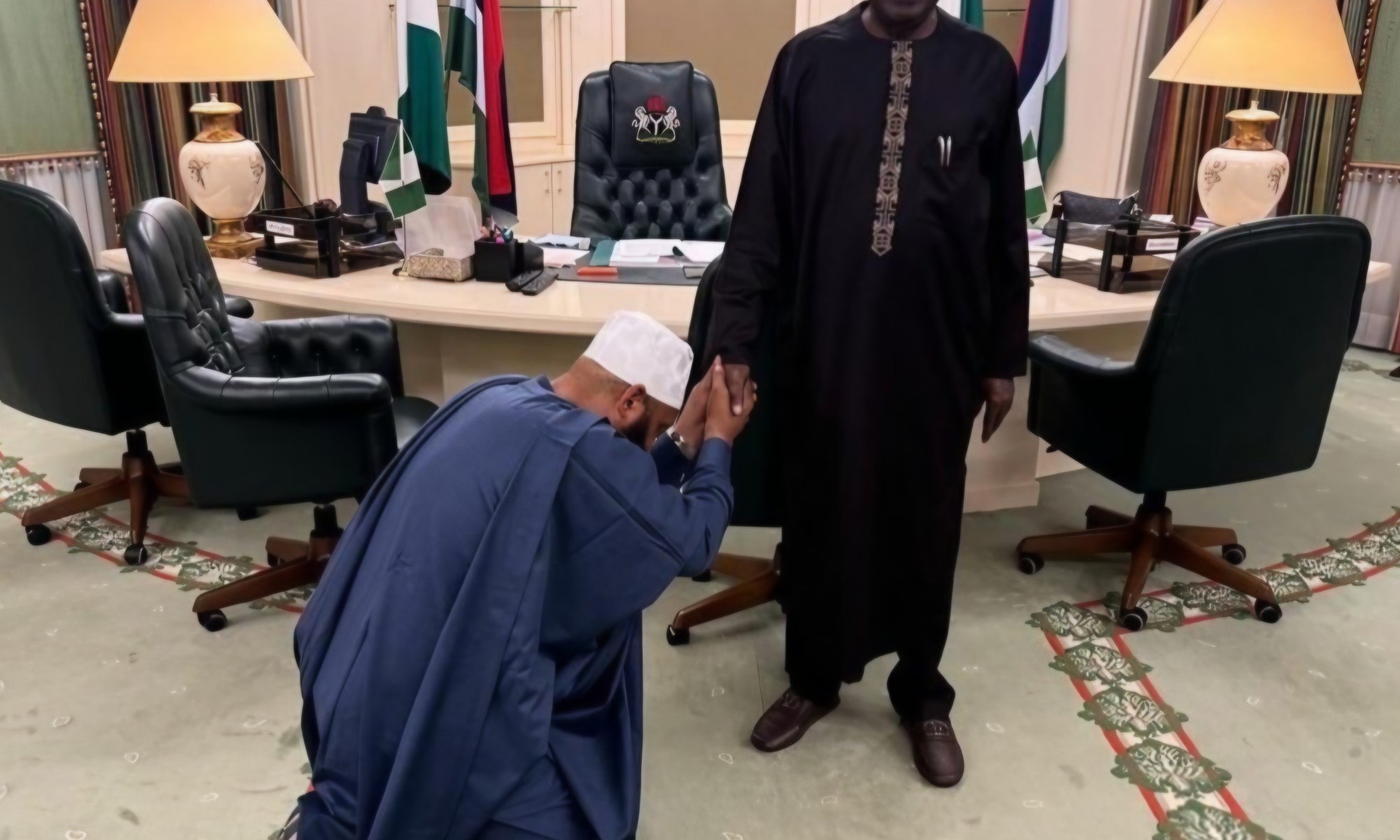
The contemporary example that illustrates this dangerous synergy is the administration of President Bola Tinubu. Critics and observers point not merely to controversial policies, but to a foundational issue: a perceived lack of that essential internal guardrail of character. This manifests in a history of unresolved ethical controversies, a mode of political operation perceived as transactional, and a demonstrated willingness to consolidate control.
This perceived personal deficiency has, in the view of many, actively polluted the external guardrails. The legislature has moved with unprecedented speed to approve measures extending executive control over vital institutions, raising questions about robust scrutiny. The judiciary has been thrust into the center of political storms, with its rulings—fair or not—now viewed by a skeptical public through the lens of potential compromise or fear.
The outcome is a palpable abuse of power: a rushed, painful economic reform agenda executed without apparent cushion for the vulnerable; a consolidation of authority that chills dissent; and a climate where the mechanisms meant to hold power accountable appear muted or aligned.
This is the assured rush toward the breakdown of a state’s ethical foundation. It is not always a dramatic revolution, but a slow, legalistic hollowing-out. The institutions remain, but their spirit—the spirit of service, restraint, and public trust—evaporates.
The sobering lesson is this: No constitution is self-executing. No system of checks and balances is automatic. They are mechanisms, and mechanisms require operators of good faith and strong character to function. We can—and must—strengthen our institutions, demand transparency, and punish breaches. But in the voting booth and in our constant civic vigilance, we must look beyond manifesto and party to the irreducible core of the individual. The character of our leaders is not a secondary virtue; it is the primary safeguard. When it is absent, all other guardrails are ultimately just painted lines on a road to nowhere.

