

David Remnick’s essay “Trump, Epstein, and the Women” is not really about sex, or even scandal. It is about power—how it is exercised, how it is protected, and how women are treated as collateral damage in a system designed to insulate powerful men from consequence.
Jeffrey Epstein did not operate in a vacuum. Nor was Donald Trump a bystander to the world Epstein inhabited. They moved within the same ecosystem: money, status, indulgence, and the unspoken assurance that rules were for other people. Remnick’s central point is devastating in its simplicity—Epstein’s crimes were enabled not just by his own depravity, but by a culture that shrugs when wealthy men exploit women and girls, so long as the exploitation is discreet and profitable.
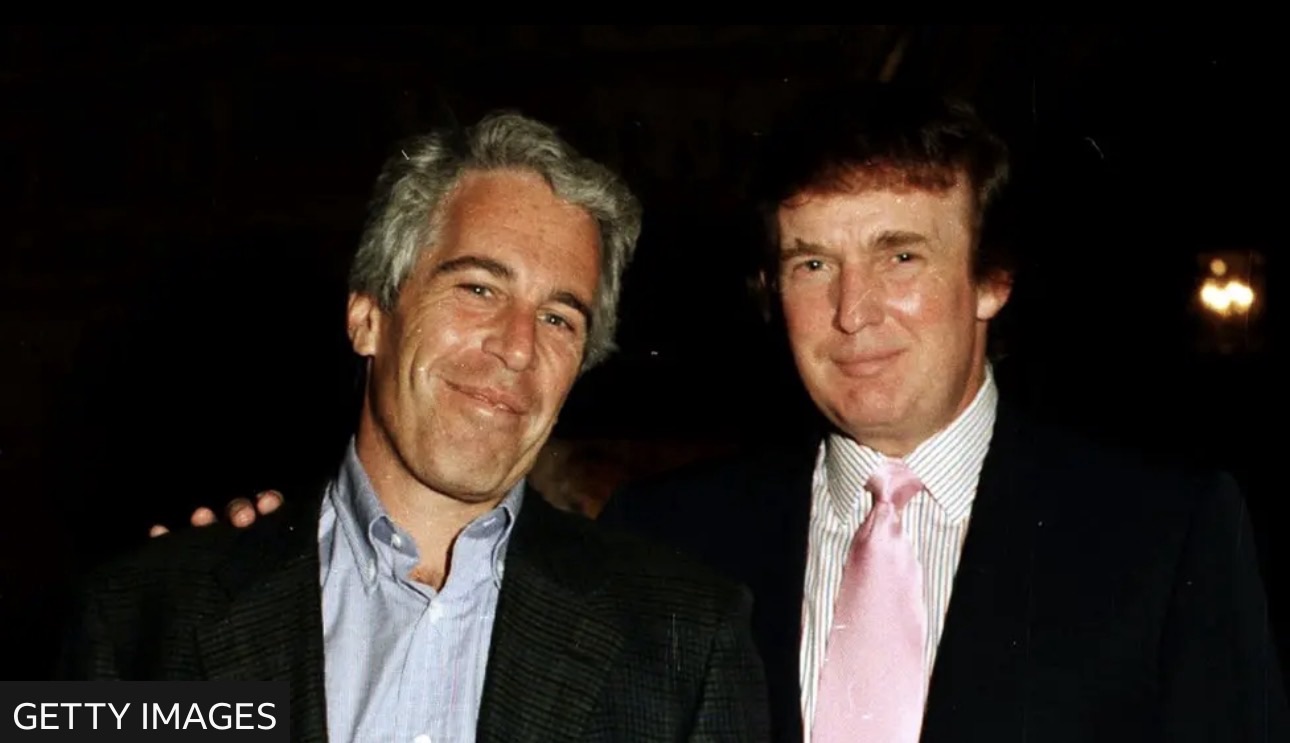
Trump’s name appears repeatedly in the Epstein story, and not merely as a social acquaintance. Photographs, party footage, flight logs, depositions—these are not inventions of partisan imagination. Yet Trump, like so many others orbiting Epstein, escaped meaningful scrutiny for years. When Epstein finally fell, the focus narrowed conveniently to one man, as though he alone constructed and maintained the machinery of abuse.
Remnick reminds us that the women—often girls—were rendered voiceless not because they lacked truth, but because truth is negotiable when wealth and celebrity intervene. Their testimonies were discounted, delayed, buried in legal technicalities and non-disclosure agreements. Justice, in this world, is something that must be affordable.
Trump’s genius—if one may use the term—has always been his ability to treat scandal as background noise. Where other politicians deny, Trump attacks. He discredits accusers, mocks institutions, and overwhelms the public with spectacle until outrage becomes fatigue. Epstein’s death in custody provided the final escape hatch: no trial, no testimony, no inconvenient cross-examination of those who shared his playground.
What makes Remnick’s essay uncomfortable is that it refuses to isolate Epstein as an aberration. He was a symptom. The disease is a society that equates success with virtue and assumes that rich men must, by definition, be innocent. Women, especially young and vulnerable ones, are expected to understand the rules: silence is survival.
This is why the Trump–Epstein connection matters even now. Not because it proves a specific criminal act—though it may—but because it exposes how power reproduces itself. Men like Trump survive scandals not by disproving them, but by outlasting them. The women do not get that luxury.
In the end, “Trump, Epstein, and the Women” is an indictment of selective memory. America prefers its villains singular and its heroes uncomplicated. Epstein is safely dead. Trump remains politically alive. And the women—still telling their stories—are expected to be grateful that anyone is listening at all.
That, perhaps, is the most damning detail of all.

