

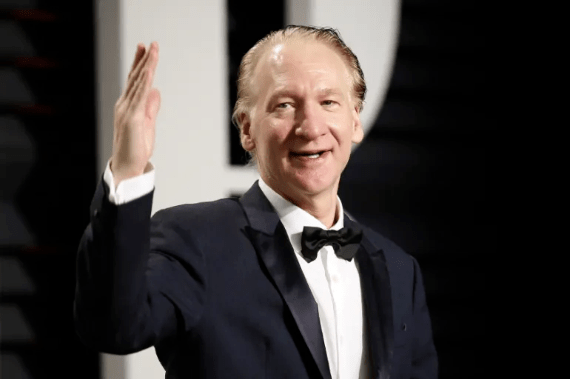
Bill Maher is one of those rare political creatures who insists—loudly, repeatedly, and with the confidence of a man who owns several mirrors—that he is a liberal. Not a “new liberal”, not a “confused liberal”, but a full-fat, old-school, California-grown liberal. And yet, if you listen to him long enough, you begin to feel like you’ve wandered into a Republican dinner party where the host swears the roast is vegan.
Maher’s liberalism exists largely as a branding exercise. Like “organic” on supermarket eggs, it reassures the buyer while revealing very little about the actual contents.
Take foreign policy. On Israel, Maher’s position is refreshingly simple: Israel is right, has always been right, and will remain right even when visibly wrong. Nuance is treated as antisemitism with better PR. Any criticism of Israeli state policy is waved away as ignorance, moral degeneracy, or the dangerous naivety of people who have not watched Exodus often enough.
Maher insists this has nothing to do with identity, of course. He just happens—purely coincidentally—to adopt a blanket, emotional, and largely uncritical defence of Israel that aligns perfectly with ethno-nationalist logic he would mock mercilessly if it came from anywhere else. If this were Russia, China, Nigeria or Venezuela, he’d be reaching for historical metaphors, moral lectures, and a smug grin. But Israel? Suddenly he’s allergic to context.
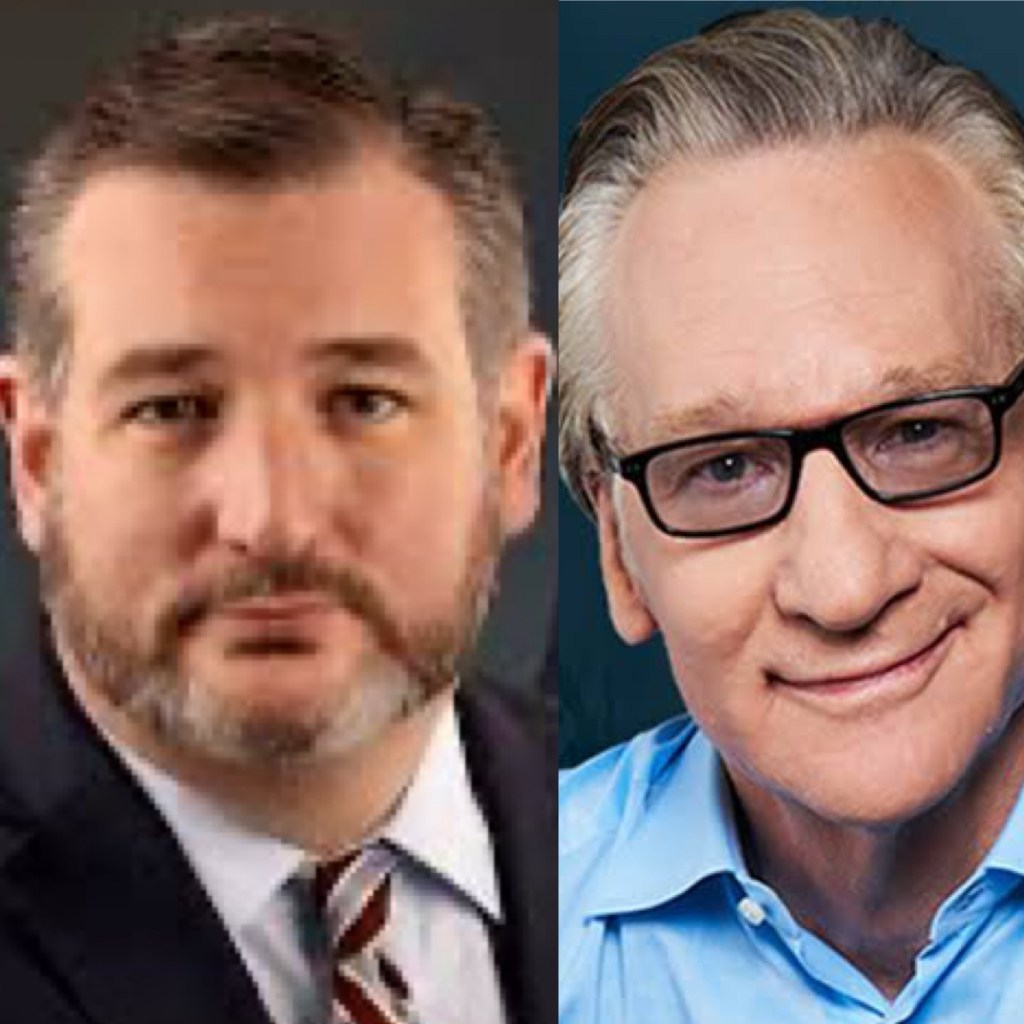
He teamed up with Ted Cruz to attempt to divert the world’s attention from Israeli atrocities in Gaza to Nigeria, alleging without foundation a Christian genocide he claimed was not receiving similar attention as Israel.
Then there’s race and DEI, where Maher has reinvented himself as the world’s most irritated uncle. Every discussion of systemic racism is dismissed as “wokeness”, every attempt at inclusion framed as a Marxist plot cooked up by blue-haired sociology graduates who apparently run America now.
Maher speaks of DEI the way Fox News speaks of migrants: as an all-powerful, shadowy force ruining civilisation one corporate training seminar at a time. Structural inequality? Overblown. Historical disadvantage? Ancient history. The problem, you see, is that minorities are talking too much about being minorities, and this makes Bill uncomfortable during dinner.
This is classic right-wing ideology: individualism without context, meritocracy without history, and freedom—only for people who already have it.
And yet Maher remains offended when anyone calls him conservative. He still believes smoking weed, hating religion, and insulting young people qualifies as liberalism. He has confused cultural rebellion with political progress, as if mocking Christians in 1995 entitles you to reactionary takes in 2026.
In truth, Bill Maher is not a liberal in exile. He is a conservative who arrived early, camped inside liberalism, and never updated his software. He distrusts movements, dislikes the marginalised when they organise, and believes power should mostly remain where it is—preferably with people who look and think reassuringly like Bill Maher.
The curious case is not that Maher has right-wing instincts. Many people do. The curiosity lies in his refusal to admit it. He wants the moral cachet of liberalism without the inconvenience of empathy, solidarity, or self-reflection.
In politics, as in comedy, timing matters. Bill Maher’s problem is not that he’s offensive. It’s that he’s outdated—and still convinced he’s ahead of the curve.

