

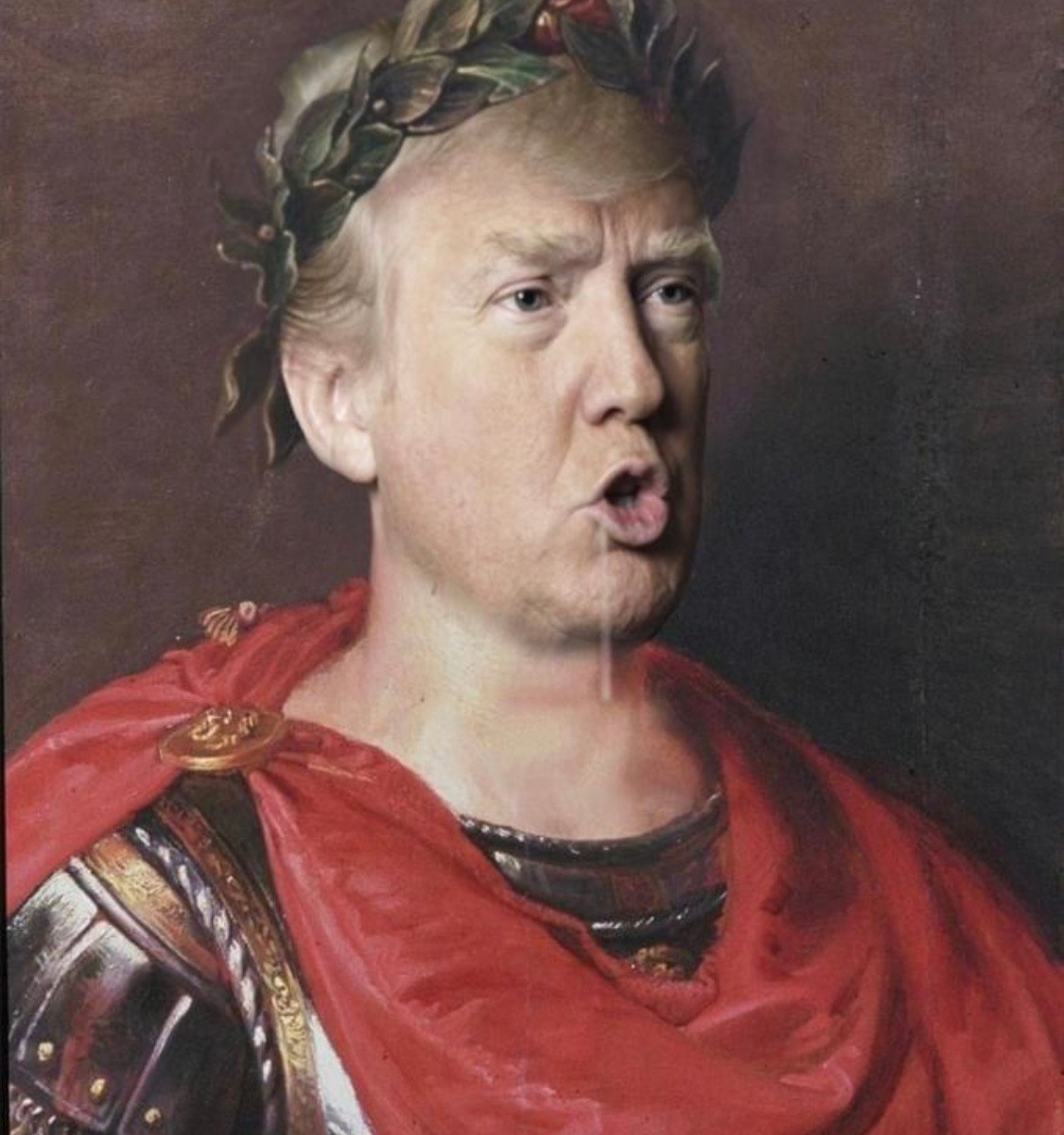

There are men who rise to leadership through vision, sacrifice and intellect. And then there are men who arrive by confusing noise with competence, audacity with ability, and shamelessness with strategy. Our subject belongs firmly in the latter category.
This is a man who cheated on his wife, then apparently felt that wasn’t ambitious enough and proceeded to cheat on the replacement wives too. Consistency, if nothing else. In business, he perfected the art of failure by declaring bankruptcy so often that creditors began to suspect it was a subscription service. “Sign up today,” he seemed to say, “and I’ll not pay you tomorrow.”
Truth, for him, is an optional accessory. He wears it only when it matches the outfit. Unsurprisingly, the law has never been a close friend—more of a distant relative who keeps sending letters marked Final Notice. When he lost an election, he did what any sore loser with a megaphone and too much free time would do: he refused reality itself. Facts, after all, are terribly inconvenient things.
He even opened a university—an institution traditionally associated with learning—to fleece students instead. Degrees were optional; fees were compulsory. Charity funds? Those, too, were apparently misunderstood as a personal savings account. Altruism, in his worldview, is merely another investment vehicle—preferably one that pays him directly.
Government, to him, is not a public trust but a transactional marketplace. Every policy is a deal, every alliance a receipt, and the only metric of success is his own comfort. National interest must queue behind personal benefit, preferably at the back, behind the golf schedule.
Skills? Light. Very light. So light they are almost theoretical. And yet, somehow, this man became a leader in one of the world’s most complex societies. It is a mystery that will puzzle historians, psychologists and barroom philosophers for generations.
The Supreme Court, sensing perhaps that chaos needs time to stretch its legs, has postponed judgment on his tariff regime—giving him room to breathe, tweet, and further experiment on the global economy. Meanwhile, foreign policy has become performance art. He now conducts external affairs as though he were Israel’s international branch office, freelancing geopolitics with all the subtlety of a wrecking ball.
He is not merely a leader; he is a warning label. A bad omen in a suit, reminding us that democracy, when left unattended, can promote the least qualified intern to CEO of the world.
And yet here we are—watching, blinking, and wondering how on earth this happened, while checking the sky for falling pianos.
 Centre for Nigeria Progress