

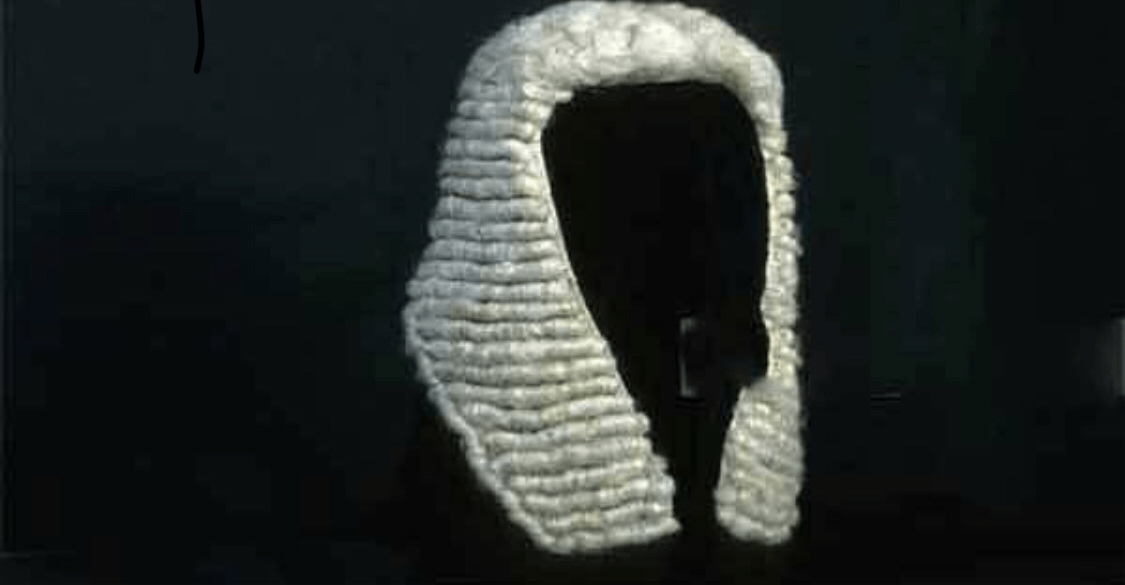
Nigeria has form in this area. After the Civil War, armed robbery graduated from petty crime to national industry. The military government observed—correctly—that the regular courts, with their wigs, rituals and adjournments, were about as useful against armed robbers as a strongly worded press release.
So they did the obvious thing: they panicked creatively.
Out went the niceties of due process. In came Special Armed Robbery Tribunals—courts in which the accused enjoyed a streamlined version of Section 36 of the Constitution, consisting mainly of the right to hear the sentence before the firing squad got bored.
And it worked. Armed robbers quickly developed a renewed respect for the state, largely because the state rediscovered its capacity for finality.
Today, Nigeria faces a similar emergency. The difference is that the robbers no longer carry guns. They carry party cards, court orders, and receipts from Ikoyi real estate agents.
Section 15(5): The Constitution’s Most Ignored Cry for Help
Section 15(5) of the 1999 Constitution boldly declares:
“The State shall abolish all corrupt practices and abuse of power.”
This is a magnificent sentence. It is also Nigeria’s most consistently violated constitutional provision, surpassed only by the national anthem.
For over two decades, the Nigerian state has responded to this mandate by:
– setting up agencies, ICPC, EFCC
– inaugurating committees, Senate and HOR sub committees
– launching slogans, War against corruption
and occasionally arresting junior offenders to maintain appearances.
Meanwhile, corruption has not been abolished. It has been restructured, consolidated, and monetised.
Section 36: Fair Hearing or Fair Delays?
Section 36 guarantees the right to fair hearing within a reasonable time. “Reasonable,” in Nigerian anti-corruption jurisprudence, is a flexible concept that can stretch across:
three governments, four Chief Judges, and several retirement parties.
The elite defendant does not defeat the system by innocence. He defeats it by attrition.
Interlocutory appeals breed like rabbits. Judges retire mid-trial. Prosecutors are transferred, promoted, discouraged, or spiritually exhausted. Files develop legs and walk away.
By the time judgment arrives—if it arrives—the public has moved on, the evidence is stale, and the accused has already rebranded as an elder statesman.
Orji Uzor Kalu: Exhibit A in Judicial Theatre
The Orji Uzor Kalu saga deserves a special place in Nigeria’s Museum of Procedural Absurdities.
Convicted. Sentenced to twelve years. The nation briefly rejoiced.
Then the Supreme Court—correctly, legally, unimpeachably—set aside the conviction because the wrong judge read the judgment.
Fine. Law is law.
But the Court ordered a retrial. That retrial has since joined the long list of Nigerian government promises awaiting resurrection.
Years later, the defendant is not in custody, not in court, but in the public square, influencing policy, shaping alliances, and helping to determine the future of the same republic that cannot determine the future of his case.
This is not justice delayed. This is justice outsourced to amnesia.
Section 6: Judicial Power or Procedural Pageantry?
Section 6 vests judicial powers in the courts. In theory.
In practice, judicial power in corruption cases has been diluted into procedural pageantry—a dance in which everyone knows the steps, nobody expects a conclusion, and the music never stops.
The courts are not necessarily corrupt. They are simply outgunned by defendants with:
– unlimited resources,
– political protection,
– and the patience to wait the system out.
The judiciary was built to adjudicate disputes, not to wrestle oligarchs.
Unexplained Wealth: The Nigerian Magic Trick
Across the country, senators and ministers inhabit palaces that would embarrass minor European royalty. The public stares. Nobody asks questions. No asset trails are examined. No serious Section 44-style forfeiture proceedings follow.
We all know the trick:
Enter public office with a modest declaration.
Exit with a mansion, a fleet, and a god complex.
Challenge anyone who asks to “prove it.”
This is not governance. This is state-sanctioned illusionism.
Wike, Godfatherism, and the Capture of Democracy
When individuals with vast, unexplained wealth openly determine who governs a resource-rich state, democracy has not failed—it has been purchased.
Elections become shareholder meetings. Voters become spectators. The constitution becomes a decorative pamphlet handed out on swearing-in day.
So… Should We Bring Back Special Tribunals?
Here lies the uncomfortable truth.
Special anti-corruption tribunals would work.
They would be fast. They would be feared. They would deliver outcomes.
They would also: sit uneasily with Section 36, tempt political misuse, and blur the line between constitutional order and emergency rule.
But let us be honest: the current system already violates the spirit of the Constitution while pretending to uphold its letters.
The Real Question Nigeria Refuses to Ask
The real issue is not whether special tribunals are constitutional.
The real question is this: At what point does allowing corruption to capture the state become the greater constitutional violation?
A constitution that cannot defend itself is not a legal document. It is a souvenir.
Nigeria does not need firing squads. It needs:
time-bound trials, restricted interlocutory appeals,
aggressive asset forfeiture, judicial accountability,
and a political class that fears consequences more than headlines.
Until then, corruption will continue to enjoy what armed robbers once lost: a healthy disrespect for the Nigerian state
 Centre for Nigeria Progress