

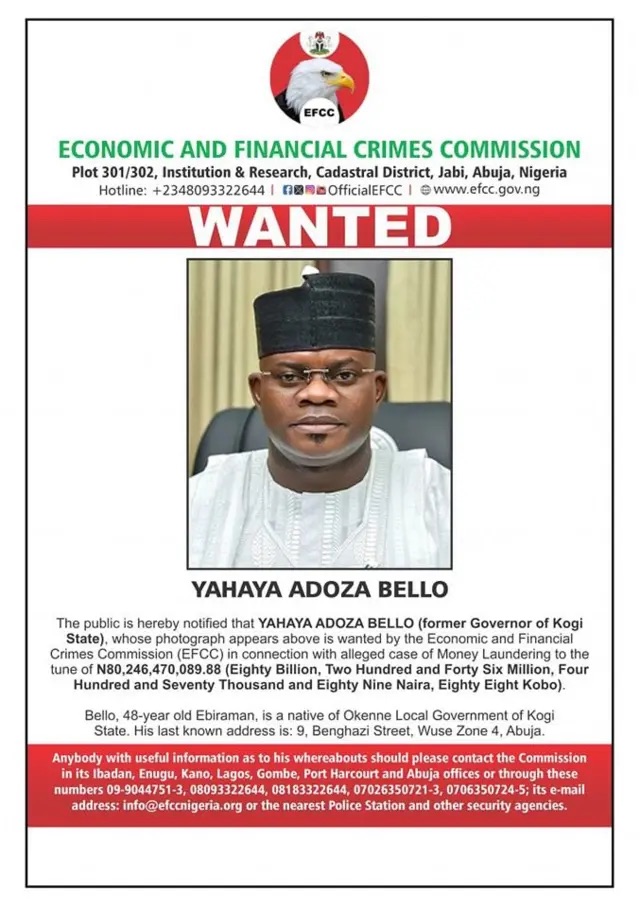
The Economic and Financial Crimes Commission (EFCC) Chairman, Ola Olukoyede, has identified what many Nigerians already know: politically exposed persons have turned the criminal justice system into a playground. They exploit procedural loopholes, secure endless adjournments, and drag cases until public memory fades and prosecutors lose steam.
Justice becomes a mirage, anti corruption efforts lose credibility, and the message to aspiring looters remains clear—steal big enough, and you can lawyer your way to freedom.
Olukoyede’s recent lament at the Canada-Nigeria Legal Exchange Forum in Toronto wasn’t new. Every EFCC chairman since the commission’s establishment has complained about cases that should take months stretching into years, sometimes decades. The pattern has become an integral part of Nigeria’s institutional framework.
The solution isn’t mysterious. Kenya’s specialised Anti-Corruption and Economic Crimes Courts have helped expedite the processing of corruption cases to judgment. The Ethics and AntiCorruption Commission’s 2021/2022 report indicates that 60 cases were concluded within the year, resulting in 30 convictions, while 97 of the 154 investigation files were recommended for prosecution. The impact isn’t eliminating corruption overnight, but reducing delay, improving case flow, and ensuring cases are actually heard and decided.
In Uganda, the Anti-Corruption Division of the High Court has delivered more visible enforcement outcomes. Official reports indicate that half of the cases concluded in key reporting periods resulted in convictions, with court ordered refunds totalling hundreds of millions of shillings, including UGX 425.8 million in one cycle alone.
In the opinion of this newspaper, specialised courts strengthen deterrence by combining criminal punishment with financial recovery, making corruption both legally and economically costly.
Nigeria has precedent for this approach. When labour disputes clogged the regular courts and strikes threatened economic stability, President Olusegun Obasanjo’s administration acted decisively. The National Industrial Court Act of 2006 re-established the National Industrial Court as a superior court of record with exclusive jurisdiction over labour matters. The Constitution (Third Alteration) Act of 2010 enshrined the court in the Constitution, removing jurisdictional ambiguities. Today, the National Industrial Court handles complex employment disputes with expertise and speed that the regular court system couldn’t provide.
Regular courts aren’t equipped to handle the complexity of modern financial crimes. Tracing laundered money through multiple jurisdictions, unravelling shell company structures, and analysing forensic accounting evidence knowledge. requires specialised knowledge.
More critically, politically exposed defendants have become adept at manipulating the court. They forum shop between state and federal high courts, file interlocutory applications that trigger automatic stays, and deploy senior advocates who exploit procedural gaps.
A dedicated corruption court with judges trained in financial crimes, strict timelines, and limited grounds for adjournment would eliminate these escape routes.
The scale of what Nigeria has lost makes the case overwhelming. Conservative estimates place the figure at over $400 billion since independence, with some reports suggesting a total of $582 billion. In 2023 alone, Nigerians paid approximately $500 million (N721 billion) in cash bribes to public officials. These aren’t abstract numbers; they represent schools that remain unbuilt, hospitals without equipment, roads that claim lives, and an entire generation that views their country as a place to escape rather than build.
Yet the EFCC continues fighting with one hand tied behind its back. The agency investigates, marshals evidence, and secures charges, only to watch cases dissolve in the quicksand of the Nigerian court system.
Critics accuse the commission of selective prosecution, but these complaints overlook a fundamental problem: the system allows the powerful to manipulate the process indefinitely.
A special corruption court would reset these dynamics. Set a firm timeline,12 months from arraignment to judgment. Appoint judges based on expertise in financial crimes and demonstrated integrity. Restrict interlocutory applications that serve as delay tactics. Allow appeals, but don’t let the appeals process become another avenue for indefinite postponement. These are standard features of functional anti corruption systems worldwide.
The deterrent effect is just as crucial as resolving cases. Currently, politically exposed persons calculate that even if caught, they can delay justice until public attention shifts elsewhere. Ensure that corruption prosecutions conclude swiftly with real consequences, and the risk-reward analysis shifts dramatically. When aspiring looters see their predecessors going to jail within a year rather than attending society weddings their behaviour will change.
Nigeria doesn’t lack anti-corruption laws or investigative capacity. What’s missing is judicial infrastructure designed to convert investigations into convictions before defendants deploy their arsenal of delay tactics.
The regular courts have too many competing demands and insufficient specialisation to specialised f ill this gap. Corruption isn’t just stealing money. It’s killing Nigerians through collapsed healthcare systems, failed infrastructure, and destroyed opportunities.
Special corruption courts won’t eliminate corruption overnight. But they would signal that the justice system is finally serious about holding the powerful accountable and demonstrate to ordinary Nigerians that the law can actually touch those who currently operate above it.
The debate over whether the EFCC is biased distracts from the real issue: without a judicial system capable of delivering swift justice, no anti-corruption agency can succeed. Nigeria needs special corruption courts as an urgent necessity. The question is how many more billions must disappear, how many more children must go without schools, and how many more years must pass before Nigeria’s leaders finally act.
 Centre for Nigeria Progress
👌👌
LikeLiked by 1 person