


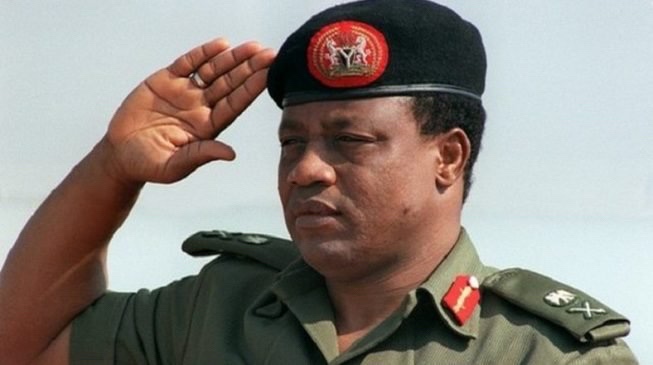
Nigeria has produced many heads of government, but only a few have truly understood Nigeria as a country, a system, and—most importantly—a people. Two men stand out in this regard: Ibrahim Badamasi Babangida and Bola Ahmed Tinubu. Not because they were the best leaders Nigeria ever had, but because they mastered Nigeria exactly as it is.
Babangida was present at the creation of Nigeria’s coup culture. From 1966 onward, his fingerprints can be found on most of the “successful” military interventions. He understood power early and understood Nigerians even better. He knew that ideology was overrated, morality negotiable, and that elite selfishness was the most reliable political constant in the country.
His genius lay not in brute force, but in proximity. Babangida neutralised critics not by jailing all of them, but by inviting many into the inner circle. Friends were brought closer; enemies even closer—so close to the armpit of power that there was no room to swing a meaningful punch. Once embraced, critics became compromised, silenced by access, contracts, and the intoxicating smell of relevance.
Babangida corrupted and was corrupting. He identified the lowest common denominator among Nigerian elites—self-interest—and built a system around it. He conquered Nigeria politically, not territorially. He hunted power patiently, acquired it quietly, and held it longer than most expected. All the while, he smiled. That famous smile did more damage to Nigeria than many tanks ever did.
Opposition under Babangida was not merely defeated; it was psychologically dismantled. His cruelty was not loud. It was administrative, strategic, and devastating.
Bola Ahmed Tinubu represents the civilian evolution of this same political intelligence.
Tinubu was not politically prominent before the Second Republic. He emerged under Babangida’s convoluted transition programme, becoming a senator in the short-lived Third Republic. That was the beginning of a carefully constructed political ascent. Like many Nigerian elites, Tinubu’s background arrived wrapped in controversy—unsourced wealth, unclear origins, disputed names, opaque schooling, and unanswered questions about his American years. None of this, in Nigeria, proved disqualifying. On the contrary, it was almost a credential.
From his Lagos base, Tinubu grew into the most electorally successful political figure in Western Nigeria since Obafemi Awolowo. Unlike Awolowo, however, Tinubu’s strength was not ideology or vision. It was organisation, resources, and ruthless political management.
Tinubu is no charmer. He is neither colourful nor inspirational. But he understands leverage. He attracts talent not through affection or loyalty, but through inevitability. People work with him because he appears to be the only game in town. He holds power not with popularity, but with a vice—tight, painful, and difficult to escape.
Both men mastered Nigeria by exploiting its weaknesses: weak institutions, elite greed, moral exhaustion, and a public long conditioned to expect little. They did not merely operate within a broken system; they perfected it.
In that sense, Babangida and Tinubu are quintessential Nigerians—not because they reflect our best instincts, but because they mirror our most persistent failures. They did not fall from the sky. They were produced by Nigeria, sustained by Nigerians, and defended by Nigerian elites who always believed they would be the exception.
History may remember them as political geniuses. But the country they helped shape remains poorer, weaker, and more cynical because of that genius.
And that is why, despite their mastery, both men rank among the worst things to have happened to Nigeria.

