

1. Rules-Based Order Is Fraying
Carney said the era in which countries could reliably depend on a stable, rules-based global system — enforced by institutions like the WTO or UN — is ending. He characterised the previous system as a “pleasant fiction” that helped provide public goods like open seas, financial stability, and dispute-resolution frameworks, but one that no longer works.
2. “Rupture, Not Transition”
He emphatically stated:
“We are in the midst of a rupture, not a transition.”
By this, Carney meant that great powers are increasingly acting without restraint — using economic integration, tariffs, supply-chain leverage and financial infrastructure as tools of coercion rather than mutual benefit.
3. New Geopolitical Reality — Great Power Rivalry
Carney warned that the international system is entering a harsher phase of intensifying competition between major powers, where smaller states cannot rely on old alliances or rules to guarantee security or prosperity.
4. Middle Powers Must Cooperate
He urged “middle powers” such as Canada, Australia, South Korea, Brazil and others to work together rather than negotiate bilaterally with dominant powers from weakness. His memorable line was:
“Middle powers must act together because if we’re not at the table, we’re on the menu.”
5. No Return to Nostalgia
Carney said:
“The old order is not coming back. Nostalgia is not a strategy.”
He argued against simply longing for the past and instead called for building new alliances and mechanisms suited to the current geopolitical landscape.
6. Economic Interdependence as Coercion
He criticised how economic ties — once seen as mutual gains — are now being weaponised: tariffs as leverage, supply chains as vulnerabilities, and financial systems as coercive instruments.
7. Support for Sovereignty and Collective Security
Carney reaffirmed support for Greenland and Denmark’s right to determine their future and emphasised that geographic assumptions about security no longer automatically confer safety or prosperity.
Context & Impact
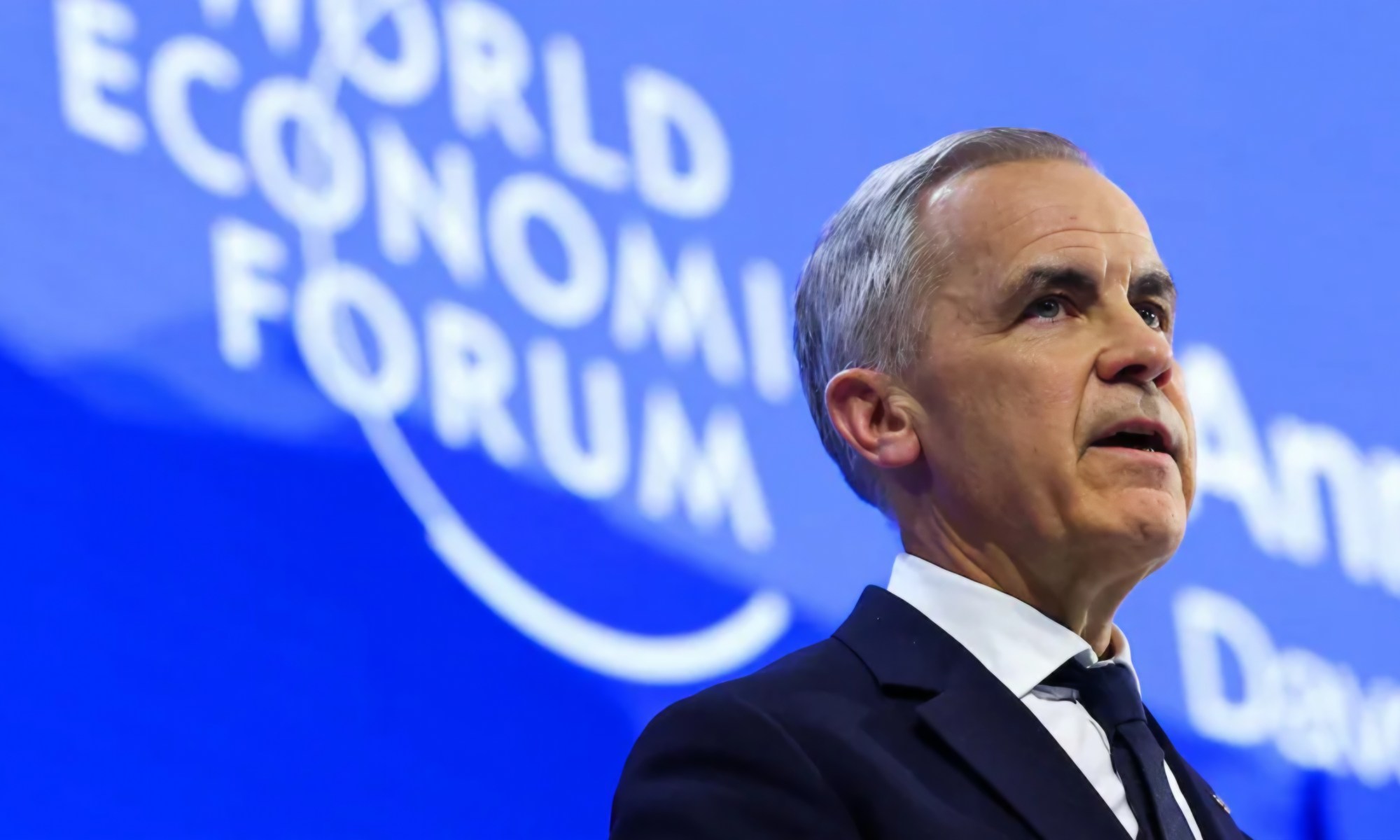
Carney’s speech came amid heightened tensions at Davos — particularly over the U.S. push to acquire Greenland and associated tariff threats — though he did not name U.S. President Donald Trump directly in his remarks. Observers interpreted his comments as a critique of unilateral geopolitical manoeuvres that erode trust in longstanding multilateral frameworks.
His address received significant attention and a standing ovation from the international audience, underscoring its resonance with leaders concerned about rising great-power competition.

